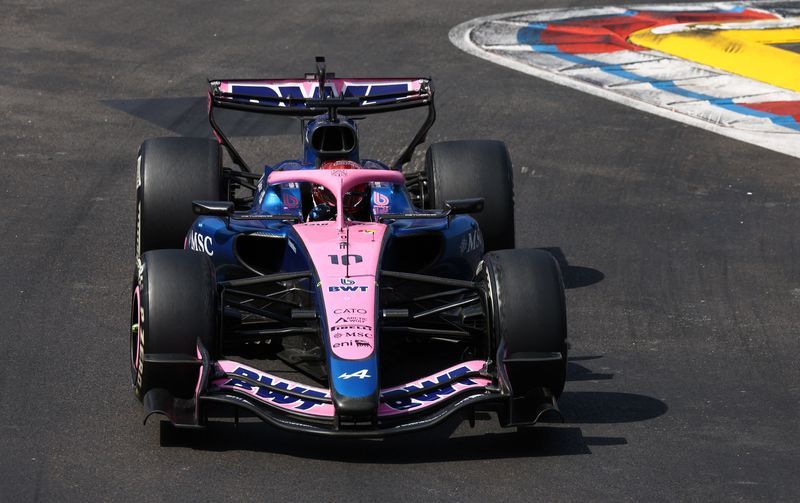
The controversy surrounding this year's Monaco Grand Prix will not reach resolution for several weeks, as the FIA's international court of appeal deliberates over one of the season's most contentious sporting decisions. Following a closed-door hearing in Paris on Tuesday, judges indicated they would require between two and three weeks to deliver their final ruling on whether Alpine's Pierre Gasly retains his third-place finish or whether Red Bull's Isack Hadjar should reclaim the position. The decision carries far-reaching consequences for multiple competitors further down the order and threatens to reshape the championship narrative as the season enters its decisive phase.
The dispute centres on a sequence of events that unfolded during and immediately after the June 7 race at the Monte Carlo circuit. Gasly crossed the line in third position but faced immediate post-race penalties—two five-second sanctions for exceeding speed limits in the pit lane—which demoted him to seventh place and elevated Hadjar into the podium positions. The ceremonial champagne spraying and official celebrations proceeded with Hadjar standing as the third-place finisher, a moment that seemed to crystallise the race's final outcome.
Yet within five days, stewards took the extraordinary step of reversing that decision entirely. On June 12, Alpine provided evidence that a timekeeping error had occurred—crucial technical data suggesting the pit-lane speeds recorded were inaccurate. Accepting this material, stewards overturned both of Gasly's penalties, restoring him to third place and necessitating an awkward trophy handover where Hadjar returned the award he had briefly celebrated with. This reversal, while resolving the immediate dispute in Alpine's favour, set in motion a chain reaction of appeals that would escalate the matter to the highest judicial level.
The complexity of the situation deepens when considering the asymmetrical treatment of other drivers facing identical offences. Oscar Piastri of McLaren also received pit-lane speeding penalties at Monaco, but crucially served them during the race rather than accepting post-race sanctions. This distinction proved decisive—because Piastri's penalties were already applied on track, they could not be revisited or overturned following the timekeeping discovery. The Australian thus lost positions and championship points permanently, while Gasly's identical infraction was completely erased from the record. This disparity prompted McLaren to lodge an appeal on June 16, arguing the outcome violated fundamental principles of sporting fairness.
George Russell's experience adds another layer to the complaint. The Mercedes driver, also penalised for pit-lane speeding, actively requested that his sanction be delayed until after the race to preserve the possibility of review should circumstances merit it. Despite serving a drive-through penalty during the event, Russell finished outside the points—a direct consequence of the penalty timing decision. When stewards reversed Gasly's penalties, the practical impossibility of similarly adjusting Russell's outcome became apparent, yet the underlying principle of fairness had seemingly been violated.
McLaren team principal Andrea Stella articulated the dual motivation for his team's legal challenge when discussing the matter at the Dutch Grand Prix. Beyond the specific sporting outcome affecting McLaren's competitive position, Stella emphasised broader concerns about the integrity of Formula One's regulatory system. The fact that identical offences resulted in markedly different outcomes depending on when penalties were applied—before or after the race—suggested potential flaws in how the sport manages such situations. For a team fighting for championship glory in an increasingly competitive season, the loss of Piastri's points represented a tangible material cost.
When stewards initially reversed Gasly's penalties, they acknowledged the apparent unfairness of the situation, noting that the timekeeping correction created problems for other competitors. However, they pointed to regulatory limitations in their official statement, emphasizing that no rule existed granting stewards authority to overturn already-served penalties. The stewards suggested that even if such power existed theoretically, implementation would be practically impossible given the cascade of consequences that had already unfolded. This reasoning, while legally sound, left the broader question of fairness unresolved—exactly the issue now before the appellate court.
The closed-door nature of Tuesday's hearing means no substantive details about the judges' questioning or the arguments presented have become public. The international court of appeal operates with confidentiality, reflecting Formula One's status as a private regulatory body, though this opacity has occasionally drawn criticism from those advocating for greater transparency in motorsport governance. What can be inferred is that both Alpine and Red Bull presented comprehensive cases, with McLaren's involvement adding further dimensions to the legal arguments under consideration.
The championship stakes add urgency to the appellate process. Mercedes' Kimi Antonelli won the Monaco race with Ferrari's Lewis Hamilton claiming second place, but the identity of third-place finisher ripples through points allocation and team standings. With the Italian Grand Prix scheduled for Monza on September 6 and Madrid's circuit debut following on September 13, the calendar offers limited time for judicial resolution before competitors return to competition. The longer the uncertainty persists, the greater the potential for frustration among teams invested in the outcome.
This situation ultimately reflects broader tensions within Formula One's regulatory framework. The sport endeavours to apply consistent rules across all competitors while acknowledging that circumstances sometimes warrant exceptional consideration. The Monaco dispute demonstrates how these competing principles can create genuine dilemmas without clear precedent for resolution. Whether the appellate court decides to overturn Alpine's victory or uphold it, the ruling will inevitably rewrite how Formula One handles similar situations in future seasons, making this more than a historical footnote to a single race.
For Malaysian and Southeast Asian Formula One enthusiasts watching from afar, the controversy serves as a reminder that modern motorsport involves complex governance challenges extending far beyond what occurs on the track itself. The legalistic sparring between teams, stewards, and judges increasingly shapes competitive outcomes, sometimes overshadowing the sporting spectacle that originally captured global imagination. As the appellate judges carefully weigh their decision over the coming weeks, the championship battle moves forward regardless, though with significant uncertainty about whether the final points allocation will truly reflect what transpired in Monaco.

