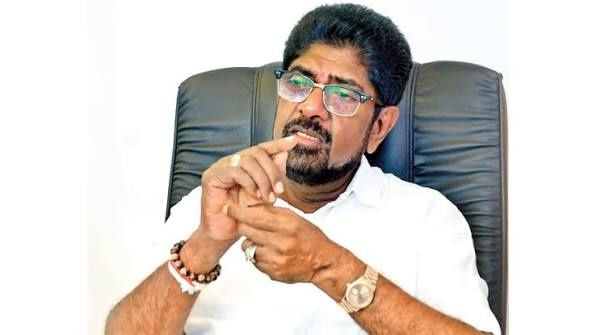
Keheliya Rambukwella, a former minister in Sri Lanka's government, was taken into custody on Tuesday by the country's anti-corruption authority following allegations that he facilitated the theft of a significant historical artefact. The Commission to Investigate Allegations of Bribery or Corruption (CIABOC) arrested him in connection with the disappearance of an intricately carved granite moonstone, a ceremonial object that formed part of the symbolic entrance to the palace of Veera Parakrama Narendrasinghe, the island's last Sinhala monarch who ruled until 1739.
The moonstone represents far more than a decorative element to Sri Lankan cultural heritage. These carved stepping stones, known locally as moonstones, are distinctive architectural features found at palace and temple entrances throughout the island, typically depicting symbolic imagery that reflects Buddhist and ancient Sinhala royal traditions. The particular stone alleged to have been stolen carries considerable historical weight, given its connection to the reign of Veera Parakrama Narendrasinghe and its presence within the palace grounds for centuries. The theft occurred in December 2022, during a period when Sri Lanka was grappling with unprecedented economic and social turmoil.
According to CIABOC's statement, Rambukwella did not merely benefit from the theft but actively participated in its orchestration. The agency specifically charged that he conspired with others to remove the heavy artefact and subsequently obstructed police investigations that followed the discovery of the crime. Such obstruction allegations suggest that officials wielded their governmental authority to impede justice mechanisms, a particularly serious dimension of corruption that undermines institutional integrity. The former minister's status at the time made his alleged actions especially grave, as those in positions of power bear heightened responsibility to uphold rather than circumvent the law.
Beyond the cultural artefact theft, prosecutors have added a separate economic crime to the charges against Rambukwella. He faces accusations of misappropriating state resources by using government funds to employ six individuals for his private commercial ventures. This alleged misuse of public money reflects a pattern of officials conflating personal and governmental interests, converting state resources into private benefit—a fundamental breach of fiduciary duty that erodes public trust in institutions.
The arrest represents the latest development in a sprawling corruption investigation that has ensnared Rambukwella across multiple portfolios and timeframes. Separately, he remains entangled in an ongoing court proceeding concerning his tenure as health minister, during which he allegedly authorised the procurement of counterfeit pharmaceutical products for government hospitals. The specific nature of this scandal borders on the criminal negligence: authorities allege that he approved the purchase of what was purportedly a life-saving cancer medication that laboratory testing revealed to be nothing more than water. Such a substitution represents a profound betrayal of patients' trust and likely contributed to preventable deaths among vulnerable populations.
The pharmaceutical procurement fraud did not occur in isolation. Multiple senior officials within the health ministry have faced indictment in connection with the same drug scam, suggesting a systematic breakdown in procurement oversight and ministerial supervision. The scale of the scheme indicates institutional corruption rather than individual malfeasance, pointing to procedural failures that allowed fraudulent suppliers to penetrate government supply chains and endanger public health.
Rambukwella's term as health minister coincided with one of Sri Lanka's most severe humanitarian crises in recent decades. In April 2022, the nation defaulted on its $46 billion foreign debt obligations and formally declared bankruptcy, precipitating an acute shortage of essential medicines across the public health system. During this desperately constrained period, when patients faced genuine scarcity of legitimate medications, the substitution of cancer drugs with water represents not merely fraud but a compounding catastrophe that transformed a crisis of availability into a crisis of safety. Patients who believed they were receiving treatment instead consumed a placebo while their conditions deteriorated.
For regional observers across Southeast Asia, Sri Lanka's cascade of corruption revelations carries instructive weight. The island's economic collapse, though rooted in macroeconomic policy failures and sovereign debt mismanagement, was substantially accelerated and deepened by systemic institutional corruption that diverted resources away from essential public services during the most critical moment. The theft of a national cultural treasure and the substitution of counterfeit medicines both occurred against a backdrop of national emergency, suggesting that crisis periods may actually heighten opportunities for corrupt actors to operate with reduced scrutiny amidst chaos and distraction.
The anti-corruption authority's renewed activity in pursuing these cases also reflects pressure from Sri Lanka's international creditors and the broader global accountability framework. As the nation navigates its debt restructuring process and seeks renewed foreign confidence, demonstrating effective prosecution of high-level corruption becomes essential to rehabilitation efforts. The arrests signal to external stakeholders and domestic constituencies alike that institutional mechanisms can function independently of political influence, though such confidence remains fragile given the history of selective prosecutions and institutional capture in Sri Lankan politics.
Rambukwella's legal situation demonstrates the multiplicity of accountability mechanisms potentially available against officials who abuse their positions. He faces charges spanning cultural heritage theft, obstruction of justice, misuse of public funds, and pharmaceutical fraud—offences spanning centuries of tradition, contemporary economic crimes, and matters of public health. Each charge independently would constitute serious criminal conduct; their accumulation paints a portrait of an official whose tenure exploited governmental position across numerous domains simultaneously.
The implications extend beyond the individual defendant. These prosecutions examine whether Sri Lanka's institutions can function with sufficient independence to hold former ministers accountable regardless of factional considerations. The success or failure of these cases will substantially influence investor confidence, international creditor assessment, and public faith in democratic institutions as the country attempts economic and institutional reconstruction following its bankruptcy declaration.

