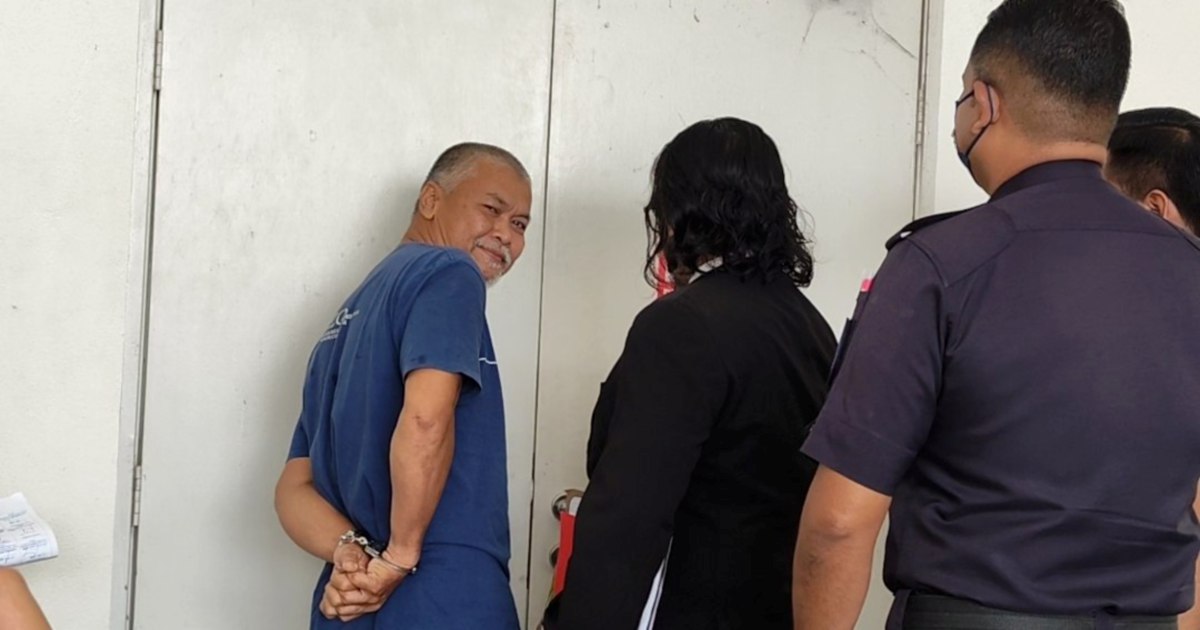
A retired military serviceman made his appearance before the courts in Kangar today, facing a series of serious charges stemming from the discovery of an extensive weapons collection held without proper governmental clearance. The accused confronted five separate charges across both the Sessions Court and the Magistrate's Court, all relating to the unauthorised possession of actual firearms alongside imitation weapons and a substantial quantity of live ammunition that authorities seized during an operation conducted in the early part of this month.
The discovery of such a considerable cache of weapons and ammunition in the hands of a former soldier has raised fresh concerns about firearm security protocols and the oversight mechanisms governing military personnel after retirement. Malaysia maintains stringent regulations surrounding firearms ownership, with civilian and former military acquisition of weapons restricted to authorised purposes and requiring comprehensive licensing. The accumulation of hundreds of rounds of ammunition alongside multiple weapons suggests a level of unauthorised stockpiling that goes beyond casual possession, warranting the attention of law enforcement agencies and triggering formal legal proceedings.
The circumstances surrounding how the former serviceman obtained these items remain under investigation, though the involvement of both imitation and genuine weapons indicates a more complex situation than simple oversight. Imitation weapons, whilst appearing functionally similar to actual firearms, carry their own regulatory framework in Malaysia. Their combination with genuine weapons and substantial ammunition quantities presents a multifaceted enforcement challenge for authorities seeking to maintain public safety standards and prevent potential misuse.
The timing of the discovery and subsequent charging process highlights the proactive approach taken by law enforcement in addressing weapons violations. By bringing charges across multiple courts, authorities demonstrate the seriousness with which they regard such breaches, as each count may carry distinct penalties and sentencing implications. The dual court jurisdiction—involving both the Sessions Court and Magistrate's Court—suggests that certain charges fall within different severity classifications under Malaysian law.
For retired military personnel, the restrictions on firearm possession represent a significant legal boundary that distinguishes between their service status and civilian life. Veterans in Malaysia do not automatically retain weapons privileges upon discharge, contrary to assumptions that former soldiers might enjoy special exemptions. This framework applies universally, meaning that even those with extensive firearms training during active service must comply with the same regulatory requirements as any civilian seeking to legally possess weapons.
The broader implications extend beyond this individual case to reflect ongoing conversations about enforcement effectiveness in Malaysia's firearms control regime. The discovery of such a substantial cache raises questions about how warehoused weapons might escape detection and whether existing monitoring systems for former military personnel prove sufficiently robust. Neighbouring Southeast Asian nations grapple with similar challenges, making Malaysia's approach relevant across the region as jurisdictions continually refine their strategies for preventing unauthorised weapon accumulation.
The location of the discovery in Kangar, the state capital of Perlis in northern Malaysia, underscores that such incidents are not confined to urban centres or particular regions. The northern border states face unique security considerations given their proximity to the Thailand frontier, making the emergence of unauthorised weapons caches a matter of particular concern for regional stability and cross-border law enforcement cooperation.
Public safety advocates in Malaysia have consistently emphasised that rigorous enforcement of existing firearms legislation remains crucial for maintaining order and preventing incidents of armed violence. Each successful prosecution reinforces the legal framework's credibility and serves as a deterrent to would-be violators. The charging process for this former soldier therefore extends beyond individual accountability to support the systematic maintenance of Malaysia's weapons control infrastructure.
The involvement of ammunition in quantities described as "hundreds of rounds" adds another dimension to the severity assessment. Ammunition stockpiling, unlike single weapons possession, suggests potential planning for extended engagement or supply to other parties. This element typically elevates enforcement priorities and may influence sentencing considerations should the accused receive conviction.
As the cases proceed through Malaysia's court system, legal outcomes will provide clarity on how the judiciary interprets and applies weapons possession statutes to former military personnel. These decisions establish precedent and reinforce standards for future cases, contributing to a consistent legal landscape across the nation. The former soldier's defence arguments and the prosecution's evidence presentation will likewise illuminate practical questions about enforcement methodology and the evidentiary standards applied in such cases.
The investigation and prosecution demonstrate that Malaysia's law enforcement apparatus maintains active surveillance for weapons violations across all demographic categories, including former service members who might otherwise escape scrutiny. This vigilant approach contributes to Malaysia's relatively low rates of armed criminal activity compared to regional neighbours, though security specialists acknowledge that perpetual refinement of oversight mechanisms remains necessary as circumstances and techniques continually evolve.

