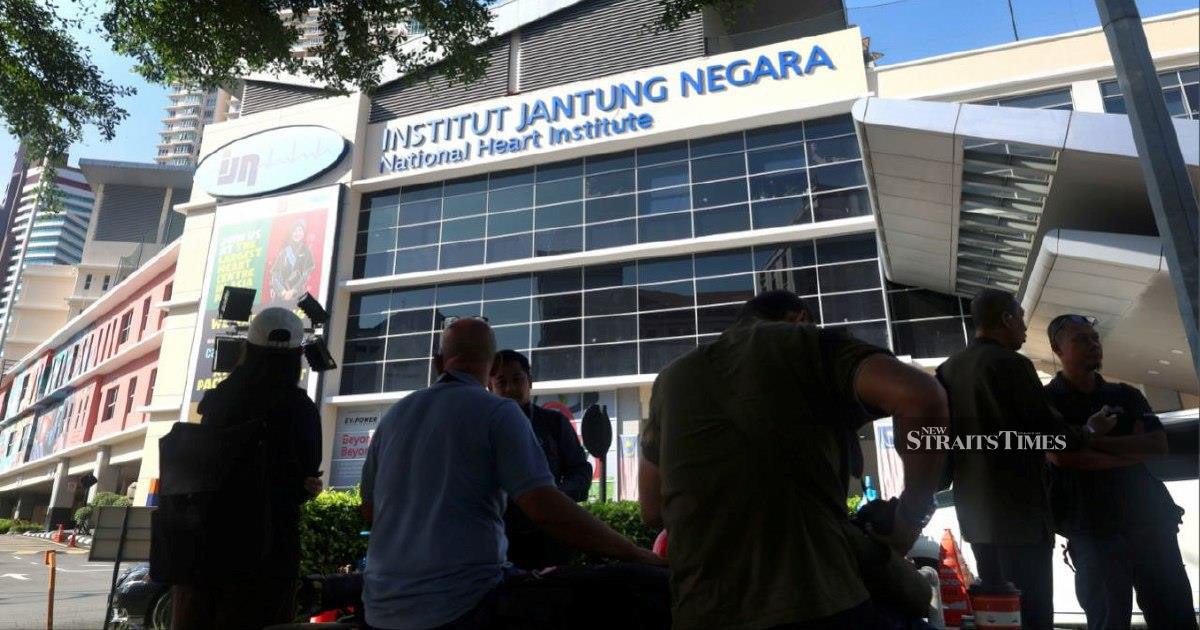
Former prime minister Datuk Seri Ismail Sabri Yaakob is scheduled to undergo pacemaker implantation at the National Heart Institute (IJN) today after medical specialists detected an irregular heartbeat, according to a statement from his legal team. The procedure represents a significant health intervention for the political figure who previously served as Malaysia's chief executive.
Cardiac arrhythmias, or irregular heartbeats, occur when electrical signals governing heart rhythm malfunction, causing the organ to beat too rapidly, too slowly, or erratically. Such conditions can lead to reduced blood flow and potentially serious complications if left untreated. A pacemaker—a small electronic device implanted beneath the skin near the collarbone—regulates heart rhythm by emitting electrical pulses, ensuring steady, consistent beating.
The National Heart Institute, located in Kuala Lumpur, stands as Malaysia's premier cardiovascular medicine facility and a regional centre of excellence for complex cardiac procedures. The institution routinely performs pacemaker implantations for patients ranging from elderly individuals with age-related cardiac conditions to younger people experiencing congenital or acquired arrhythmias. IJN's involvement signals that Ismail Sabri has accessed treatment through Malaysia's most advanced cardiac care infrastructure.
Pacemaker procedures typically require only local anaesthesia and minimal surgical intervention, with implantation usually taking between 30 to 60 minutes. Recovery is generally swift, permitting most patients to return home within a day or two, though activity restrictions apply during the initial healing period. Modern pacemakers are sophisticated devices incorporating battery life spanning 7 to 10 years, with programmable settings allowing cardiologists to adjust parameters as patient needs evolve.
For public figures navigating health challenges, medical procedures often intersect with political considerations and public scrutiny. The timing and transparency surrounding such treatments reflect broader dynamics within Malaysia's political landscape. Ismail Sabri's tenure as prime minister concluded in August 2022 following the general election, after which he transitioned into opposition parliamentary politics. His current position within Malaysia's complex political ecosystem means his health status carries implications for factional alignments within the United Malays National Organisation and the broader political balance.
The disclosure of cardiac health issues among senior political figures is not uncommon globally, yet it frequently generates public interest and speculation regarding governmental stability and leadership continuity. In Malaysia's context, where succession planning and leadership health have occasionally influenced political trajectories, such announcements warrant careful consideration by political analysts and party strategists. However, modern pacemaker technology and improved cardiac management typically allow individuals to maintain active public and professional roles.
Myalsia's healthcare system encompasses both private and public facilities, with the National Heart Institute representing the public sector's flagship institution for advanced cardiovascular care. The decision to utilise IJN for Ismail Sabri's procedure underscores the institute's reputation and capabilities. The facility has historically attracted patients from across Southeast Asia, reflecting its standing as a regional medical centre offering treatment quality comparable to international standards.
Irregular heartbeat diagnosis typically follows electrocardiogram testing, holter monitoring, or echocardiography, diagnostic tools that detect deviations from normal cardiac electrical and mechanical function. The progression from diagnosis to pacemaker implantation indicates that Ismail Sabri's condition warranted intervention beyond medication management alone. Various factors—including age, overall health status, underlying causes of arrhythmia, and risk stratification—influence the decision to pursue device implantation.
For individuals requiring pacemakers, lifestyle adjustments are generally modest, permitting continued engagement in professional responsibilities, travel, and social activities. Security protocols surrounding electronic devices do necessitate precautions during airport screening and around certain industrial equipment, though such constraints rarely prove debilitating. Long-term outcomes for pacemaker recipients are generally favourable, with regular follow-up appointments ensuring optimal device function and management of any evolving cardiac conditions.
The procedural decision reflects contemporary medical best practice for managing cardiac arrhythmias unresponsive to conservative treatment. As populations age and cardiac conditions become increasingly prevalent, pacemaker implantation represents a routine intervention within modern healthcare. Ismail Sabri's willingness to proceed with treatment publicly demonstrates broader societal normalisation of cardiovascular health management and the acceptance of technological solutions for chronic medical conditions.
The timing of this announcement during Malaysia's dynamic political period adds an additional layer to the narrative, particularly given the former premier's continued parliamentary presence and potential influence within opposition structures. Political observers will monitor both the immediate surgical outcomes and Ismail Sabri's subsequent recovery trajectory, as such health developments can subtly reshape political calculations within Malaysia's legislature. Nevertheless, the prognosis for patients undergoing uncomplicated pacemaker implantation remains decidedly positive, suggesting that Ismail Sabri should resume his public and political activities within a reasonable timeframe.

