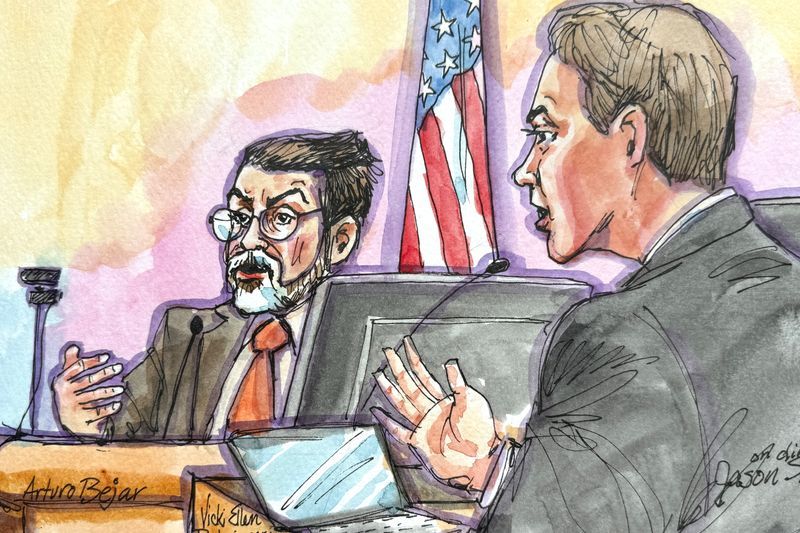
Arturo Bejar, a former Facebook engineering director who has become Meta's most prominent internal critic, returned to the witness stand on Wednesday in a trial that could fundamentally reshape how two of the world's largest social media platforms operate. The case, unfolding in an Oakland federal courthouse, represents perhaps the most significant legal challenge to Meta's business practices regarding young users, with implications that extend far beyond California or even the United States.
Bejar's role in the proceedings is particularly significant because he is the first witness called by the coalition of states bringing the case, signalling the importance of his testimony to their overall strategy. He spent six years at Meta as an engineering director from 2009 to 2015, then returned as an independent contractor between 2019 and 2021, giving him substantial insight into how the company operated across two distinct periods. This dual tenure, combined with his willingness to criticise the company publicly and in court, makes him an unusually credible witness in what is already being viewed by legal experts as a watershed moment in regulating social media's impact on children and teenagers.
The trial itself brings together four states—California, Colorado, Kentucky and New Jersey—in their assertion that Meta deliberately engineered its platforms to capture and hold young users' attention, fuelling widespread mental health crises including anxiety, depression, and in some cases, suicide. Beyond these allegations of addictive design, the states contend that Meta misrepresented the safety features of its platforms to the public, creating a false impression of robust protections for minors. An additional 29 states have joined the action with separate claims that Meta violated federal law by collecting and exploiting personal data from children under the age of 13, a demographic whose information carries particular legal protections.
During his testimony, Bejar detailed how his work at Meta involved surveying teenage experiences on Instagram between 2019 and 2021, placing him in direct contact with real data about how young people experienced the platform. Critically, he revealed that Meta's internal monitoring systems were fundamentally flawed in their methodology. Rather than measuring the actual harm young users experienced, these systems focused narrowly on counting violations of Meta's stated policies—a distinction that proved consequential. An email he shared with the court, addressed to Meta's chief product officer Chris Cox, highlighted a significant disparity between what Meta's surveillance tools reported and the lived reality of harm that users themselves reported experiencing.
Bejar's characterisation of the findings was stark: young people were experiencing harm at extraordinarily high rates, he testified. He then posed a rhetorical question to the jury, asking whether a parent would have wanted to know this reality before allowing their child to use the platform. This framing shifted the discussion from abstract policy debates to the concrete question of informed consent, a powerful rhetorical move in a trial designed to appeal to jurors' understanding of parental responsibility and child protection.
Meta's response to these allegations has been categorical denial combined with assertions that the company takes teen safety seriously. The company has argued that Bejar's opinions exceed what he actually worked on during his tenure, an attempt to limit the scope and credibility of his testimony. This defence strategy highlights a core tension in the case: whether former employees with specific engineering responsibilities can meaningfully comment on broader company practices and strategic decisions they did not directly oversee. Judge Yvonne Gonzalez Rogers, presiding over the trial, rejected Meta's attempt to prevent Bejar from testifying, dismissing the company's arguments as unlikely to succeed.
The case carries particular weight given Meta's track record in litigation over similar matters. The company is currently defending against thousands of lawsuits alleging harm to children, and Bejar has already testified against Meta in three cases that proceeded to trial. One of those cases, brought by New Mexico, resulted in damages and penalties totalling $942 million, along with a binding order requiring Meta to implement specific changes to how its platforms operate within that state. This precedent suggests that the stakes in the Oakland trial are genuinely high, with potential national ramifications.
Bejar's prominence as a witness extends beyond courtroom appearances. In 2023, he testified before a U.S. Senate committee, making public allegations that Meta knew of harassment and other harms affecting teenagers on its platforms but chose not to address them adequately. This congressional testimony established him as a credible critic in the public sphere, not merely a disgruntled former employee with an axe to grind. His willingness to speak against his former employer across multiple forums has elevated his profile and lent weight to his allegations.
The trial itself is scheduled to run for six weeks, suggesting the complexity and volume of evidence both sides intend to present. The Oakland proceedings represent the latest chapter in an increasingly contentious relationship between social media giants and government regulators and advocates concerned about youth welfare. For Malaysia and the broader Southeast Asian region, the trial's outcomes could influence how platforms operate domestically, potentially affecting how Meta manages content moderation, data collection, and algorithmic recommendations for young users in Malaysian markets.
Meta's unsuccessful attempt to block Bejar's testimony by challenging his evidence preservation practices—specifically citing Signal messages he had deleted—illustrates how contentious the proceedings have become. Judge Gonzalez Rogers characterised this manoeuvre as a long-shot attempt to eliminate a key witness, indicating her scepticism of Meta's tactics. The company's aggressive posture suggests recognition of how damaging Bejar's testimony could prove to its defence.
As the trial unfolds over its planned six-week duration, Bejar's continued testimony will likely establish the evidentiary foundation for the states' central claims about Meta's knowledge of harms and its decision to prioritise engagement metrics over user welfare. His insider perspective, combined with documentary evidence and personal email communications, positions him to translate complex technical and product decisions into language that resonates with jurors concerned about child protection. The outcome could reshape how social media platforms balance profitability with responsibility toward young users globally.

