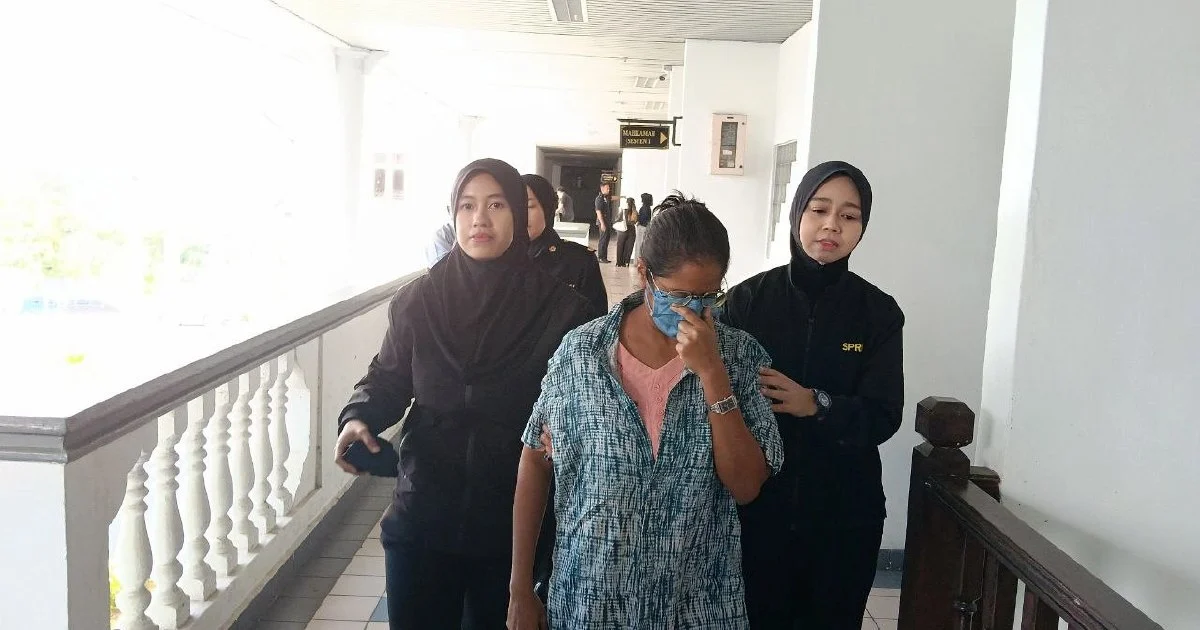
A former senior civil servant from Melaka faced prosecution today after being accused of orchestrating financial crimes that involved siphoning off substantial public funds and deceiving high-ranking state government officials. The suspect made an appearance at the Ayer Keroh Sessions Court to answer to seven distinct charges centred on the alleged misappropriation of state resources and fraudulent conduct against members of the state executive council, with the total value of the alleged misconduct exceeding RM60,000.
The prosecution's case represents a significant breach of public trust within Melaka's civil service, highlighting vulnerabilities in financial oversight mechanisms at the state administrative level. Cases involving senior government staff are particularly concerning as these individuals occupy positions of authority and are expected to uphold the highest standards of integrity and accountability. The involvement of executive council members as victims underscores the scale and audacity of the alleged scheme, suggesting systematic deception rather than isolated administrative errors.
Financial crimes within the civil service have become an ongoing challenge for Malaysian authorities across multiple states and federal departments. Such cases typically emerge through internal audits, whistleblower reports, or routine investigations following discrepancies in financial records. The fact that charges have proceeded to court indicates that preliminary investigations have gathered sufficient evidence to satisfy prosecutorial standards, though the defendant maintains the right to present their defence during subsequent court proceedings.
The misappropriation of public funds represents a direct loss to state coffers and undermines the government's capacity to deliver services to the public. Melaka, like other Malaysian states, relies on careful management of its revenue allocation to fund essential programmes including education, healthcare, and infrastructure development. When financial resources are diverted through fraudulent means, these critical services face potential constraints that ultimately affect ordinary citizens who depend on state-funded initiatives.
The involvement of executive council members in this case raises questions about the adequacy of financial controls and oversight procedures within the state administration. Executive councils typically supervise departmental operations and approve significant financial expenditures, yet the allegations suggest that fraudulent activities escaped detection until formal investigations commenced. This gap between supervisory responsibility and practical detection capabilities reflects broader systemic challenges in institutional governance that extend beyond Melaka to encompass best practice standards across Southeast Asia's public sector.
Malaysia's legal framework provides substantial penalties for public sector fraud, including imprisonment and substantial fines. The seven-count structure of the charges indicates that prosecutors may be treating different instances of misappropriation as separate offences rather than consolidating them, a strategy that can carry heavier penalties upon conviction. The threshold of RM60,000 places this firmly in the category of serious financial crime rather than minor administrative irregularities.
The prosecution's decision to proceed through Sessions Court rather than seeking trial in a lower court signals the gravity assigned to these allegations. The Ayer Keroh court handles serious criminal matters within Melaka, and the choice of jurisdiction suggests the prosecution anticipates presenting complex financial documentation and multiple witness testimonies to establish its case beyond reasonable doubt.
Civil service accountability has emerged as a priority concern across Malaysian states and federal agencies following several high-profile cases in recent years. Authorities have intensified internal audit procedures and implemented more rigorous vetting mechanisms for procurement processes and fund disbursement. These developments reflect recognition that robust internal controls, combined with transparent reporting systems, serve as the most effective deterrent against financial misconduct among government employees.
The former officer's career trajectory from senior civil servant to defendant illustrates how positions of trust can become platforms for misconduct when ethical guardrails prove insufficient. Many public sector fraud cases involve individuals with lengthy service records and previously unblemished track records, suggesting that personal circumstances, financial pressures, or evolving ethical standards may contribute to eventual wrongdoing. The case therefore serves as a cautionary reminder that seniority and experience do not automatically confer immunity from criminal behaviour.
Outcomes in similar cases throughout Malaysia have ranged from suspended sentences for first-time offenders with mitigating circumstances to lengthy imprisonment for those convicted of large-scale systematic fraud. The sentencing phase, should conviction occur, will likely consider the defendant's age, prior service record, whether restitution is possible, and the degree of premeditation demonstrated by the evidence presented during trial.
The proceedings at Ayer Keroh Sessions Court will unfold over coming months as the prosecution presents its evidence and the defence mounts its counter-arguments. The case will likely receive continued scrutiny from Melaka's administration and may prompt additional reviews of financial control procedures within the state civil service. Beyond its immediate legal dimensions, the case reinforces the importance of maintaining vigilant oversight mechanisms within public institutions to protect state resources and uphold public confidence in government integrity.