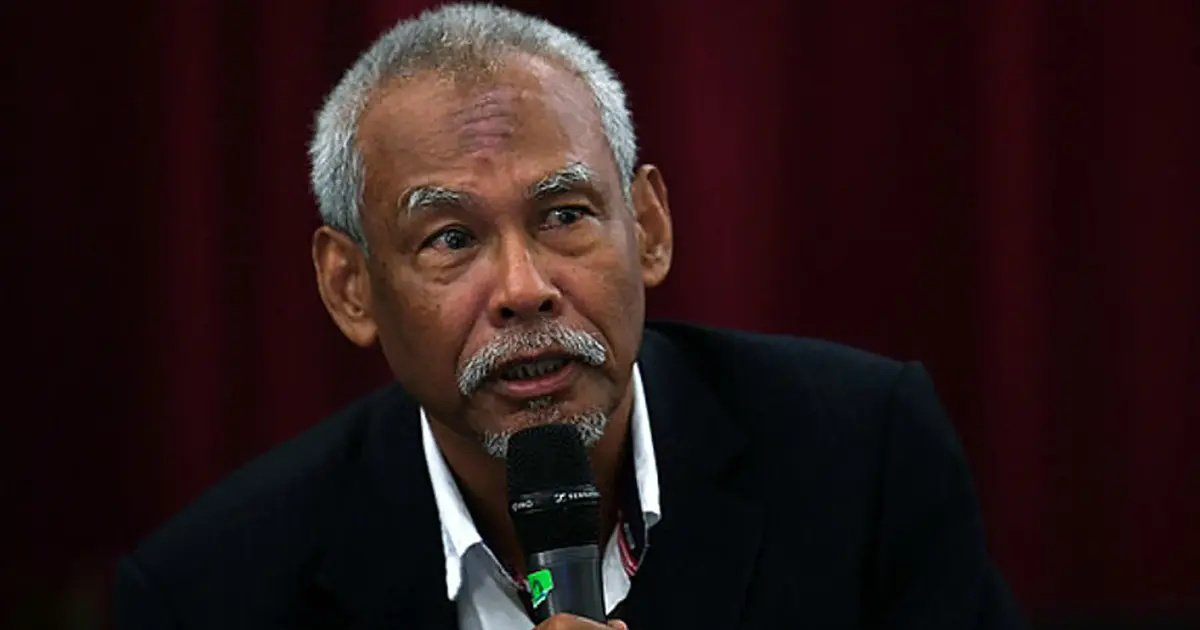
The Federal Court has closed the door on former Inspector-General of Police Musa Hassan's attempt to overturn a significant defamation ruling, declining to revisit the fundamental questions he raised about the legal protections afforded to public officers and the boundaries of free expression in Malaysia. The apex court's decision marks the end of a prolonged legal battle and leaves unchanged a precedent that carries implications for how public figures can pursue legal remedies against critics and commentators.
Musa Hassan had sought to appeal the case through a mechanism that allows parties to request judicial review when questions of public importance are at stake. He presented nine separate legal questions for consideration, framing them around the principle that public servants should be entitled to defend their reputations through defamation suits, and arguing that certain constraints on such rights may conflict with constitutional protections. However, the court determined that these questions, taken collectively or individually, did not satisfy the threshold for reopening an already-decided matter. This determination suggests the judges found the legal principles already well-established in Malaysian jurisprudence.
The defamation case itself centered on allegations made in comments attributed to Hannah, whose statements the former police chief viewed as damaging to his personal and professional reputation. Like many defamation disputes involving public figures in Malaysia, the case touched on the delicate equilibrium between protecting individual honour and preserving space for public discourse and accountability. The lower court's original finding that Hannah's statements constituted actionable defamation represented a position favourable to Musa Hassan at that stage, but his subsequent appeals and attempts to broaden the case into a constitutional matter have repeatedly encountered judicial resistance.
For Malaysian legal observers, the apex court's rejection of his application reinforces existing precedent on defamation and public figures. The court's stance suggests that while public officers retain the right to sue for defamation like any citizen, the law will not readily entertain broad constitutional challenges to that principle based merely on abstract arguments about freedom of speech. This approach reflects a judicial philosophy that balances reputation protection against the public interest in commenting on matters of governance and public administration.
The implications extend beyond Musa Hassan himself. His case has functioned as a test of how far a high-ranking public official can push legal boundaries when seeking redress for alleged reputational harm. The court's unwillingness to engage with his nine questions suggests judicial reluctance to establish new protections or immunities for public servants in defamation matters, even when those servants held positions of considerable influence and authority. This approach aligns with legal principles recognised across Commonwealth jurisdictions, though the specific application in Malaysia reflects local constitutional considerations.
Musa Hassan's legal journey in this matter exemplifies the challenges facing litigants who attempt to convert specific disputes into broader constitutional examinations. While individuals certainly possess the right to invoke higher courts on matters touching constitutional principles, those courts maintain considerable discretion in determining whether the circumstances genuinely warrant such elevated scrutiny. The Federal Court's decision indicates that it found his arguments fell short of that demanding standard, essentially treating his case as a routine defamation matter rather than a vehicle for reshaping the law.
The ruling also carries procedural significance for Malaysian civil litigation. It demonstrates that even prominent figures with access to sophisticated legal representation cannot easily leverage defamation cases into wider constitutional conversations. Courts prefer to decide cases on narrower grounds when possible, reserving broader constitutional pronouncements for situations where they prove truly unavoidable. By rejecting Musa Hassan's appeal bid, the apex court signalled its preference for maintaining the existing framework rather than expanding it in directions he advocated.
For the legal profession and civil society, the decision provides clarity on the limits of defamation litigation as a tool for addressing reputational concerns among the powerful. It suggests that Malaysian courts will not readily use such cases to erect new barriers against critical speech, even when that criticism targets individuals who commanded significant public authority during their careers. This approach reflects a judicial understanding that permitting expansive defamation protections for public figures could potentially chill legitimate commentary on governance and administration.
The Hannah defamation case ultimately illustrates the tension inherent in any legal system attempting to accommodate both individual reputation rights and broader free expression principles. By declining to revisit the matter, Malaysia's apex court has implicitly endorsed the earlier judicial conclusion that in this particular instance, the balance tilted toward recognising the statements as actionable defamation. Yet the court's refusal to engage with Musa Hassan's larger constitutional arguments suggests limits to how far such reasoning should extend when the plaintiff is a former senior public official.
The finality now imposed by the apex court's rejection effectively closes significant avenues for further appeal or legal manoeuvering by Musa Hassan in this dispute. This closure may eventually allow both parties to move forward, though the case will likely continue resonating within Malaysian legal circles as an important reference point for understanding how courts approach defamation claims involving prominent public figures. The decision reinforces the principle that constitutional objections to defamation law itself require far more compelling circumstances than a single disputed case to warrant judicial reconsideration, regardless of the prominence or persistence of the litigant involved.

