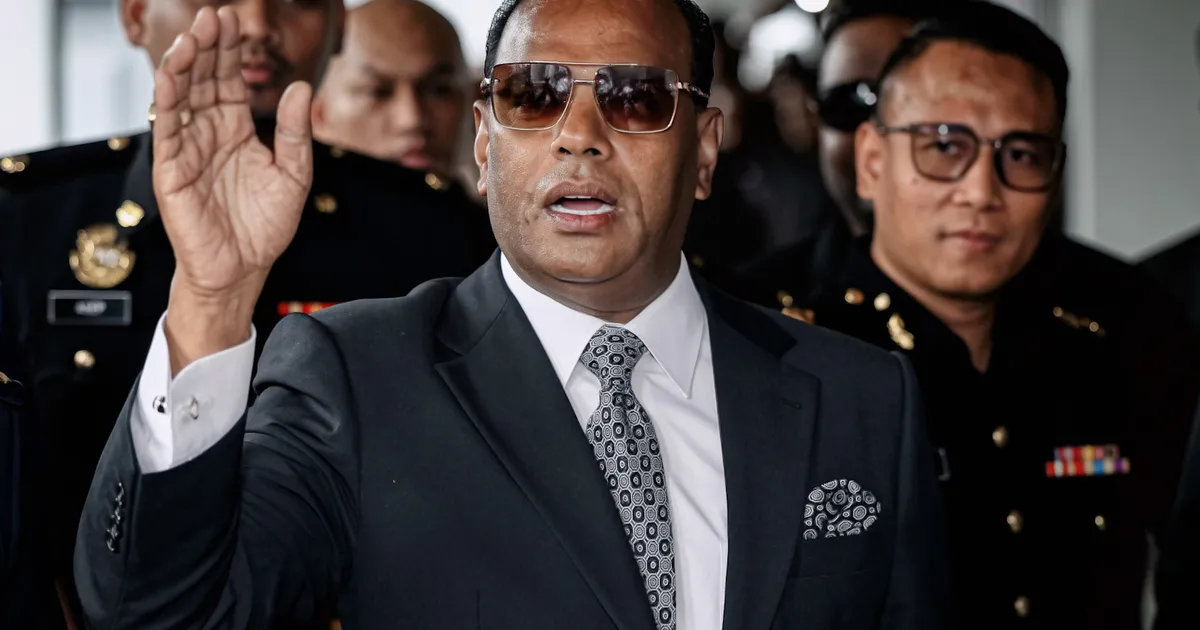
Former Human Resources Minister Saravanan has pushed back against insinuations that his letter to Prime Minister Anwar Ibrahim constituted an attempt to suppress his ongoing corruption investigation, clarifying instead that he was seeking a full and fair reassessment of charges he views as fundamentally flawed and unsupported by evidence.
The distinction marks an important moment in Saravanan's defence strategy as he confronts serious graft allegations. His statement underscores a significant tension between his portrayal as someone requesting procedural fairness and the interpretation by others that such a letter might represent an improper appeal for preferential treatment. In Malaysian politics, where perceptions of accountability carry considerable weight, such clarifications often shape public understanding of whether figures are being genuinely wronged or merely evading responsibility through administrative channels.
Saravanan's characterization of his communication to the Prime Minister emphasises substance over form: he contends the letter was not a cry for leniency or concealment but rather a call for diligent examination of what he regards as baseless accusations. This framing suggests confidence in the strength of his position, implying that if the case were subjected to rigorous scrutiny, the allegations would crumble. The ex-minister appears to be arguing that transparency and thorough review would vindicate him, not expose him further.
The credibility question looms centrally in his defence. By asserting that the charges against him lack foundation, Saravanan is essentially challenging the prosecutorial case at its roots. Malaysian readers familiar with corporate and political corruption cases will recognize this as a standard defensive posture—questioning the evidentiary basis rather than merely seeking procedural delays or political intervention. However, the appearance of appealing directly to the Prime Minister, however framed, inevitably invites scrutiny about whether such appeals are appropriate in systems meant to preserve separation between political leadership and judicial processes.
This episode reflects broader conversations within Malaysian governance about how political figures should conduct themselves when facing investigation. The country has witnessed high-profile cases in recent years that have tested public tolerance for figures who appear to leverage political connections during legal proceedings. Saravanan's need to clarify his intentions suggests awareness of how such actions are perceived within a society increasingly conscious of accountability standards.
The timing of this clarification also matters. As Malaysia continues navigating post-2018 reforms intended to strengthen institutional independence and reduce political interference in justice systems, any appearance of politicians using back channels to influence investigations encounters heightened public skepticism. Saravanan's statement can therefore be read partly as defensive positioning within this evolving political climate, where the optics of propriety carry nearly as much weight as the substance of legal arguments.
For regional observers, the case illustrates persistent challenges in establishing clear boundaries between legitimate political advocacy and improper interference. Southeast Asian democracies frequently grapple with distinguishing between a politician's right to petition their government for fair treatment and the system's imperative to maintain investigative independence. Saravanan's situation exemplifies this ongoing tension, particularly relevant for countries like Malaysia that have committed to anti-corruption reforms.
The ex-minister's insistence on the non-credibility of charges invites consideration of what evidence forms the basis of accusations against him. Without seeing the prosecution's case in detail, the public must assess his claims against whatever information has entered the public domain. This informational asymmetry is typical in Malaysian cases before trial, leaving space for competing narratives about whether investigations represent genuine concerns or politically motivated actions.
Saravanan's position also touches on questions about access and privilege within political systems. An ordinary Malaysian citizen facing criminal charges cannot simply write to the Prime Minister seeking case review; this option is largely available only to those with political standing. This reality raises legitimate questions about equal treatment before law, whether or not Saravanan's particular letter crossed improper lines. Such structural inequities remain persistent concerns in Malaysian governance discussions.
The unfolding narrative around Saravanan's case will likely continue shaping perceptions of how political accountability functions in contemporary Malaysia. If his claims about charge non-credibility ultimately withstand scrutiny, his intervention might eventually be viewed as reasonable. Conversely, if the case against him proves substantive, his letter to Anwar Ibrahim may be retrospectively interpreted less charitably. For now, his clarification represents an attempt to control the narrative and establish that seeking thorough review of allegations, however unusual the channel, differs fundamentally from requesting concealment or political interference.
As this case develops, Malaysian observers should watch whether any substantive review of the charges actually occurs, and whether Saravanan's framing of his letter as a request for fairness proves consistent with subsequent events. The resolution will carry implications not just for the former minister's legal standing but also for broader understanding of proper conduct by political figures navigating investigations within Malaysia's still-evolving institutional landscape.

