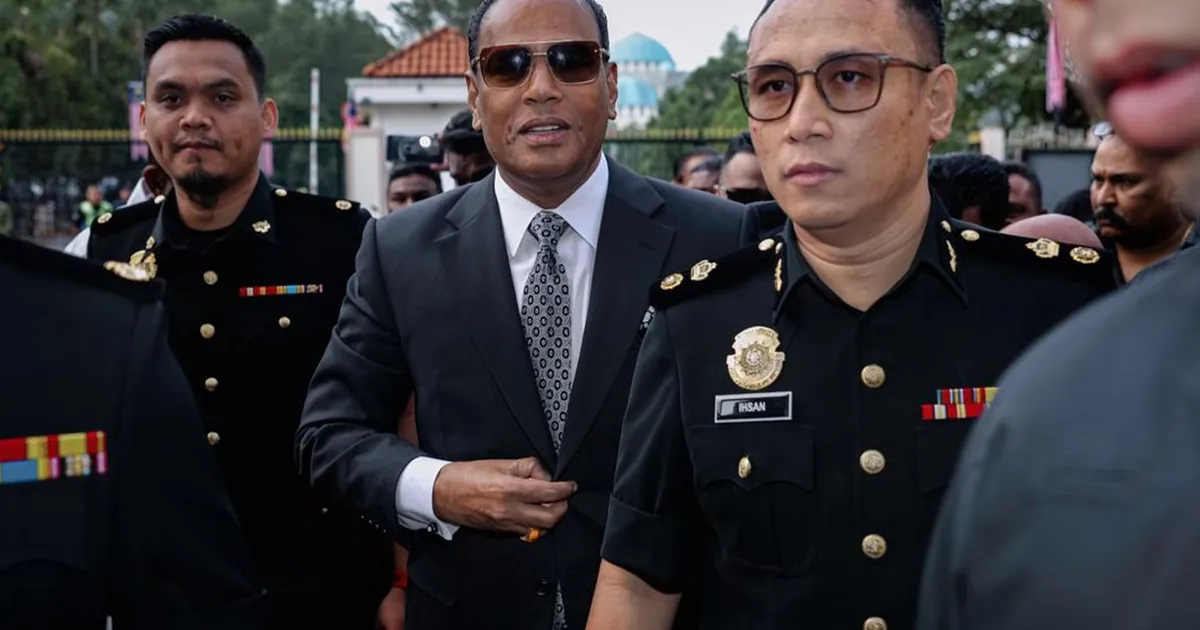
Saravanan, the former human resources minister, made his appearance at the Kuala Lumpur courts complex on Wednesday morning, arriving at approximately 8.25am with a notably polished presentation that drew the attention of observers at the courthouse.
The early morning arrival underscores the formal nature of proceedings involving high-ranking political figures in Malaysia's judicial system. Court appearances by former ministers typically attract scrutiny, particularly when they involve individuals who held significant cabinet positions affecting the employment landscape and workers' rights portfolio across the country.
The timing of the morning arrival reflects standard court protocols and scheduling practices observed in Malaysian legal proceedings. High-profile cases often commence early to accommodate media presence, legal teams, and the administrative requirements of the courts. The 8.25am arrival suggests Saravanan and his legal representatives were preparing for substantive hearing or procedural matters slated for the morning session.
As a former human resources minister, Saravanan held responsibility for national labour policies, employment standards, and workers' welfare matters that directly affect Malaysia's workforce. His previous ministerial position places this court appearance within the broader context of governance and accountability mechanisms that apply to public officials who have managed substantial government portfolios.
The composed nature of his arrival carries significance in the context of legal proceedings. Political figures facing court appearances often maintain dignified presentations as a deliberate approach to their public conduct during litigation or investigation-related matters. This demeanor reflects both personal composure and strategic awareness of how media coverage shapes public perception during legal processes.
Malaysia's courts system handles cases involving former officials with the same procedural rigor applied to all citizens, though such cases inevitably draw heightened public attention. The Kuala Lumpur courts complex, located in the capital's judicial precinct, serves as the venue for numerous significant matters affecting national governance and accountability standards.
For Malaysian observers and analysts monitoring governance issues, court appearances by former ministers represent pivotal moments where institutional mechanisms of justice function to address concerns or allegations that warrant judicial examination. These proceedings contribute to the broader framework of political accountability and the rule of law that underpins Malaysia's democratic system.
The presence of former government officials at court hearings also reflects the ongoing scrutiny of Malaysia's political leadership and administrative practices. Citizens and civil society organisations maintain interest in how officials conduct their legal defences and what outcomes emerge from judicial processes, as these elements shape public confidence in institutional integrity.
Saravanan's arrival at the courts, documented by media observers present at the complex, forms part of the public record of significant legal proceedings affecting Malaysia's political landscape. Such moments often generate discussion among legal analysts, political commentators, and concerned citizens regarding accountability mechanisms and how the judicial system processes cases involving individuals who previously held positions of public trust.
The courts complex in Kuala Lumpur serves as the arena where Malaysia's judicial system addresses substantive legal matters, and proceedings involving former ministers demonstrate that institutional oversight continues regardless of an individual's previous political status. This consistent application of legal processes reinforces the principle that accountability applies uniformly across society.
Observers tracking political developments in Malaysia note that court appearances by figures of Saravanan's profile tend to influence broader conversations about governance standards and the consequences of official conduct. Media documentation of such proceedings contributes to transparent public discourse regarding how the judicial system manages politically significant cases.

