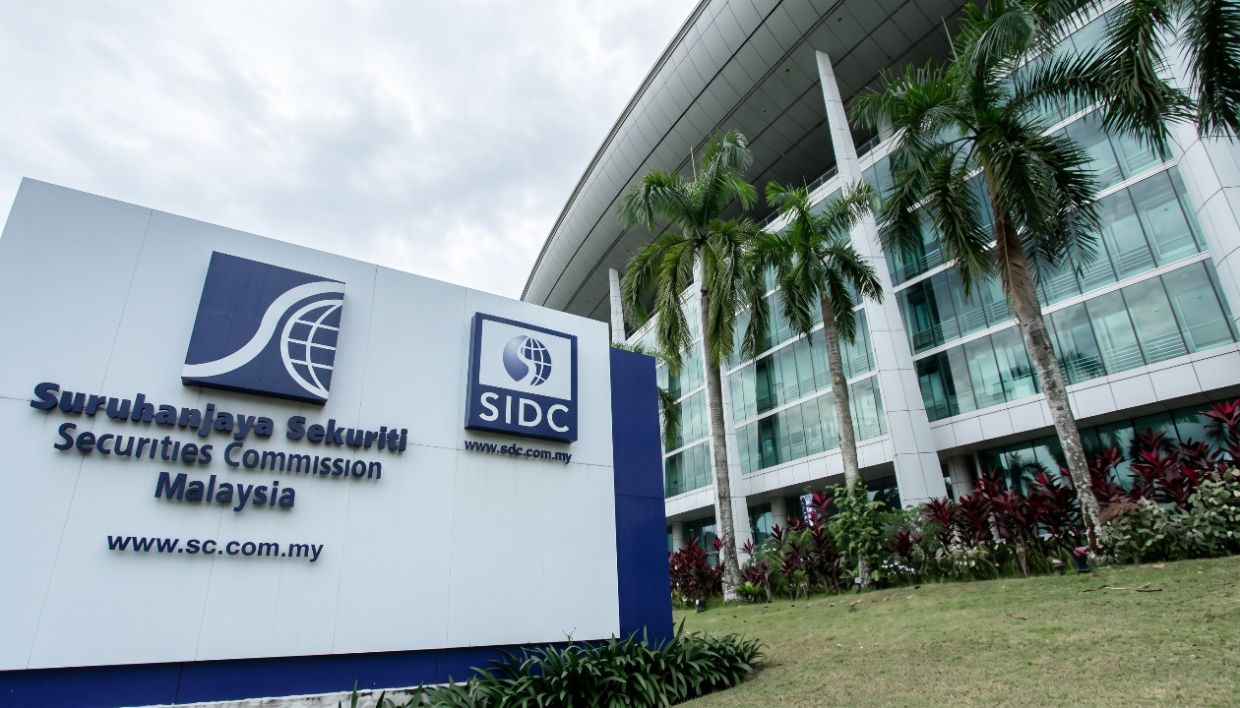
Muhamad Fadzli Jamaludin, former director of Kyaputen Sdn Bhd, has been sentenced to five years imprisonment by the Kuala Lumpur Sessions Court after conviction on charges of unlicensed fund management activities and money laundering. Sessions Court judge Puan Hamidah Mohamed Deril delivered the judgment, finding that the prosecution had established its case beyond reasonable doubt and that Fadzli's defence had failed to introduce reasonable doubt into the proceedings.
The case against Fadzli originated from charges filed on November 9, 2023, when prosecutors brought three charges under section 58(1) of the Capital Markets and Services Act 2007 alleging that he held himself out as conducting a fund management business without proper licensing from the Securities Commission Malaysia. The charges specifically relate to his representation that he was operating a legitimate fund management enterprise when he lacked the mandatory regulatory approval required for such activities. Three weeks later, on November 29, 2023, nine additional charges were filed under section 4(1)(b) of the Anti-Money Laundering, Terrorism Financing and Proceeds of Unlawful Activities 2001, addressing the financial crimes dimension of his scheme.
The prosecution constructed its case through testimony from 23 witnesses during the joint trial, six of whom were victims of Fadzli's activities. These six investors collectively suffered financial losses totalling RM1.263 million through their involvement with his company. The fraudulent operations spanned a significant period between August 2018 and April 2020, with activities documented in both Kuala Lumpur and Melaka. The scale and duration of the scheme underscores how unregulated investment operations can persist and inflict substantial harm on investors who believe they are engaging with legitimate financial professionals.
During his defence, Fadzli chose to testify under oath regarding the accusations against him, yet he did not call any supporting witnesses to corroborate his version of events or bolster his credibility. This decision to stand alone in his defence without corroborating testimony appears to have significantly weakened his position in court. The judge's assessment that he failed to create reasonable doubt in the prosecution's case suggests that his testimony was either unconvincing or substantially contradicted by the evidence and witness accounts presented by prosecutors throughout the trial.
The sentencing handed down by Judge Puan Hamidah Mohamed Deril imposed five years imprisonment on each of the 12 charges, with all sentences to run concurrently. This means Fadzli will serve the five-year term rather than facing cumulative sentences that could have extended far longer. Under section 58(1) of the Capital Markets and Services Act 2007, the maximum penalty for operating an unlicensed fund management business reaches 10 years imprisonment alongside fines up to RM10 million. For the money laundering convictions, the law allows for sentences of up to 15 years and fines set at the higher of either five times the value of proceeds or RM5 million.
The concurrent sentencing approach, while falling short of the maximum available penalties, still represents a serious custodial sentence designed to punish the wrongdoing and deter similar conduct. The court's decision reflects a balance between accountability for defrauding vulnerable investors and proportionality within the legal framework. The five-year term ensures that Fadzli will spend a substantial portion in custody, though prosecutors and regulators may view the concurrent rather than consecutive approach as lenient given the gravity and duration of his activities.
For Malaysian investors and the broader financial services landscape, this case illustrates the critical importance of regulatory oversight in protecting the public from unscrupulous individuals posing as investment professionals. Fund management is specifically designated as a regulated activity in Malaysia, requiring practitioners to obtain proper licensing from the Securities Commission Malaysia before soliciting funds from investors. The existence of such regulatory requirements reflects recognition that investment activities carry inherent risks and that the public requires assurance that anyone managing their money operates under institutional oversight, maintains proper accounting standards, and is subject to regulatory discipline.
The Securities Commission Malaysia has used the conviction to underscore its advisory to potential investors: they should exclusively engage with individuals and entities licensed by the SC for regulated activities including fund management. This guidance serves as both protection and warning, signalling that investors who choose to work with unlicensed operators do so at their own peril and may find their recourse limited when fraud or mismanagement occurs. The SC's statement suggests ongoing vigilance in identifying and prosecuting such violations, demonstrating commitment to safeguarding capital markets integrity.
The Fadzli case carries particular significance for Southeast Asia, where rapid wealth creation and growing middle-class investment appetite have sometimes outpaced the development of investor protection mechanisms. Unregulated financial operators exploiting knowledge asymmetries between themselves and retail investors remain an persistent challenge across the region. Malaysia's willingness to prosecute such cases and impose meaningful sentences sends a message that financial fraud linked to unlicensed operations will face serious legal consequences, potentially influencing behaviour across jurisdictions where Malaysian investment products and practices operate.
Beyond the immediate sentencing, the conviction creates important precedent for how Malaysian courts assess cases combining regulatory violations with money laundering charges. The prosecution's success in proving money laundering allegations—distinct from the unlicensed fund management charges—indicates that investigators can effectively demonstrate the nexus between fraudulent fund collection and subsequent attempts to obscure the illicit source of those funds. This dual-charge approach strengthens enforcement mechanisms by allowing prosecutors to target both the initial wrongdoing and the subsequent concealment activities.
The case also raises questions about due diligence and investor behaviour. That six victims collectively lost RM1.263 million to Fadzli's scheme suggests inadequate scrutiny of his credentials or promises on their part, whether due to marketing sophistication, social trust, or desperation for investment returns. Regulatory authorities and industry bodies may view this as justifying enhanced public education campaigns emphasizing verification of licensing status before committing funds to any investment professional or firm. The SEC-Malaysia's emphasis on checking licence status reflects recognition that many investors remain unaware of basic regulatory protections available to them.
Looking forward, this judgment reinforces that Malaysian regulators and courts take unlicensed financial services operations seriously, particularly when investor harm is documented and quantifiable. The willingness of prosecutors to pursue lengthy trials involving multiple witnesses and charges, combined with judicial conviction and meaningful sentencing, suggests that enforcement against such violations will continue. For legitimate fund managers operating in Malaysia, the case provides assurance that regulators are actively removing competitors operating outside regulatory boundaries, supporting the integrity of the licensed industry.

