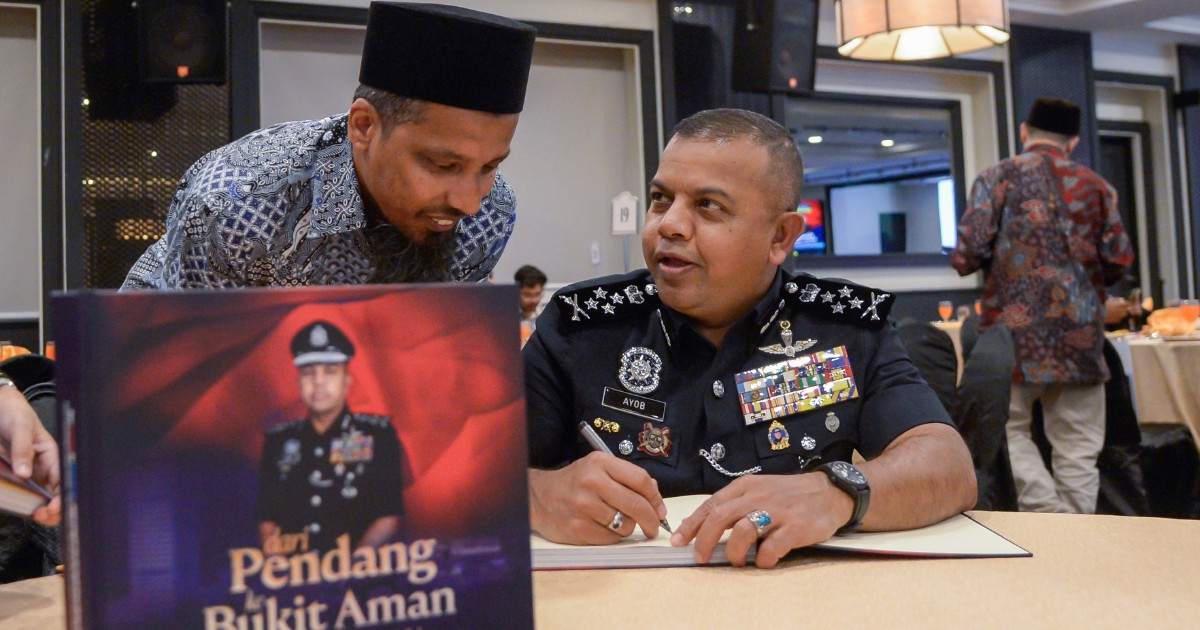
Tan Sri Ayob Khan Mydin Pitchay, who served as deputy Inspector-General of Police, has identified the investigation into the notorious "Gang Nicky" operation as one of the most significant cases that left an indelible mark on Malaysia's law enforcement establishment. The candid reflection from the high-ranking former officer underscores the profound impact this particular criminal investigation had on the Royal Malaysian Police's institutional memory and investigative practices.
While specific details about the case remain under examination, the designation of the Gang Nicky probe as a landmark investigation speaks to the complexity, scale, and importance that senior police leadership attributed to it. Cases of this magnitude typically involve substantial resources, coordination across multiple police units, and sustained investigative effort over extended periods. For a former deputy IGP to single out this particular operation suggests it represented either unprecedented criminal sophistication, widespread organised activity, or a combination of factors that tested institutional capacity.
The fact that Ayob Khan chose to publicly reflect on this investigation carries significance for understanding how Malaysian law enforcement has evolved and the types of criminal enterprises that have captured the attention of the country's senior police ranks. Such reflections from retired senior officers often serve as institutional benchmarks, helping shape how police academies, training programmes, and operational doctrine are developed for future generations of law enforcement personnel.
Bukit Aman, as the headquarters of the Royal Malaysian Police, represents the apex of Malaysian law enforcement hierarchy. Cases that command attention at this level typically transcend ordinary criminal activity and often involve elements that pose risks to public order, national security, or established institutional interests. The emphasis placed on the Gang Nicky case by a former deputy IGP suggests it involved factors that warranted sustained senior-level attention and decision-making.
The investigative environment during the period when this case was active would have been shaped by the technological capabilities, informant networks, and inter-agency cooperation mechanisms available at that time. Understanding how police leadership navigated such a complex investigation provides insights into the institutional strengths and potential vulnerabilities of Malaysia's law enforcement apparatus during that era.
For Malaysian readers and observers of the criminal justice system, the characterisation of Gang Nicky as a defining investigation invites reflection on what makes certain cases particularly consequential from a police administration perspective. The answer often extends beyond the immediate criminal activity itself to encompass broader implications for public safety, organised crime prevention strategies, and the evolution of investigative techniques.
The experience garnered from major investigations like Gang Nicky typically influences policy formulation at the highest levels of the police service. Officers who led such probes, including Ayob Khan, carry institutional knowledge about both what worked effectively and where systemic improvements became necessary. Their reflections serve as valuable institutional memory for a country's law enforcement establishment.
In the Malaysian context, where organised crime has periodically posed distinct challenges, the Gang Nicky investigation presumably addressed criminal patterns or operational methodologies that warranted the involvement of senior police leadership. The public acknowledgement of its significance by a former deputy IGP validates the gravity that was assigned to the case during its active phase.
For current law enforcement personnel and policy makers monitoring criminal trends in Malaysia and Southeast Asia, Ayob Khan's assessment provides perspective on the persistence and evolution of organised criminal operations. Cases elevated to the attention of Bukit Aman's upper echelons invariably contain elements that extend beyond jurisdictional boundaries or conventional criminal categorisation.
The reflection also speaks to professional evolution within the police service. Former senior officers who openly discuss significant investigations contribute to a culture of institutional learning and transparency about law enforcement challenges. This approach contrasts with organisational cultures that remain entirely circumspect about historical cases, and it suggests a degree of confidence in the institution's capacity to revisit and analyse past operations.
Roguing the Gang Nicky case as one of Bukit Aman's most substantial investigations places it alongside other historically significant probes that shaped Malaysian law enforcement practice and public understanding of crime prevention. Such historical markers help contemporary observers contextualise the evolution of criminal enterprises and police responses across decades.
The willingness of former senior police officials like Ayob Khan to publicly discuss landmark investigations also reflects broader trends toward greater accountability and institutional transparency within Malaysian governance structures. When high-ranking retired officials share perspectives on major cases, it contributes to public discourse about the effectiveness and evolution of law enforcement methodology.

