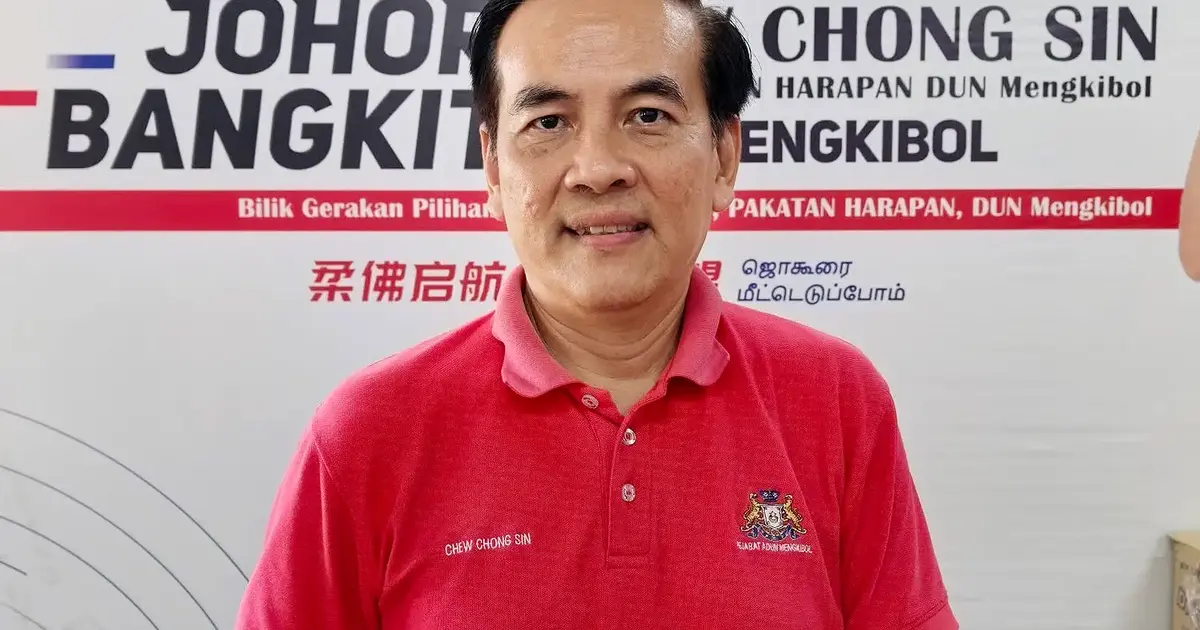
Chew Chong Sin, a former Democratic Action Party member, has made public allegations that Barisan Nasional and Perikatan Nasional have struck an undisclosed agreement to establish a unified state administration in Johor. The accusation, which lacks official confirmation from either coalition, has reignited scrutiny over backroom political negotiations that may reshape the political landscape in Malaysia's southern state.
The implications of such an arrangement warrant close examination, particularly given the traditional ideological positioning of both coalitions. While Barisan Nasional has historically maintained centrist positions within Malaysia's political spectrum, and Perikatan Nasional has emerged more recently as a conservative force, their potential fusion at the state level could materially shift policy outcomes in areas ranging from religious affairs to economic management. Chew's assertion that this configuration would generate conservative governance represents a substantive concern for voters who may have expected alternative political directions following recent electoral contests.
Johor, as Malaysia's second-most populous state and home to approximately 4.1 million residents, carries disproportionate significance in national political calculations. The state's economic complexity—spanning port operations, manufacturing, agriculture, and growing technology sectors—means that policy decisions made in Kota Iskandar reverberate throughout the nation's economic corridors. Any shift towards more conservative governance frameworks could influence how the state addresses contemporary challenges including labour rights, business regulation, and sectarian matters, each of which extends beyond Johor's borders.
The mechanics of such a purported understanding remain opaque. Malaysia's constitutional framework permits state governments formed through multi-party coalitions, yet explicit formal declarations of intent are typically required for legislative assembly operations. If Chew's claims have substance, the arrangement represents the kind of quid pro quo arrangement that has characterised Malaysian politics since independence, where power-sharing agreements often remain partially hidden from public view until formally enacted through assembly votes and executive appointments.
For the Democratic Action Party, which has positioned itself as advocating for transparency and accountability in governance, Chew's allegations carry particular weight in party discourse. His status as a former representative lends his remarks credibility despite the absence of corroborating institutional evidence. The timing of such disclosures—whether they emerge weeks or months after electoral outcomes—frequently influences how effectively they penetrate public consciousness and shape voter expectations in subsequent electoral cycles.
The potential consequences for Johor's diverse constituencies merit serious consideration. The state encompasses significant urban centres including Johor Bahru, which attracts international business investment and maintains multicultural demographics, alongside rural areas with traditional agricultural economies. A conservative policy orientation might favour certain constituencies whilst disadvantaging others, creating fractures within Johor's social fabric that could persist across multiple electoral cycles. Issues including labour standards, education funding allocation, and religious institution oversight would likely experience directional shifts under such governance.
Peikatan Nasional's participation in state-level coalitions has represented a strategic expansion of its influence beyond its traditional strongholds in Kelantan and Terengganu. An arrangement in Johor would position the coalition more centrally within Malaysian governance architecture, providing it leverage in federal negotiations and resource allocations. Conversely, for Barisan Nasional, which has experienced electoral setbacks over the past decade, such partnerships offer pathways to maintain administrative authority and prevent fragmentation of its governmental capacity across states.
The broader context of Malaysian coalition politics cannot be overlooked. Since 2018, the nation has witnessed extraordinary flux in political alignment, with parties shifting coalitions, leaders exchanging positions, and parliamentary majorities appearing and dissolving with striking rapidity. Within this environment of fluid allegiances, allegations of tacit arrangements between previously antagonistic coalitions have become increasingly commonplace, reflecting underlying structural instabilities within Malaysia's party system. Voters facing such revelations must navigate significant uncertainty regarding politicians' genuine commitments versus expedient manoeuvring.
Chew's specific warning regarding conservative policy outcomes functions as both a factual claim and a political statement. The framing invites recipients to consider whether conservative governance aligns with their own policy preferences and values. For those advocating progressive social policies, pluralism in governance structures, or enhanced transparency in state administration, such an arrangement would represent movement in unwelcome directions. Conversely, other constituencies may view conservative orientation positively, seeing it as providing stability and clear ethical guidelines for governance.
The absence of official response from either Barisan Nasional or Perikatan Nasional leadership compounds the uncertainty surrounding Chew's claims. Political actors in Malaysia typically address significant allegations promptly, either confirming or forcefully denying them. Silence or delayed response can itself communicate information to attentive observers, suggesting either negotiation sensitivity or confidence that public attention will dissipate without formal clarification. As Johor voters and Malaysian political observers assess these allegations, the burden falls upon political institutions to provide transparent accounting of governmental formation processes and the considerations driving coalition arrangements.

