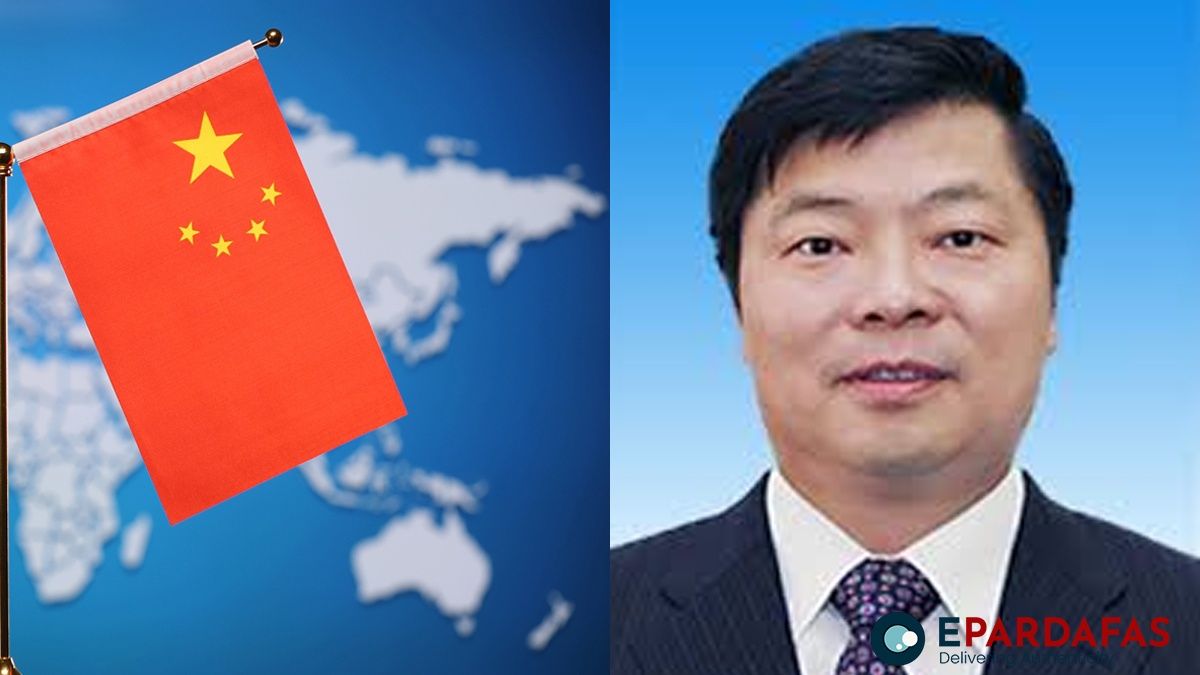
Beijing's top anti-graft authority has opened a formal investigation into Ouyang Weimin, who previously held the position of president at the China Development Bank, citing suspicions of grave violations relating to both communist party regulations and national law. The Central Commission for Discipline Inspection made the announcement through a terse official statement on Sunday, working in conjunction with the National Commission of Supervision on the matter. No elaboration on the specific charges or circumstances was provided in the brief public disclosure.
Ouyang's professional trajectory spans nearly four decades within China's state financial system. He became a member of the Chinese Communist Party in 1986 and built substantial experience in the banking sector, particularly during an extended tenure at the People's Bank of China in various capacities. His career path reflects the typical progression of senior figures within China's state-controlled financial apparatus, where positions at the central bank traditionally serve as stepping stones to leadership roles in larger development institutions.
Before his appointment to the China Development Bank, Ouyang held considerable influence in one of China's most economically significant regions. He served as vice-governor of Guangdong province, the manufacturing and trade hub situated along the border with Hong Kong that has been instrumental to China's economic transformation since market reforms began four decades ago. This provincial role demonstrated his ability to manage complex economic portfolios and interface between local and central government priorities.
In 2019, Ouyang received promotion to the dual position of president and deputy party secretary at the China Development Bank, representing one of the most prestigious appointments within China's development finance sector. He retained this position until 2023, when he stepped down from the presidency, though the circumstances surrounding his departure were not immediately disclosed at the time. The timing of his removal and the subsequent investigation suggest potential concerns may have emerged during his final years in office.
The China Development Bank itself occupies a unique position within China's financial architecture. Established in 1994, the institution functions as a state-owned development finance vehicle rather than a conventional commercial bank. According to official sources, it operates under the direct oversight of the State Council, China's highest executive authority, and concentrates its lending activities on strategic sectors deemed critical to national economic development, including infrastructure, manufacturing, and regional development projects in less-developed areas.
This investigation arrives within the context of President Xi Jinping's sustained anti-corruption campaign, an initiative that has defined much of his tenure since assuming power in 2012. The campaign has resulted in the detention and prosecution of numerous officials across multiple levels of government, as well as senior figures within China's military establishment. While officially framed as a means to eliminate graft and improve governance standards, international observers and political analysts have frequently noted that the campaign disproportionately affects individuals associated with competing political factions, leading some critics to characterise it as a tool for consolidating power and removing potential rivals.
The investigation into Ouyang reflects broader patterns within China's financial sector, where senior management at state-owned enterprises and development banks have faced heightened scrutiny in recent years. Financial institutions managing substantial state resources and wielding influence over credit allocation have attracted particular attention from anti-corruption authorities. The scale of capital flowing through institutions like the China Development Bank creates numerous opportunities for unauthorised dealings, and the opaque decision-making processes characteristic of state-owned finance have long raised concerns about potential misconduct.
For Malaysia and other Southeast Asian nations, developments within China's financial architecture carry strategic implications. The China Development Bank has been instrumental in financing major Belt and Road Initiative projects across the region, including infrastructure developments in Malaysia. Uncertainty surrounding the leadership and governance of such a significant lender could potentially affect the timing and structure of future financing arrangements for regional projects. The investigation may also signal shifting priorities within Beijing's economic policy circles regarding overseas investment and development financing.
The case underscores the precarious position of high-ranking officials within China's state system, where advancement to elite positions does not guarantee protection from subsequent investigation. Even individuals with decades of service and substantial accomplishments within their respective institutions remain vulnerable to scrutiny. The absence of transparent institutional checks or independent judiciary oversight creates an environment where career trajectories can shift dramatically based on political considerations rather than performance alone.
Ouyang's situation reflects the broader vulnerability of China's technocratic elite, who operate within a system where loyalty and factional alignment often matter as much as competence or achievement. The investigation will likely proceed through closed channels, with limited public disclosure of evidence or findings. Historically, such probes typically result in either formal charges and prosecution or, alternatively, negotiated retirement packages that conclude the matter quietly. The coming months will reveal which path this case ultimately follows.

