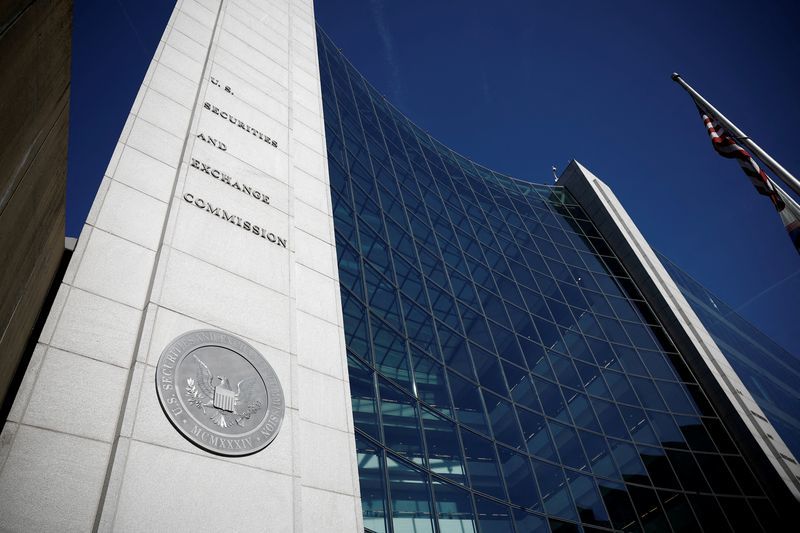
The United States Securities and Exchange Commission has brought enforcement action against Jason Satsky, a former co-head of Bank of America's Americas power and renewable energy banking division, accusing him of passing material non-public information to facilitate insider trading. According to the regulator, Satsky disclosed details of an impending acquisition to Gavin Wolfe, a long-standing personal associate and former professional colleague, enabling Wolfe to accumulate shares in South Jersey Industries ahead of a public announcement. The alleged scheme generated illicit profits totalling $18.5 million, highlighting persistent vulnerabilities within investment banking's information barriers despite regulatory oversight.
Satsky allegedly tipped Wolfe during late 2021 regarding the potential buyout of South Jersey Industries, an energy holding company for which Bank of America was providing advisory services. The two men maintained extensive communications about the transaction across multiple months, utilising both direct contact and incidental meetings to discuss the impending deal. Their relationship extended beyond professional networking, as evidenced by their attendance together with their respective spouses at a Duke-Kentucky college basketball match at Madison Square Garden, where Satsky had access to premium seating provided through his employer—a detail that underscores how sophisticated traders sometimes exploit informal settings to exchange sensitive intelligence.
Wolfe, who currently operates Evergreen Capital and has maintained ties with Satsky exceeding two decades, executed purchases of approximately 2.2 million shares in the South Jersey Gas parent company, representing an initial investment of roughly $53 million. When South Jersey Industries announced an $8.1 billion acquisition on February 24, 2022, the share price surged dramatically. Wolfe's position generated a 36 percent return, translating to substantial unauthorised profits extracted from market inefficiencies created by his possession of undisclosed merger intelligence.
The SEC's case against Satsky seeks comprehensive remedies including recovery of all illicit gains obtained by Wolfe, imposition of monetary penalties against both defendants, and permanent bars from serving as officers or directors of public companies. These enforcement tools represent the regulator's standard approach to punishing information-based fraud and deterring similar conduct among financial professionals with access to transaction secrets. The allegations carry particular significance given Satsky's seniority within one of America's largest investment banking operations, suggesting that institutional controls failed to prevent the transmission of confidential data to external parties.
Satsky, aged 59 and based in New York, has categorically denied the SEC's allegations through his counsel, Robert Anello. His legal team contends that evidence will demonstrate Satsky operated appropriately and maintained proper information barriers, never furnishing Wolfe with confidential details concerning South Jersey Industries or any other entity. This defensive posture represents a standard opening statement in securities enforcement proceedings, where defendants typically challenge both the existence of wrongful conduct and the characterisation of transmitted information as material and non-public.
Wolfe's legal representation similarly rejected the SEC's characterisation, with attorney Reed Brodsky asserting that his client categorically refutes the allegations and will mount a vigorous courtroom defence. Brodsky's statement emphasises that Wolfe's investment decisions reflected an independent analysis thesis regarding South Jersey Industries' value proposition, unmoored from any confidential bank information. The defence strategy further points to sworn testimony and documentary evidence allegedly overlooked by the SEC during its investigation, suggesting that independent research and market analysis, rather than tipped information, motivated the share purchases.
Both men maintain current or recent residences in New York, with Wolfe additionally holding property in Sunny Isles Beach, Florida. This geographic presence in financial centres reflects their deep involvement in capital markets activities. Bank of America terminated Satsky's employment in March 2025, severing his institutional affiliation months after the SEC initiated its investigation. The bank itself has not faced allegations of systemic wrongdoing and stated that Satsky no longer maintains any relationship with the organisation, attempting to distance the institution from his alleged misconduct.
Wolfe's professional trajectory included a previous position as a senior power and renewable energy banker at Credit Suisse before both he and Satsky joined Bank of America in 2012. This shared employment history at the megabank likely facilitated their partnership in establishing Evergreen Capital, which manages assets belonging to the Wolfe family. Evergreen declined to provide immediate comment regarding the SEC's charges, a cautious approach typical for firms facing regulatory scrutiny concerning senior employees or associated individuals.
The case illustrates persistent challenges within capital markets regulation regarding information asymmetries and the enforcement mechanisms available to combat insider trading. Despite decades of Securities Exchange Act enforcement and the establishment of compliance infrastructure at major financial institutions, individuals with legitimate access to confidential transaction details continue attempting to monetise that information advantage through trusted relationships. The energy sector, where Satsky and Wolfe specialised, frequently features complex multi-billion-dollar transactions that create substantial profit opportunities for traders possessing non-public merger intelligence. For Malaysian investors and regional financial professionals, the case underscores the reality that insider trading remains a serious crime prosecuted aggressively by US regulators, with potential consequences including substantial financial penalties and permanent exclusion from securities industry roles.

