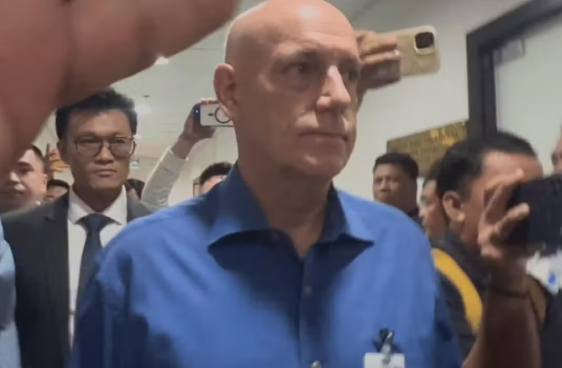
Former head coach of Ateneo de Manila University's men's basketball programme, Tab Baldwin, made his long-awaited appearance at the National Bureau of Investigation's Homicide Division on Tuesday afternoon, arriving with his legal representative Karl David. The appearance came after Baldwin had twice failed to show up for scheduled questioning in connection with an ongoing investigation into the deaths of two student-athletes, marking a significant development in a case that has drawn considerable scrutiny both within the Philippine sporting community and beyond.
Rene Baterbonia and Divine Adili, both members of the Ateneo basketball team, drowned during a team-related activity held in Dipaculao, Aurora, early this month. The tragic incident has prompted parallel investigations by both the NBI and the Philippine National Police-Criminal Investigation and Detection Group, with authorities seeking to establish the precise circumstances that led to the deaths of the two young athletes. The case has raised serious questions about duty of care, supervision protocols, and accountability in university sports programmes across the Philippines.
Baldwin's failure to comply with the initial summonses had attracted considerable attention. During the first scheduled appearance on June 16, the former coach's legal team submitted documentation asserting that their client was unwell and unable to attend proceedings. The second missed appointment on June 19 occurred on the same day Baldwin appeared before the PNP-CIDG, creating logistical confusion and raising questions about the coordination between investigating agencies. His eventual appearance on Tuesday suggested either an improvement in his health or a shift in tactical approach by his legal representatives.
The parallel nature of the investigations—with both the NBI and PNP-CIDG conducting separate inquiries—reflects the serious nature of the matter and the need for thorough verification of accounts. NBI Director Melvin Matibag has indicated that a key element of Tuesday's questioning will involve comparing Baldwin's statement to investigators with his earlier testimony provided to the PNP-CIDG. Such comparative analysis is standard practice when multiple agencies investigate the same incident, serving to identify inconsistencies or clarify evolving accounts of events.
Tab Baldwin's presence as head coach of one of the Philippines' most prestigious university basketball programmes lends additional weight to the investigation. Baldwin, an American coach with significant experience in basketball development, had been leading the Ateneo Eagles programme and would have held primary responsibility for the safety and welfare of athletes under his supervision during the ill-fated team activity. The investigation thus examines not only what occurred during the drowning incident itself but also the planning, preparation, and safety measures—or lack thereof—that preceded the activity.
The timing of Baldwin's appearance comes as the investigative agencies seek to conclude their preliminary inquiries. The NBI has signalled its intention to wrap up its investigative phase by the end of the week, suggesting that crucial information gathering and witness interviews are reaching their conclusion. This accelerated timeline indicates the priority being placed on the case and the desire to move toward determinations regarding accountability and potential charges.
For Malaysian readers and observers throughout Southeast Asia, this case carries broader implications for how universities and sporting organisations manage athlete welfare and institutional responsibility. The Philippines' approach to investigating such incidents reflects international standards that increasingly emphasise transparent processes and accountability at leadership levels. Similar concerns about supervision, safety protocols, and duty of care in university sports have emerged across the region, making Baldwin's interrogation and the broader investigation relevant beyond Philippine borders.
The involvement of multiple investigative agencies also underscores the complexity of modern institutional investigations. When athletes die under circumstances involving institutional activities, determining liability and establishing precise sequences of events requires careful coordination between different branches of law enforcement. The need to cross-verify statements and ensure comprehensive coverage of investigative angles explains why parallel inquiries, while sometimes appearing redundant, serve important functions in accountability processes.
The case has broader ramifications for coaching standards and institutional governance in Philippine university sports. Questions about training methodologies, emergency preparedness, and adherence to safety protocols during team activities will likely inform discussions about best practices across the nation's universities. Athletic programmes across Southeast Asia may similarly reassess their own safety procedures in light of this tragic incident and the investigative responses it has triggered.
As Baldwin's interrogation continues, the coming days promise further developments in establishing what led to the deaths of Baterbonia and Adili. The focus on comparing statements across investigating agencies suggests authorities are building a comprehensive picture of the events surrounding the drowning incident. Whether the investigation yields charges, disciplinary findings, or institutional reforms remains to be determined, but the intensity of scrutiny reflects the serious nature of allegations and the pressing need for transparency when young athletes lose their lives during university-sanctioned activities.