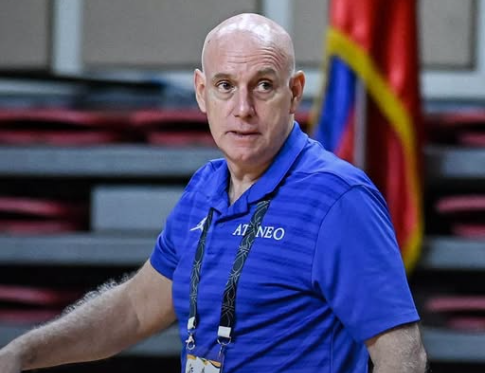
The Philippine National Police Criminal Investigation and Detection Group has recommended filing charges against former Ateneo de Manila University men's basketball coach Thomas Anthony 'Tab' Baldwin and 10 others for violations of the Anti-Hazing Act, following the drowning deaths of two team players during a training activity in Dipaculao, Aurora on 8 June.
The two players, Rene Baterbonia and Divine Adili, died while participating in a seawater training exercise that authorities now characterise as hazing rather than a legitimate team-building activity. The investigation has prompted legal and policy officials to reexamine how training activities conducted by elite sports programmes operate, and whether the line between rigorous conditioning and hazardous conduct had been crossed in this case. The case underscores growing concerns about athlete safety in Philippine sports institutions, particularly at university level where such activities are common.
In addition to Baldwin, the 11 individuals named in the recommendation include strength and conditioning coaches Grant Dearns and Ceasar Vicent Javellana Elumba, assistant coaches Dean Caesar Castaño, Sandro Nicholas Romero Soriano, and Reynaldo Jacinto. Student managers Paolo Manuel Maceda Adevoso and Andrew Lorenzo 'Drew' Bondoc Salud, along with physical therapist John Eric Quiambao Rueca and utility personnel Aris Ramos Pronce and Joel 'Boy' Palmiano Rapa, have also been implicated. According to investigators, all 11 were present during the activity and failed to intervene despite dangerous conditions developing.
Authorities highlighted a critical distinction in their findings: they determined that while the activity may have been presented as team-building and training, it satisfied the legal definition of hazing under Republic Act No. 11053. The definition extends beyond traditional initiations to encompass forced calisthenics and exposure to hazardous weather and environmental conditions. This interpretation represents an important shift in how authorities view such activities, potentially affecting how sports programmes across the Philippines conduct conditioning exercises going forward.
Reconstruction of the day's events reveals a relentless schedule of physical exertion culminating in the fatal sea activity. The 20 team members present were roused at 4am and instructed to complete a four-kilometre run, followed by intense competitive games with physical penalties imposed on those who lost. The seawater training was then conducted between 2pm and 2.30pm, which coincided precisely with the day's active high tide at 2.27pm. This timing proved critical, as the sea conditions at that hour featured strong rip currents, powerful waves, and unpredictable seabed depths—precisely the hazardous environment in which the athletes were placed.
Investigators emphasised that the cumulative effect of these conditions created an unacceptable risk. One official stated bluntly that on the beach that day, no one stopped the activity, no one questioned it, and no one pointed out that it was dangerous. This absence of supervision and safeguarding, combined with the inherent dangers of the location and timing, forms the basis of the hazing allegation. The failures represent not merely lapses in judgement but, according to authorities, deliberate acts that violated Philippine law.
A troubling revelation emerged during the investigation: only 17 of the 20 players present that day would be selected for the official University Athletics Association of the Philippines roster under Baldwin's leadership. Officials therefore characterised the Aurora activity not as optional conditioning but as a selection mechanism—an initiation of sorts to determine which athletes merited continued team membership. This reframing strengthens the legal definition of hazing, since the activity served as a prerequisite for competitive participation.
Crucially, investigations found no weights were attached to the bodies of either victim when they were recovered from the water. This detail contradicts any potential defence suggesting the athletes deliberately harmed themselves. Instead, it confirms that the drowning resulted from the environmental conditions and the victims' physical exhaustion after hours of intense activity, factors entirely within the control and responsibility of coaching staff and team management.
The case has drawn international attention, not least because Baldwin previously apologised for the deaths through a lengthy video statement released on Ateneo's social media channels. However, the investigation appears to have moved beyond accepting such public expressions of remorse, instead focusing on establishing responsibility and recommending criminal prosecution. The recommendations now proceed to the Department of Justice for further case development and preliminary investigation, determining whether sufficient evidence exists to warrant prosecution before the courts.
For Malaysian and Southeast Asian readers, this case carries significant implications. University sports programmes across the region often employ similar conditioning methods and team-building activities that operate in legal and ethical grey zones. The Philippine authorities' decision to prosecute team leadership sends a clear message that institutions cannot hide behind the traditions of professional sports culture when athlete safety is genuinely compromised. Universities and athletic departments throughout Asia may now face increased scrutiny and potential legal liability for activities previously considered standard practice in developing elite athletes.

