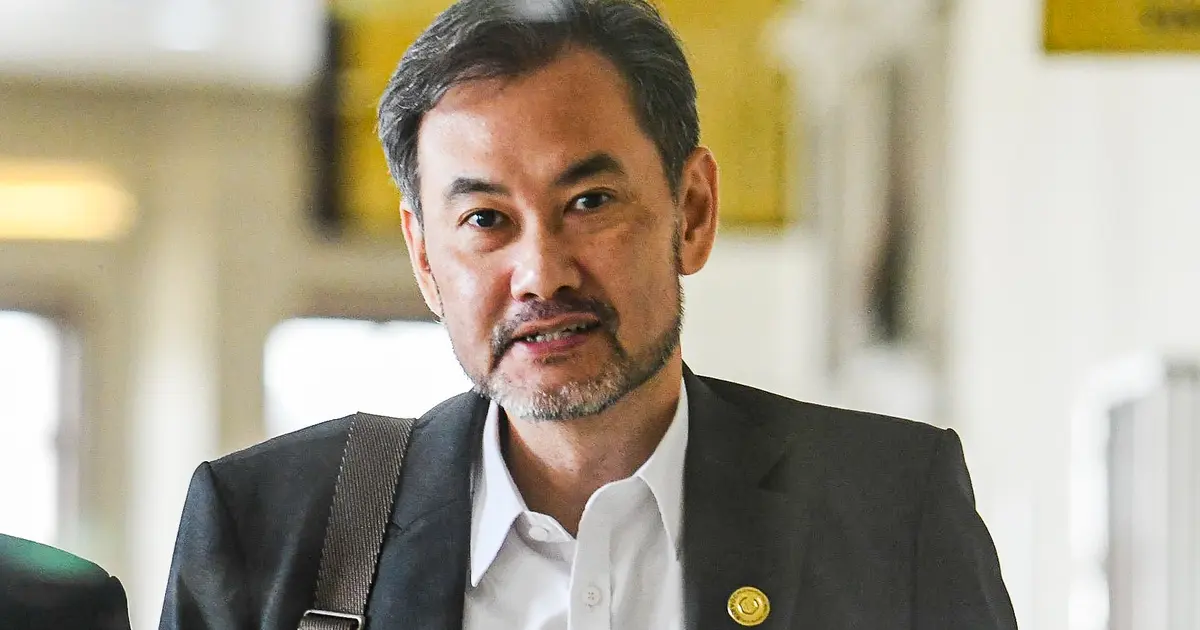
In a significant clarification during ongoing legal proceedings related to Malaysia's sprawling 1MDB scandal, former chief executive Shahrol Azral Ibrahim Halmi has firmly denied that he treated controversial financier Jho Low as though he wielded authority equivalent to then-Prime Minister Najib Razak. The distinction matters considerably, as it touches on fundamental questions about the structure of power and decision-making within the state development fund that ultimately lost billions of ringgit.
Shahrol's testimony addresses a critical aspect of how the 1MDB affair unfolded: the informal networks and back channels through which instructions apparently flowed from the highest political levels. Rather than conducting business through formal governmental procedures, the former CEO indicated that his communication with Najib Razak occurred via unconventional pathways, with Jho Low serving as one conduit among others. This arrangement highlights how the fund operated outside normal bureaucratic safeguards and accountability structures that typically govern Malaysian public institutions.
The separation Shahrol draws between Jho Low's role and that of the prime minister is legally and politically important. While Low undoubtedly exercised substantial influence over 1MDB's operations and enjoyed unusual access to decision-makers, Shahrol's evidence suggests the financier functioned as an intermediary rather than a principal decision-maker. However, this characterization may offer only limited reassurance to Malaysians concerned about the governance failures that allowed such informal arrangements to persist unchecked within a fund managing national resources.
Jho Low's documented involvement in 1MDB represents one of the most brazen examples of influence-peddling in Malaysia's modern history. The fugitive financier, now believed to be hiding outside Malaysia, allegedly orchestrated transactions that diverted fund assets for personal use and political purposes. Shahrol's admission that Low served as a communication channel between himself and the prime minister, regardless of Low's official title or lack thereof, demonstrates how thoroughly unconventional actors had penetrated Malaysia's sovereign wealth management during the Najib administration.
The testimony emerges within the broader context of multiple criminal prosecutions stemming from the 1MDB investigation. Najib himself faces numerous charges related to the scandal, while other senior officials and associates have also been implicated. The continuing judicial process gradually illuminates the mechanisms through which approximately USD 4.5 billion disappeared from the fund between 2009 and 2015, enriching individuals connected to the scheme while leaving Malaysian taxpayers significantly poorer.
Shahrol's distinction between treating someone as prime minister and using them as a communication channel may reflect legal strategy, but it also suggests the degree to which normal institutional hierarchies had become blurred. When a fund's CEO feels compelled to defend his conduct by explaining that he did not accord a private citizen the formal status of the head of government, the statement itself reveals how profoundly abnormal the operating environment had become. The fact that such a defense was necessary indicates how extensively informal power networks had supplanted official structures.
For Malaysian investors and the broader Southeast Asian financial community, Shahrol's testimony reinforces lessons about institutional vulnerability. State-owned enterprises require robust governance frameworks precisely because individuals in leadership positions might otherwise succumb to pressure or enticement from politically connected figures operating outside formal channels. The 1MDB case demonstrates that even well-educated executives with significant responsibilities can become complicit in massive financial irregularities when informal power networks override institutional safeguards.
The question of who precisely made decisions at 1MDB remains partially obscured despite Shahrol's cooperation with authorities. Whether instructions originated with Najib and merely passed through Jho Low, or whether Low held greater autonomous authority than previously acknowledged, remains partially unclear. What emerges unambiguously is that conventional decision-making procedures were circumvented through personal connections and informal communications, creating an environment where accountability could be evaded and improper conduct concealed.
Shahrol's testimony also carries implications for how Malaysia's political leadership and public institutions have since evolved. Reforms implemented after the change of government in 2018 have aimed to strengthen governance frameworks and reduce space for informal networks to operate within sovereign wealth funds and other state entities. However, the testimony serves as a sobering reminder that establishing formal rules means little without vigilance and institutional commitment to enforcing them, a lesson that extends beyond Malaysia to other developing economies confronting similar governance challenges.
The continuing court proceedings promise to reveal further details about the internal dynamics of how 1MDB was manipulated and looted. Each witness appearance adds texture to the emerging historical record of one of the world's largest financial scandals. For Malaysia's political system and international reputation, the thoroughness of the judicial accountability process matters as much as the ultimate verdicts, demonstrating whether Malaysia's institutions possess genuine capacity to investigate and punish even the most powerful figures when they abuse the public trust.

