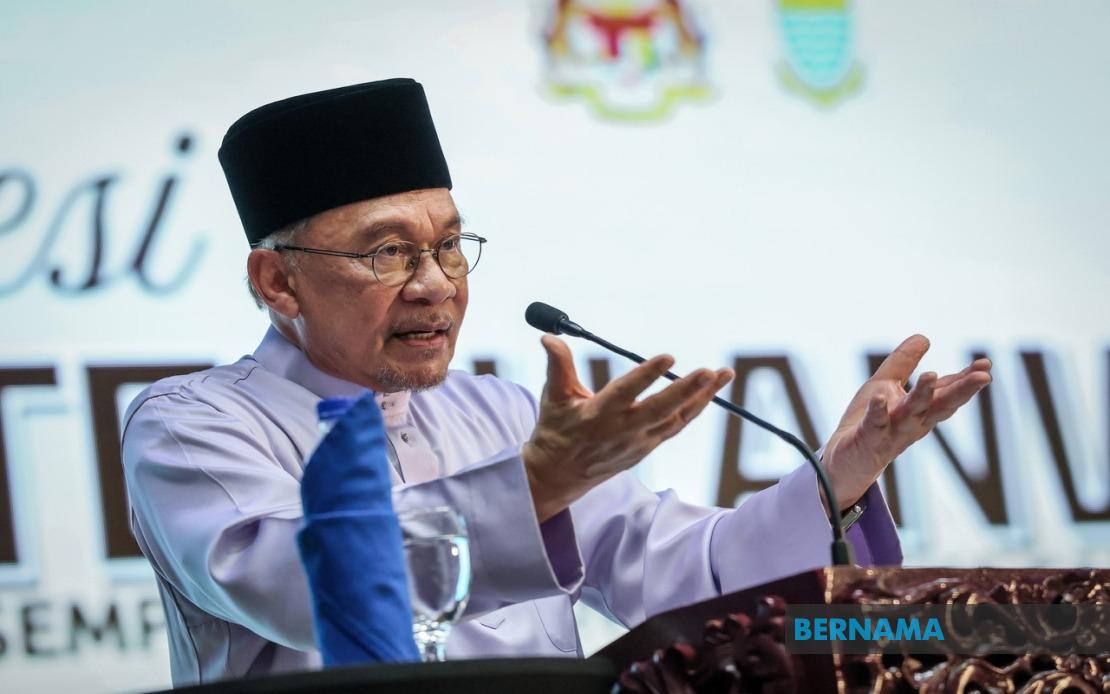
Prime Minister Datuk Seri Anwar Ibrahim has committed to introducing a financial allowance programme for Form Six students through the upcoming Budget 2027, which will be presented to Parliament in October. The announcement, made during a government engagement session in Bukit Mertajam, represents a significant policy shift to harmonise financial support across the education sector and address what officials describe as an existing disparity in student assistance.
Anwar, who simultaneously holds the portfolio of Finance Minister, explained that the decision emerged from direct dialogue with pre-university students who highlighted the absence of any structured allowance at the Form Six level. He noted that the current system provides financial assistance to pupils throughout primary school and secondary education up to Form Five, as well as university-bound students, yet leaves those undertaking the two-year pre-university programme without comparable support. This gap has prompted recalibration of education financing priorities as the government restructures its budget allocations.
The Prime Minister acknowledged during his remarks at the Temu Anwar programme held at Tuanku Bainun Teacher Education Institute that the precise quantum of the allowance remains undetermined at this stage. Officials stressed that the final amount will be calculated after careful assessment of the government's fiscal position and overall budgetary constraints in the coming year. This cautionary approach reflects broader economic considerations that may influence the scope and scale of the programme's rollout across the country's Form Six cohort.
Education Minister Datuk Seri Fadhlina Sidek, present at the event, contextualised the allowance commitment within a broader suite of student-centred reforms. She disclosed that the proposed allowance ranked among twelve resolutions endorsed during the MADANI Pre-University Congress convened in Klang earlier that morning. The ministry, she indicated, has adopted an inclusive stance toward the agenda raised by student representatives, committing to thorough examination of each proposal and exploration of implementation pathways.
The timing of this announcement reflects heightened government responsiveness to youth concerns, particularly as pre-university students constitute an increasingly vocal demographic within Malaysia's education system. Form Six programmes, which serve as critical staging grounds for university entry and professional development, have historically operated with less visible government support structures than their counterparts at other educational levels. This policy intervention seeks to rectify that asymmetry by extending the safety net of financial assistance to this cohort.
For Malaysian families, particularly those from middle and lower-income backgrounds, the introduction of Form Six allowances carries tangible implications. Many students currently forego pre-university education due to financial constraints, opting instead for vocational pathways or workforce entry. An allowance scheme could substantially reduce barriers to progression and expand access to tertiary education opportunities, indirectly strengthening Malaysia's human capital pipeline. The measure also acknowledges that tuition and ancillary educational costs weigh particularly heavily on families already managing limited budgets.
The proposal's emergence from student congresses rather than ministerial directives underscores a participatory governance approach increasingly prevalent in Malaysian policymaking. Student voices have gained prominence in education debates, particularly around cost-of-living pressures affecting the pre-university cohort. By institutionalising this feedback mechanism, the government signals responsiveness to grassroots concerns whilst simultaneously building legitimacy for subsequent education reforms that may encounter resistance without such consultative grounding.
Regionally, Malaysia's move toward comprehensive student allowance coverage reflects patterns observed in neighbouring developed economies. Singapore, Thailand, and Indonesia have implemented various student support schemes at pre-university levels, often as part of broader efforts to boost completion rates and reduce inequality in educational attainment. Malaysia's adoption of this framework positions it within an emerging Southeast Asian consensus on the importance of financial accessibility in pre-tertiary education.
The October budget presentation will provide crucial detail on several operational dimensions currently unspecified. Policymakers must determine eligibility criteria—whether the allowance extends to all Form Six students or targets those meeting means-tested thresholds; disbursement mechanisms, including whether payments flow directly to students or through educational institutions; and whether the programme encompasses both public and private pre-university institutions. These implementation details will substantially influence both the scheme's fiscal footprint and its real-world impact on educational access.
Implementation challenges should not be underestimated. The existing education allowance infrastructure, whilst extensive, requires capacity enhancement to absorb Form Six cohorts into administrative systems. Schools and pre-university colleges must develop mechanisms to verify student eligibility and process payments efficiently. Coordination between the Education Ministry, Finance Ministry, and school management will prove essential to ensuring smooth programme launch without administrative bottlenecks that could delay payments to students.
The allowance commitment also carries implications for Malaysia's broader fiscal strategy. Education expenditures compete with defence, healthcare, and infrastructure investments within a constrained budget envelope. Officials must balance the political and social benefits of expanded student support against alternative uses of public resources. The government's ability to resource this initiative without compromising other priority areas will test its fiscal management capabilities as economic growth moderates.
Looking forward, the Form Six allowance represents incremental progress toward educational equity but requires complementary policy interventions to maximise its effectiveness. Efforts to improve pre-university programme quality, expand capacity at quality institutions, and strengthen pathways into high-demand professions will amplify the return on this investment. Student feedback mechanisms, such as those that generated the allowance proposal, should remain institutionalised to ensure policies evolve responsively alongside changing needs.
The Budget 2027 allowance for Form Six students reflects genuine commitment to removing financial barriers within Malaysia's education system, though the ultimate success of this initiative depends substantially on implementation fidelity and accompanying reforms. As the government prepares detailed budget proposals over coming weeks, stakeholders—including students, educators, and parents—will scrutinise both the quantum of support and the operational architecture that will determine whether this policy delivers tangible benefit to the pre-university cohort.

