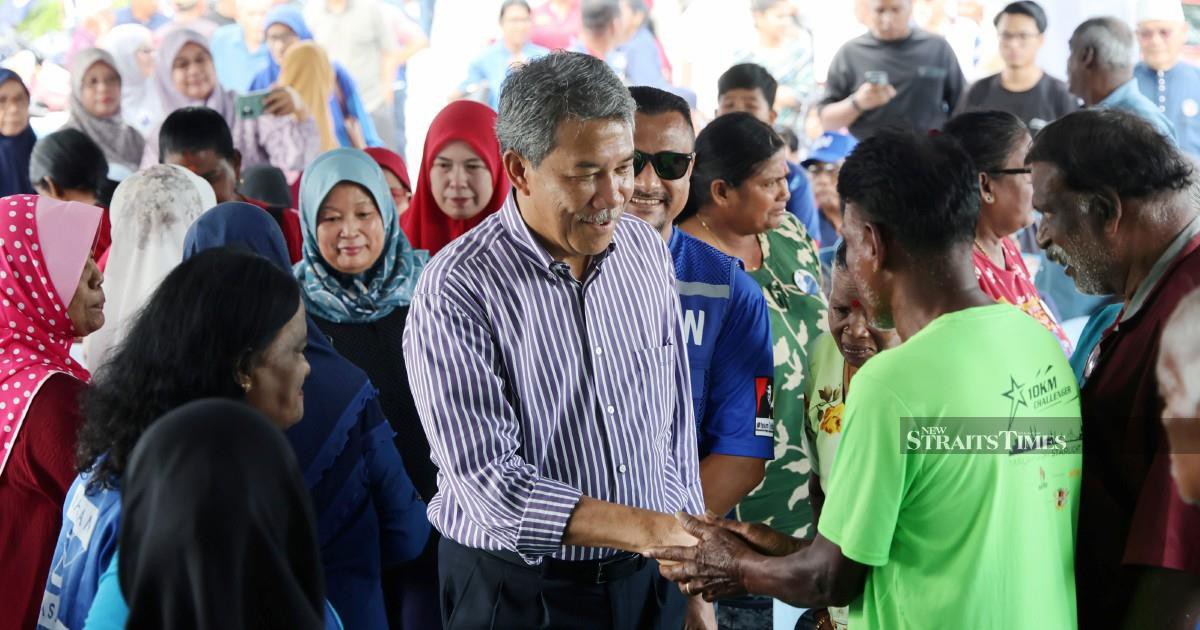
Datuk Seri Mohamad Hasan has declared his preparedness to resign from the Foreign Minister portfolio should Prime Minister Datuk Seri Anwar Ibrahim decide to make such a request. The statement, made in Rembau, reflects the minister's deference to the executive authority vested in the prime ministerial office and signals his acknowledgement of the constitutional prerogatives governing cabinet reshuffles in Malaysia's parliamentary system.
The Foreign Minister's remarks come at a time when cabinet composition often receives public scrutiny, particularly regarding ministerial performance and the distribution of portfolios among coalition partners. In the Malaysian political landscape, where executive authority flows from the Prime Minister, such declarations of readiness to step aside are not uncommon, though they typically carry implicit messaging about political stability and party discipline.
Modhash Hasan's tenure in the Foreign Ministry represents a significant post within Malaysia's diplomatic apparatus. The Foreign Ministry oversees bilateral relations with more than 200 countries and international organisations, manages trade negotiations, and represents Malaysia's strategic interests on the global stage. Given these weighty responsibilities, the minister's openness to transition suggests either robust confidence in his performance or an acknowledgement of the fluid nature of political appointments in Malaysia's coalition-dependent governance structures.
The statement carries particular relevance for Southeast Asia's diplomatic observers, as Malaysia's foreign minister plays a crucial role in regional affairs, including engagement with ASEAN counterparts, management of bilateral disputes, and participation in multilateral forums. Any change in leadership at this level could influence Malaysia's diplomatic positioning on issues ranging from maritime security to trade arrangements with neighbouring nations.
Prime Minister Anwar Ibrahim maintains substantial discretion over ministerial appointments and dismissals, a power that extends across the cabinet regardless of coalition politics. This centralization of authority ensures the PM can respond swiftly to performance issues, political calculations, or strategic realignments without requiring additional legislative approval. Ministers understand this dynamic intimately, which contextualizes Mohamad Hasan's readiness statement as pragmatic acknowledgement of political reality rather than expression of imminent departure.
The timing and public nature of such statements can carry subtle political implications. In Malaysia's coalition government, where multiple parties hold ministerial positions, resignation readiness declarations sometimes serve to deflect speculation about potential changes or to demonstrate loyalty to the Prime Minister. They may also preemptively address performance criticisms by suggesting the minister's tenure remains contingent on continued confidence from the top leadership.
Modhash Hasan's political trajectory has seen him navigate various ministerial roles, demonstrating adaptability within Malaysia's complex political ecosystem. His willingness to accept potential reassignment reflects the practical reality that Malaysian politics frequently reshuffles cabinet positions to balance party representation, manage factional interests, or respond to changing governance priorities. Ministers who resist or complicate such transitions typically find themselves sidelined more abruptly.
For Malaysia's foreign policy continuity, the potential instability inherent in such uncertainty requires that diplomatic operations maintain institutional robustness independent of individual ministers. The Foreign Service prides itself on maintaining consistent approaches to longstanding relationships and commitments, cushioning against disruptions caused by leadership transitions. This institutional strength allows Malaysia to pursue coherent strategic objectives even when ministerial portfolios shift.
The statement also reflects broader patterns within Malaysia's ruling coalition, where parties retain influence over portfolio allocation and ministerial performance remains subject to factional and inter-party dynamics. Understanding that ministerial positions depend on maintaining support from both the Prime Minister and coalition partners, ministers often signal flexibility regarding their continued tenure as a means of consolidating support.
Looking forward, Malaysia's engagement with regional and global partners depends on predictable diplomatic representation. While ministerial changes are inevitable in any government, the Foreign Ministry's core functions—maintaining bilateral relations, representing Malaysian interests internationally, and advancing national strategic objectives—transcend individual occupants of the position. Mohamad Hasan's declaration suggests preparedness for this reality, ensuring that any potential transition would proceed smoothly without organizational disruption.
The Foreign Minister's remarks ultimately underscore the hierarchical nature of Malaysia's executive governance, where the Prime Minister retains final authority over cabinet composition. This constitutional arrangement, while occasionally creating uncertainty, enables decisive governance and rapid adaptation to changing circumstances. For observers tracking Malaysian politics and regional diplomacy, such statements provide clarity about the leadership dynamics shaping Malaysia's foreign policy direction.

