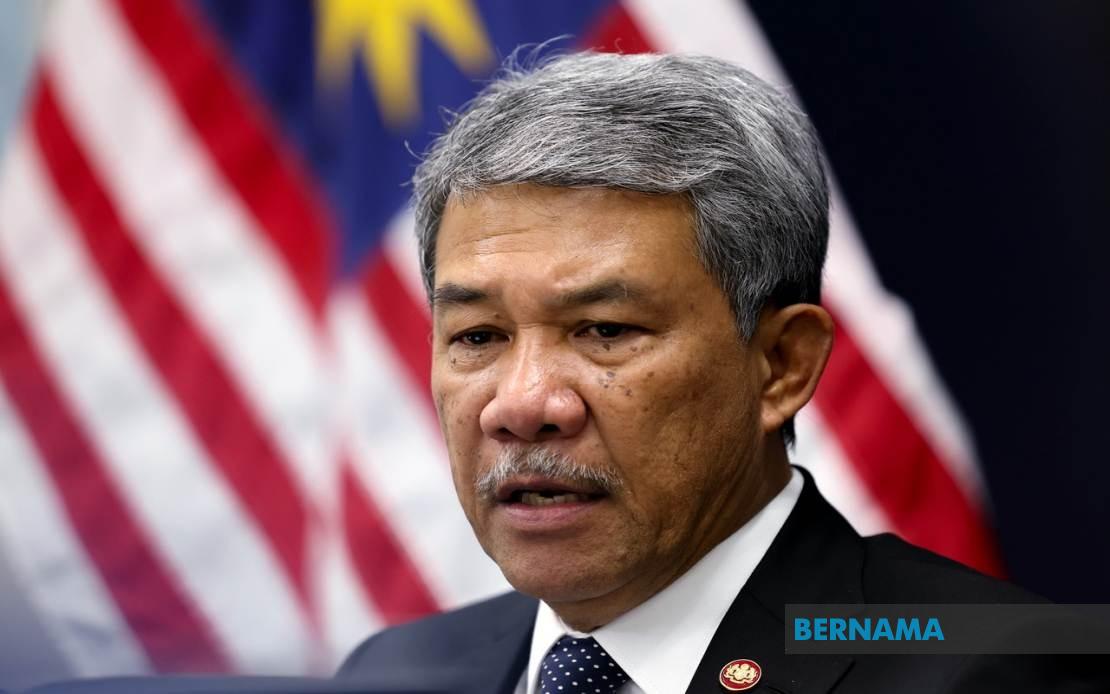
Foreign Minister Datuk Seri Mohamad Hasan touched down in Manila on Sunday afternoon to spearhead Malaysia's participation in a week-long diplomatic engagement centring on the 59th ASEAN Foreign Ministers' Meeting and its related consultations. His arrival at Ninoy Aquino International Airport at 4:15 pm local time marked the beginning of Malaysia's active role in what promises to be a consequential gathering for Southeast Asia's collective response to mounting regional and global pressures. The Philippines' Department of Foreign Affairs Assistant Secretary and Chief of Protocol Ariel Rodelas Peñaranda received the Malaysian delegation, while Malaysian Ambassador to the Philippines Datuk Abdul Malik Melvin Castelino Anthony was also in attendance, signalling the importance Kuala Lumpur places on this particular engagement.
The venue and timing of this gathering carry particular weight for Malaysia and the broader ASEAN community. Hosted under the Philippines' 2026 ASEAN Chairmanship with the overarching theme "Navigating Our Future, Together," the meetings will run through Thursday and are designed to address an agenda heavily weighted by geopolitical challenges that directly affect Southeast Asia's interests. The selection of this diplomatic moment to convene reflects the escalating urgency with which ASEAN must coordinate its positions on conflicts that threaten regional stability and prosperity.
The West Asia crisis looms as the central preoccupation for the gathered foreign ministers. As a Muslim-majority nation and a significant stakeholder in Middle Eastern stability, Malaysia's voice will prove essential in shaping ASEAN's collective messaging on the humanitarian dimensions of ongoing conflicts and the bloc's diplomatic approaches to de-escalation. The presence of Mohamad at the helm of Malaysia's delegation underscores the seriousness with which the government views its responsibility to advocate for peace and humanitarian principles in a region where multiple crises have displaced populations and complicated global supply chains that directly affect Southeast Asian economies.
Parallel to the acute concerns about West Asia, the Myanmar situation remains entrenched as a persistent challenge for ASEAN unity and credibility. Mohamad will participate in an extended informal consultation specifically dedicated to the Five-Point Consensus framework that ASEAN adopted to address Myanmar's political turmoil and humanitarian emergency. This discussion will scrutinise recommendations from recent ASEAN Leaders' Reviews and examine whether the consensus mechanism remains viable or requires recalibration. Malaysia's participation in these conversations reflects its ongoing commitment to the Five-Point Consensus, even as the framework has faced criticism from some quarters for failing to produce substantive improvements in Myanmar's situation.
Beyond these headline issues, Malaysia's diplomatic calendar encompasses an unusually dense sequence of multilateral engagements that illustrate the complexity of contemporary Southeast Asian statecraft. Mohamad will engage with the ASEAN Intergovernmental Commission on Human Rights, reinforcing Malaysia's investment in regional human rights architecture at a time when such institutions face questions about their effectiveness and independence. Similarly, his participation in the Southeast Asia Nuclear Weapon-Free Zone Commission meeting reflects Malaysia's enduring commitment to regional non-proliferation frameworks, an area where Southeast Asia has established itself as a model for other developing regions.
The broader diplomatic architecture encompassing the 27th ASEAN Plus Three Foreign Ministers' Meeting, the 33rd ASEAN Regional Forum, and the 16th East Asia Summit Foreign Ministers' Meeting situates Malaysia's engagement within the wider context of great power competition in the Indo-Pacific. These platforms enable Malaysia to calibrate its relationships with major powers including China, the United States, India, Japan, and Russia, while also strengthening ties with fellow ASEAN members and dialogue partners. Each forum offers distinct opportunities to advance Malaysia's strategic interests and to present coordinated ASEAN positions on transnational challenges ranging from climate change to maritime security.
A particularly noteworthy element of Mohamad's diplomatic agenda involves Malaysia's responsibility as the country coordinator for ASEAN-China Dialogue Relations for the 2024-2027 term. On Wednesday, Mohamad will co-chair the ASEAN Post-Ministerial Conference with China alongside Chinese Foreign Minister Wang Yi, a responsibility that positions Malaysia as a critical interlocutor in what remains one of the most consequential bilateral relationships shaping the region's future. This role demands careful balancing of Malaysia's own interests alongside the collective positions of the ten-member bloc, a challenge that has become increasingly intricate as geopolitical tensions mount.
The agenda further includes Malaysia's participation in ASEAN Post-Ministerial Conferences with the bloc's eleven dialogue partners: Australia, Canada, China, the European Union, India, Japan, New Zealand, the Republic of Korea, the Russian Federation, the United Kingdom, and the United States. This extensive calendar of bilateral-multilateral meetings offers Malaysia multiple channels through which to advance its foreign policy objectives, from trade expansion and security cooperation to technology partnerships and educational exchanges. For each dialogue partner, these meetings represent opportunities to deepen engagement with ASEAN and to address bilateral concerns within a multilateral framework.
The fifth Conference on Cooperation among East Asian Countries for Palestinian Development rounds out Mohamad's formal obligations, reflecting Malaysia's longstanding advocacy for the Palestinian cause and its commitment to development cooperation frameworks that extend Malaysian soft power into Middle Eastern and North African contexts. This conference position Malaysia alongside other East Asian nations in demonstrating solidarity with Palestinian development aspirations, an issue of significant domestic resonance given Malaysia's Muslim majority and historical role in Palestinian advocacy.
Beyond the formal schedule, Mohamad is anticipated to conduct a series of bilateral meetings with fellow foreign ministers attending the gathering. These sideline engagements often prove as consequential as the multilateral forums themselves, providing opportunities for candid discussions on bilateral irritants, shared interests, and coordinated approaches to mutual challenges. For Malaysia, such encounters with ministers from major powers and fellow ASEAN members represent invaluable opportunities to advance specific national interests while simultaneously reinforcing regional cohesion.
The composition and ambition of Malaysia's diplomatic mission to Manila reflects a government acutely aware that Southeast Asia's future will be shaped by how well the region navigates the intersecting crises of geopolitical competition, humanitarian emergencies, and institutional challenges. Malaysia's participation in this comprehensive diplomatic exercise, under Mohamad's leadership, positions the country as an active contributor to ASEAN's collective problem-solving and as a responsible stakeholder committed to regional stability and prosperous development. The outcomes of these meetings, particularly regarding ASEAN's approaches to West Asia, Myanmar, and great power engagement, will carry implications extending far beyond the meeting rooms of Manila into the lives of Southeast Asian citizens grappling with the consequences of these complex global and regional dynamics.

