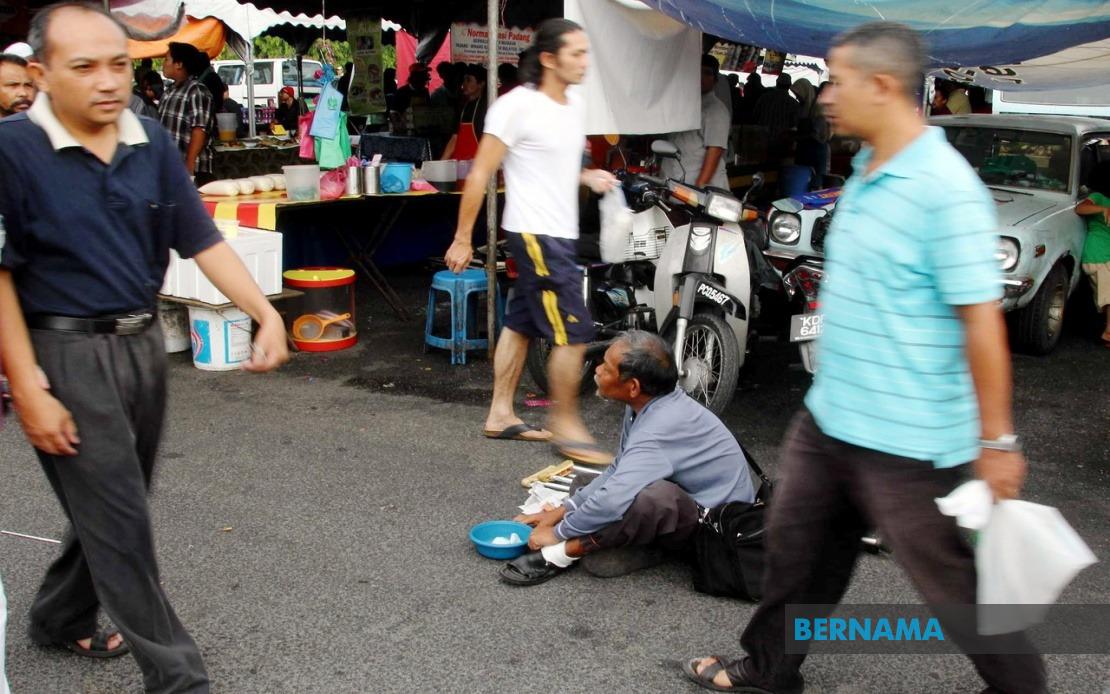
The Malaysian Home Ministry has raised fresh concerns about the scale and sophistication of begging operations involving foreign nationals, suggesting that many such activities are orchestrated by criminal syndicates rather than reflecting individual desperation. The assertion, made in a parliamentary written reply this week, underscores growing official anxiety over the visible presence of foreign beggars—particularly children—in high-traffic commercial and tourist zones across the capital.
Immigration Department enforcement operations between January and May this year painted a picture of considerable irregular foreigner activity in the Kuala Lumpur metropolitan region. Officers conducted 836 separate enforcement sweeps that encompassed more than 10,600 individual checks. Among those encountered, approximately 5,411 foreigners faced detention on immigration-related violations, a figure that speaks to both the operational intensity of the drives and the underlying prevalence of undocumented or status-compromised foreign nationals operating within the city. Within that cohort, 42 individuals were specifically identified as engaged in begging.
Wellington the enforcement numbers alone suggest systematic coordination rather than random street-level activity. The ministry's acknowledgement that investigations are simultaneously targeting Malaysian nationals suspected of providing protection, organisation, or financial management for these operations reveals a multi-layered criminal apparatus. Such individuals—often local gatekeepers, handlers, or beneficiaries—form the crucial connective tissue between foreign operatives on the streets and the financial mechanisms driving these networks. Their involvement signals that foreign begging is not a marginal phenomenon but rather an integrated component of larger human exploitation supply chains.
The geographic concentration of begging complaints in premium tourist and commercial precincts—Bukit Bintang, Jalan Alor, and Changkat Bukit Bintang were specifically cited by Fong Kui Lun, the Bukit Bintang parliamentarian who prompted the official response—indicates deliberate site selection. These locations attract affluent domestic shoppers, expatriate workers, and international visitors carrying cash, making them logical deployment zones for organised networks seeking to maximise yield. The syndicate nature of such positioning stands in sharp contrast to uncoordinated poverty-driven begging, which typically occurs across broader geographic patterns.
Responding to growing public disquiet about the visibility of child beggars, the ministry emphasised that no tolerance exists for exploitation-based activities affecting the nation's international standing. This framing—linking domestic law enforcement to Malaysia's global reputation—reflects diplomatic sensitivities around child exploitation narratives, which carry particular weight in international travel advisories and investment climate assessments. Southeast Asian nations remain scrutinised for human trafficking vulnerabilities, making visible child begging a reputational liability that transcends ordinary public order concerns.
The institutional response architecture unveiled by the ministry demonstrates recognition that begging syndicate suppression cannot rely on immigration enforcement alone. The Immigration Department has expanded joint operations with the Royal Malaysia Police and Kuala Lumpur City Hall, creating layered enforcement capacity. Critically, the apparatus now includes the Department of Social Welfare, indicating acknowledgement that sustainable intervention requires victim identification and social support mechanisms alongside law enforcement. The establishment of dedicated intelligence fusion—improved data sharing and pattern analysis—suggests maturing recognition that syndicate dismantling depends on mapping operational networks rather than merely processing individual arrests.
The operational centrepiece is the KL Strike Force, a multi-agency task force encompassing police, city authorities, welfare officials, and immigration personnel. Beyond routine enforcement sweeps, this structure emphasises continuous monitoring of recurrence patterns, suggesting that syndicate operations adapt quickly to enforcement pressure, disbanding or relocating after disruptions before reconstituting in alternative form or location. The emphasis on preventing recurrence tacitly acknowledges the cyclical nature of such crime—initial sweeps yield temporary respite, but sustained suppression demands persistent intelligence-led operations.
For Malaysian readers navigating urban commercial and tourist spaces, this enforcement posture offers some reassurance whilst simultaneously raising uncomfortable questions. The visible presence of organised begging reflects not merely poverty migration but active criminal exploitation operating within gaps in immigration compliance monitoring and local law enforcement capacity. The involvement of Malaysian nationals as syndicate facilitators implicates domestic criminal structures in cross-border human exploitation networks, a dynamic with troubling implications for overall governance integrity.
The ministry's separate response regarding foreign worker quota applications introduced a tangential but revealing policy dimension. Of 1,919 applications submitted during a special extension period spanning January through March this year, only 314 employers received recommendations. This notably low approval rate—approximately 16 percent—illuminates the administrative stringency now applied to foreign labour importation. The policy context matters: while headline figures suggest orderly foreign worker management, the heavy filtering at quota stage potentially incentivises employers to engage undocumented labour markets, where regulatory compliance costs are eliminated. Such structural pressures may indirectly contribute to irregular foreigner accumulation within urban centres, creating the very population pools from which syndicate operators recruit.
For Southeast Asian observers, Malaysia's wrestling with organised begging networks reflects broader regional dynamics. Poverty, conflict, and climate pressures across South Asia and Southeast Asia continuously generate migration flows exceeding legal channels' capacity. Criminal syndicates profit from channelling these migrants into exploitative arrangements, with begging representing merely one end of a continuum encompassing labour trafficking, sexual exploitation, and debt servitude. Malaysia's geographic position as a wealthy regional destination with substantial informal economy sectors makes it inherently attractive for such networks.
The forward trajectory outlined by the ministry—continued interagency coordination, enhanced intelligence work, and sustained operational tempo—provides a roadmap but no guarantees. Syndicate dismantling typically requires international cooperation, given that foreign beggars originate from multiple source countries with limited extradition relationships with Malaysia. Identifying and interrupting recruitment pipelines in origin communities demands sustained diplomatic engagement and development cooperation that extends far beyond Kuala Lumpur's streets. Without such upstream intervention, suppression efforts risk remaining perpetually reactive, processing arrests and temporary disruptions whilst the underlying structural conditions sustaining syndicate operations persist unaltered.

