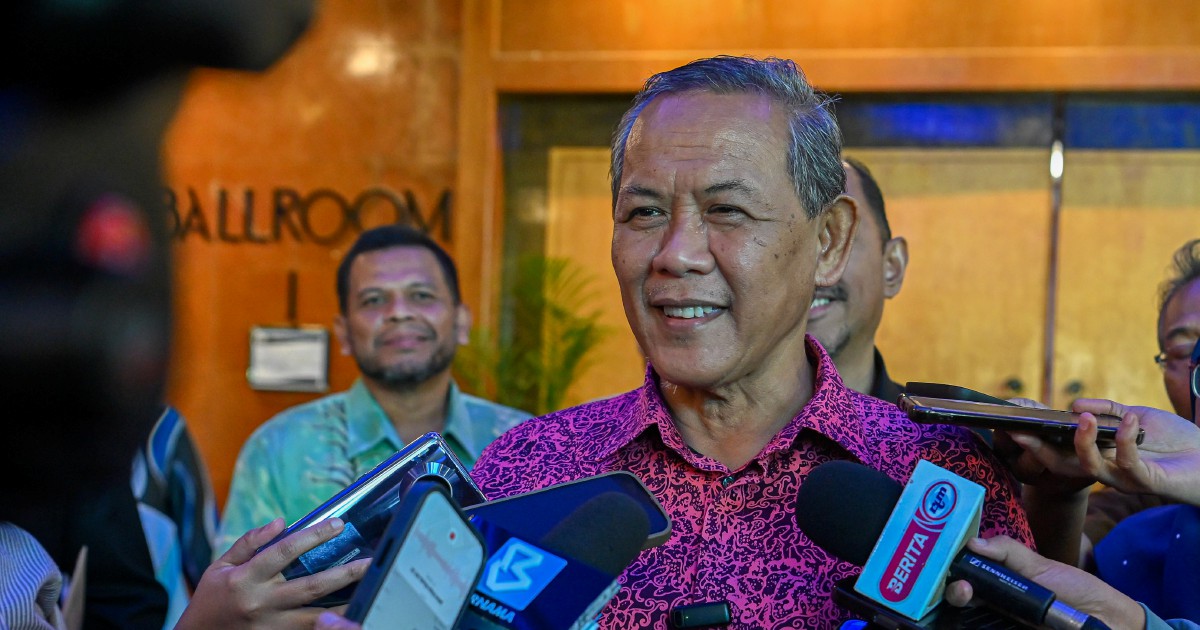
Negri Sembilan Menteri Besar Datuk Seri Aminuddin Harun has made an unusually direct appeal for the Linggi flooding crisis to be treated as a governance challenge rather than electoral ammunition, seeking to redirect public attention toward the substantial mitigation works already underway in the flood-prone region. Speaking in Seremban, he emphasised that voters ought to evaluate his administration's tangible response to the perennial problem that has plagued Linggi communities for years, rather than permit opposition figures or political opportunists to weaponise the disaster ahead of the 16th state election.
The Linggi river basin, which encompasses parts of central Negri Sembilan, has endured a long history of destructive seasonal flooding that displaces families, damages homes and businesses, and disrupts economic activity. The problem is not unique to the state—monsoon flooding affects communities across Malaysia—but its persistence in Linggi has made it a flashpoint for criticism of state governance. Aminuddin's appeal reflects a broader tension in Malaysian politics, where infrastructure failures and natural disasters become convenient rallying points for opposition campaigns, often overshadowing the technical and financial complexities of long-term mitigation.
By explicitly urging voters to focus on remedial action rather than rhetoric, the Menteri Besar is essentially asking the electorate to weigh outcomes over blame. This framing assumes that Linggi residents care most about whether flooding will recur and how severely, rather than who held office when the problem began. It is a pragmatic appeal, yet it also sidesteps questions about why a chronic issue has persisted, what prevented earlier intervention, and whether current measures are adequate or merely incremental.
The government has already committed resources to various mitigation schemes in the Linggi area. These typically include drainage improvements, riverbank reinforcement, detention basin construction, and early warning systems designed to minimise damage and enable faster evacuation. Such infrastructure projects require sustained funding, technical expertise, and inter-agency coordination—elements that do not always align with election cycles. Aminuddin's reference to ongoing works suggests that the state administration views these efforts as evidence of competence and commitment, even if their impact may not be immediately visible to residents still affected by floods.
However, the implicit tension in his statement—that the issue should not be politicised—itself reflects how deeply entrenched the Linggi floods have become in local political narrative. Residents who have endured repeated inundation may reasonably ask why such fundamental problems require external pressure to motivate government action. In Malaysian politics, infrastructure and environmental disasters do become election issues precisely because voters believe them to be barometers of administrative effectiveness. Asking people not to consider them politically may be asking them to separate their material interests from their electoral choices, which is asking a great deal.
The timing of Aminuddin's statement is significant given the approach of the 16th state election. Opposition parties have likely seized upon Linggi's continuing vulnerability as evidence of state mismanagement, while the ruling coalition presumably wishes to present itself as having stabilised the situation or initiated recovery. The Menteri Besar's effort to reframe the debate suggests some concern that the narrative has tilted against his government, or that further political exploitation of the issue could erode voter confidence.
For Linggi residents themselves, the practical question is whether mitigation works will actually prevent or substantially reduce future flooding. Many communities in Malaysia have experienced repeated flooding despite government assurances of improvement, leading to justified scepticism about promises unaccompanied by visible results. The electorate in Seremban and surrounding areas will likely judge the government on whether its interventions demonstrably lower the frequency and severity of inundation, not merely on whether officials make appeals for rational deliberation.
Beyond Negri Sembilan, this incident underscores a broader Malaysian challenge: how to separate technical environmental and infrastructure issues from electoral politics without rendering them invisible or deprioritised. Flooding in Linggi is both a legitimate governance concern and a legitimate electoral issue. Voters have every right to demand that their representatives solve chronic public problems, and to vote accordingly if they believe those problems persist due to neglect or incompetence.
Aminuddin's appeal essentially asks for a distinction between acknowledging a problem as a campaign issue and allowing it to be misrepresented for partisan gain. The distinction is sound in principle—voters should have accurate information about a government's actual mitigation efforts—but it requires transparency about what those efforts entail, their cost, their timeline, and their expected outcomes. Without such clarity, calls to depoliticise an issue can appear to be requests for silence rather than enlightened deliberation.
As Negri Sembilan heads toward its state election, the Linggi flooding question will undoubtedly feature in debates and campaign literature. The real test will be whether the government's mitigation works deliver measurable improvements in the near term. If they do, the issue may recede from political prominence. If they do not, or if improvements prove marginal, no amount of exhortation to voters will prevent Linggi from remaining a focal point of criticism. In Malaysian politics, as elsewhere, results speak louder than rhetoric.

