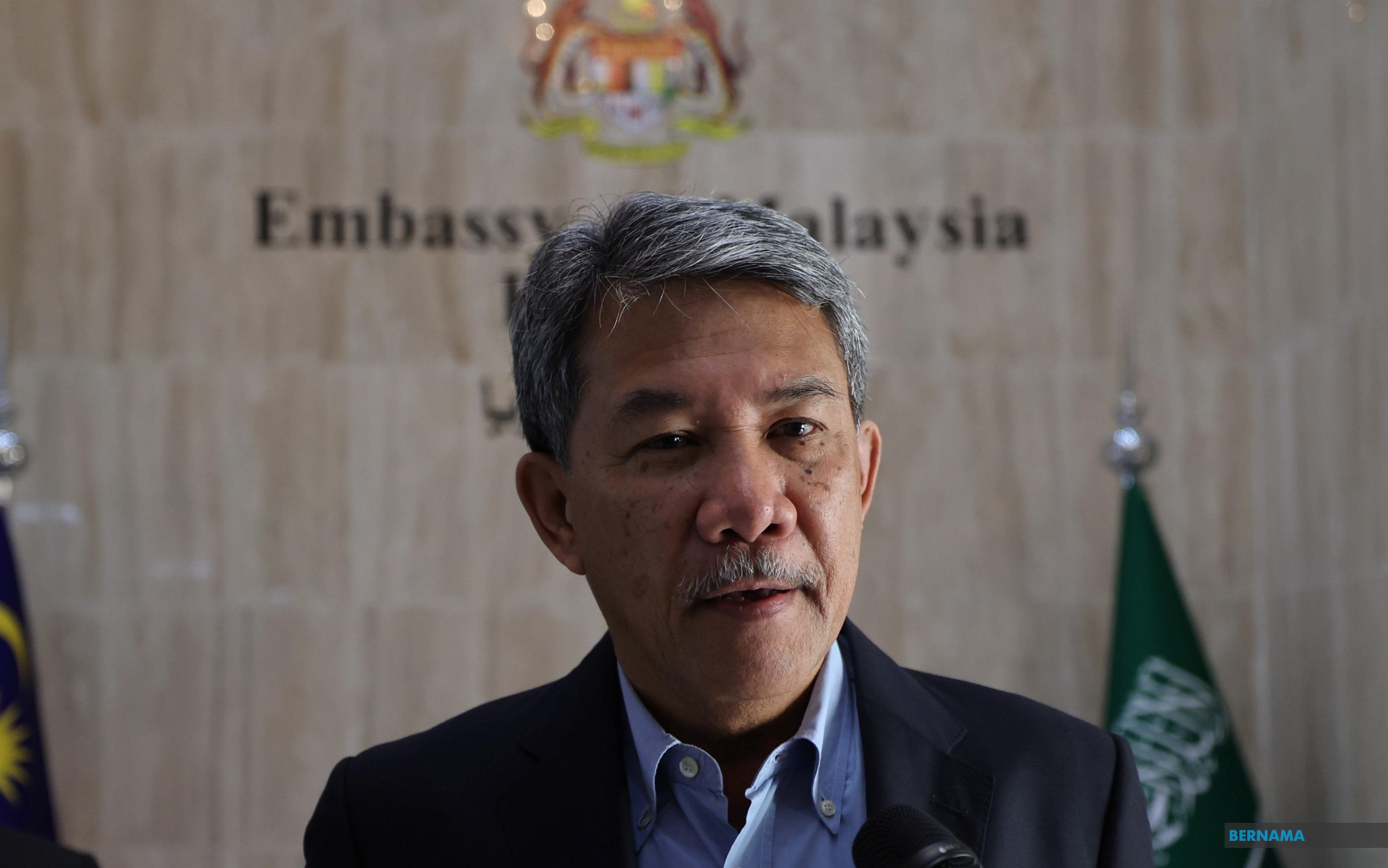
Foreign Minister Datuk Seri Mohamad Hasan touched down in Jeddah on August 26, preparing to represent Malaysia at a specially convened session of the Organisation of Islamic Cooperation's Council of Foreign Ministers. His arrival at King Abdulaziz International Airport, where he was received by Malaysian Ambassador to Saudi Arabia Datuk Syed Bakri Syed Abdul Rahman, signals Kuala Lumpur's commitment to engaging with the Muslim world's premier diplomatic forum on one of its most pressing contemporary issues.
The extraordinary meeting, scheduled for August 27, represents an urgent mobilisation of OIC member states to address the escalating humanitarian and political dimensions of the Israeli-Palestinian conflict. The agenda encompasses the deteriorating conditions in Gaza and the West Bank, alongside the contentious matter of illegal Israeli settlements—issues that have consistently drawn Malaysia's vocal opposition and condemnation at multilateral platforms. By convening outside its regular schedule, the OIC is signalling the gravity with which it views recent developments in the occupied territories.
Malaysia's participation carries particular significance given the country's longstanding and principled stance on Palestinian self-determination. Ambassador Syed Bakri underscored that attendance at this forum provides an essential opportunity for Malaysia to reinforce its unwavering position regarding Israeli military actions and territorial expansion. For Malaysian policymakers, this gathering represents not merely symbolic representation but a chance to shape collective OIC responses and ensure that member states maintain unified messaging on this fundamental issue affecting the broader Muslim ummah.
During the proceedings, Mohamad is slated to deliver Malaysia's National Statement, a formal address that will reaffirm the country's steadfast commitment to Palestinian rights and aspirations. The statement will emphasise Malaysia's support for the Palestinian people's legitimate struggle for independence and sovereignty, grounded in international law principles recognising the pre-1967 borders as the foundation for any sustainable peace settlement. This framing reflects Malaysia's consistent legal and diplomatic approach, anchoring its position in established international norms rather than purely emotional appeals.
The significance of Malaysia's participation extends beyond ceremonial protocol. As a respected voice within the OIC and the broader Non-Aligned Movement, Malaysia can amplify perspectives from Southeast Asia—a region whose Muslim-majority nations often occupy a more measured diplomatic stance than their Middle Eastern counterparts. This positioning allows Malaysia to bridge diverse viewpoints within the OIC while maintaining principled clarity on fundamental issues of justice and international law.
Beyond the formal agenda, Mohamad's presence in Jeddah creates valuable opportunities for bilateral engagement with counterparts from various nations attending the extraordinary session. These bilateral meetings serve dual purposes: they allow Malaysia to deepen relationships with strategic partners while simultaneously exploring practical avenues for cooperation in business, trade, and investment sectors. Such conversations are particularly important for Southeast Asian nations seeking to diversify economic partnerships while maintaining diplomatic ties across the Islamic world.
The timing of this OIC convocation reflects broader geopolitical tensions and the ongoing struggle to find diplomatic solutions to the Palestinian question. Malaysia's participation demonstrates that the country views engagement through multilateral Islamic frameworks as complementary to its bilateral relationships and broader foreign policy objectives. Rather than isolating itself within a particular bloc, Malaysia continues to navigate multiple diplomatic circles simultaneously, advocating for Palestinian rights while maintaining pragmatic relationships across the international community.
The delegation Mohamad leads will carry with it Malaysia's accumulated diplomatic experience in Palestinian affairs. Over decades, Malaysian governments have consistently advocated for Palestinian statehood in the United Nations General Assembly, regional forums, and bilateral discussions. This consistent positioning has established Malaysia as a credible voice on the issue, lending weight to its interventions at gatherings like the OIC Council of Foreign Ministers.
For Malaysian observers and policymakers monitoring international developments, this Jeddah meeting underscores the continuing centrality of the Palestinian question to Muslim-majority nations' foreign policy calculations. Even as Southeast Asia grapples with its own regional security challenges, maritime disputes, and economic competition, the Palestinian-Israeli conflict remains a touchstone issue that mobilises collective action among OIC members. Malaysia's presence ensures that Southeast Asian perspectives inform OIC discussions and that the organisation's deliberations consider the interests and positions of non-Arab Muslim-majority states.
The outcomes of this extraordinary session—whether measured through collective statements, coordinated diplomatic initiatives, or bilateral understandings forged in Jeddah's corridors—will likely shape Malaysia's approach to Palestinian affairs in coming months. As Malaysia continues asserting itself as an influential voice in both regional and Islamic multilateralism, such gatherings provide platforms to advance national interests while contributing to broader efforts supporting Palestinian self-determination and regional stability.

