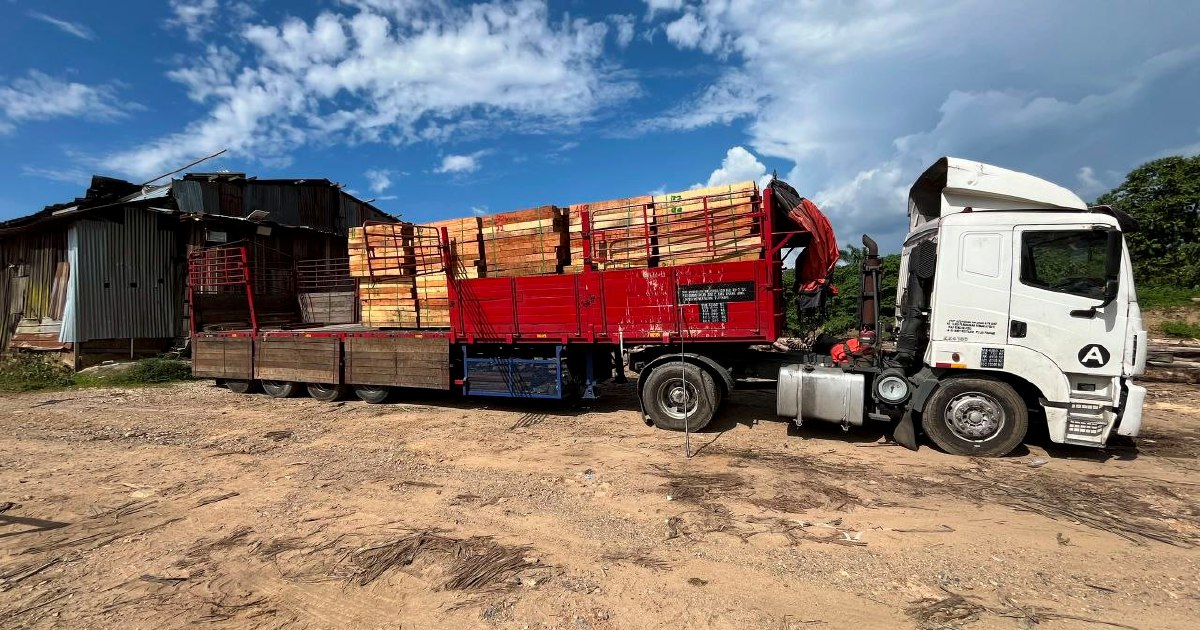
Law enforcement authorities have dealt a significant blow to organised illegal timber trafficking in East Coast Malaysia by dismantling an underground processing operation in Kuala Krai, Kelantan. The operation, conducted in the Sungai Embak industrial area, resulted in the arrest of five men and the seizure of equipment and timber valued at RM2.32 million, marking a substantial recovery in the ongoing crackdown against the illicit forestry sector that has long plagued the region.
The raid represents an escalation in enforcement efforts targeting the sophisticated networks that have transformed Malaysia into a critical transit hub for illegally harvested timber destined for regional and international markets. These operations, often spanning multiple jurisdictions and involving complex supply chains, have historically proven difficult for authorities to dismantle entirely. The discovery of a fully operational processing facility rather than merely a storage depot suggests that criminal syndicates have become increasingly brazen in conducting value-added processing activities domestically, rather than exporting raw logs.
Kelantan has emerged as a particular flashpoint for timber trafficking, given its proximity to the Thai border and its substantial forest reserves. The state's geography and administrative complexities have made it vulnerable to cross-border smuggling networks that exploit porous enforcement gaps. Unlike previous operations that focused on intercepting timber in transit, this facility appears to have been specifically equipped for converting logs into processed timber products, indicating a higher degree of operational sophistication and capital investment by the criminal enterprise.
The machinery and industrial equipment recovered during the operation are now in the custody of enforcement agencies. These assets provide crucial intelligence about the technical capabilities and production capacity of the illegal operation, allowing investigators to trace relationships with larger distribution networks and identify potential downstream recipients of processed timber. The scale of equipment seizure suggests the facility was operating at near-industrial capacity rather than functioning as a small-scale operation.
The timber itself represents the most immediate environmental concern, as its successful processing and export would have contributed significantly to regional deforestation pressures. Malaysia's forests continue to face mounting pressure from legal concessions, agricultural expansion, and illegal harvesting. Each seizure of this magnitude represents not only financial loss to criminal networks but also prevents further environmental degradation across the Southeast Asian region, where timber trafficking remains a transnational challenge affecting multiple jurisdictions simultaneously.
These enforcement actions carry implications that extend well beyond Kelantan's borders. Southeast Asia has positioned itself as a global timber processing hub, with legitimate mills operating alongside illegal operations that exploit regulatory gaps. The ability of criminal networks to establish full processing facilities domestically, rather than merely acting as collection points, reflects the evolving sophistication of timber trafficking. Malaysian authorities' capacity to identify and dismantle such operations before products reach export channels is therefore crucial to regional efforts to combat organised environmental crime.
The detention of five individuals allows investigators to potentially unravel the broader network structure. Timber trafficking organisations typically employ compartmentalised operations where different individuals manage harvesting, transportation, processing, and distribution functions. Interrogation of those arrested may yield intelligence regarding supplier networks operating in adjacent jurisdictions, potentially involving both domestic and cross-border criminal organisations. Such investigative breakthroughs often catalyse multi-agency efforts involving forest departments, customs authorities, and police units across state and national boundaries.
Corruption remains a persistent challenge in disrupting these networks. Illegal timber operators have historically relied on complicity at various governmental and administrative levels to move their product through controlled checkpoints and processing facilities. The success of this particular operation likely reflects improved inter-agency coordination and heightened vigilance by field operatives. However, sustained effectiveness requires continuous resource allocation and ongoing efforts to fortify institutional integrity within enforcement agencies themselves.
The international dimension of timber trafficking cannot be overlooked. Processed timber from such illegal facilities often enters formal supply chains destined for China, Vietnam, and other regional manufacturing hubs. International demand for Malaysian tropical timber, combined with significant price differentials between legally and illegally harvested products, creates powerful economic incentives for criminal networks to maintain operations. Regional cooperation mechanisms and enhanced port inspections are therefore essential complements to domestic enforcement efforts.
For Malaysian policymakers, this seizure underscores the continued necessity for investment in enforcement infrastructure, training of personnel, and development of intelligence-sharing mechanisms with neighbouring countries. The RM2.32 million in recovered assets demonstrates that financially substantial criminal enterprises remain operative despite previous enforcement actions. Addressing the underlying drivers of timber trafficking—including demand-side pressures and price arbitrage opportunities—requires coordinated policy responses that extend beyond law enforcement into supply chain regulation and international trade monitoring.
The incident also highlights the importance of community engagement and whistleblower mechanisms. Industrial-scale illegal operations cannot function entirely clandestinely; they inevitably generate observable signs including unusual transport activity, industrial equipment installation, and worker movement. Strengthening reporting channels and protecting informants can enhance early detection capabilities. Moving forward, authorities will likely intensify surveillance in known timber trafficking hotspots while continuing their investigative pursuit of individuals arrested during this operation and the networks they served.

