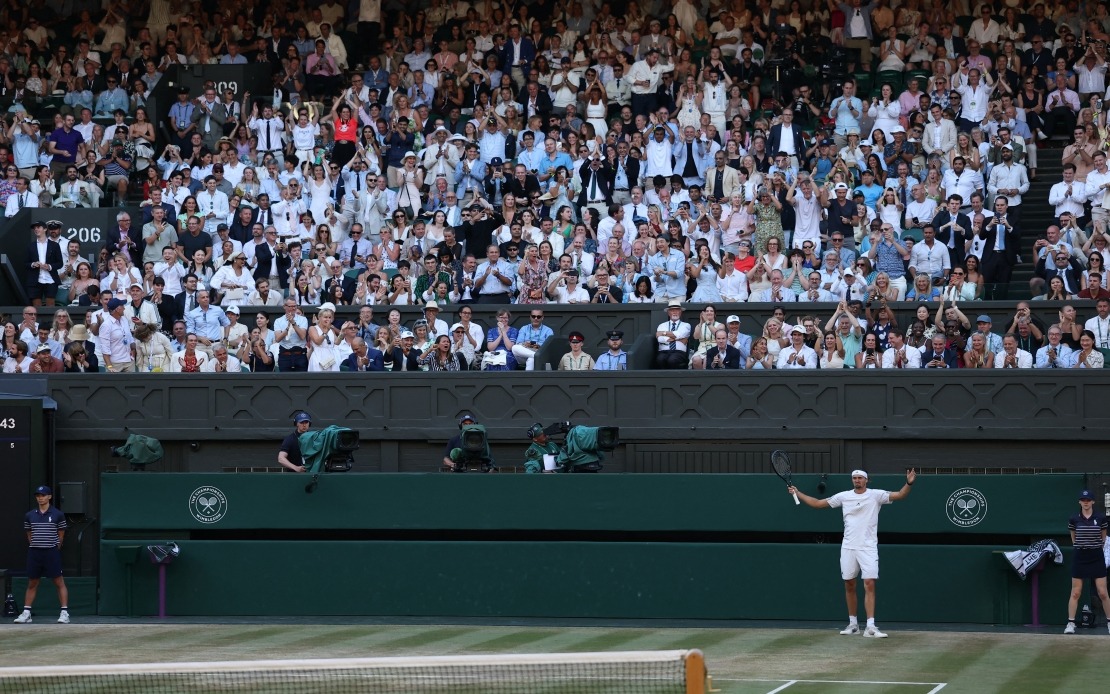
The 2026 Wimbledon Championships concluded with Jannik Sinner capturing his maiden Grand Slam title through a commanding four-set victory over Alexander Zverev in the men's singles final. The triumph represented a watershed moment for the rising Italian star and provided a satisfying conclusion to a fortnight marked by unexpected narratives, dramatic comebacks, and several performances that will linger in the memory of tennis followers across Southeast Asia and beyond.
Karoline Noskova's path to the women's singles crown embodied both the heartbreak and resilience that makes Wimbledon unique. The Czech finalist squandered five championship points during a second-set implosion that saw her surrender a commanding 5-2 advantage, forcing the match into a deciding set. Noskova's near-collapse inevitably invoked comparisons with Jana Novotna's anguished exit from the 1993 final against Steffi Graf, when the Czech legend wept on the shoulder of the Duchess of Kent after squandering what appeared to be a winning position. Unlike Novotna, who endured a five-year wait before capturing her Wimbledon crown in 1998, the 21-year-old Noskova demonstrated remarkable mental fortitude. Following a bathroom break during which she walked past the gleaming trophies, Noskova returned with steely determination, reportedly declaring to herself: "I'm taking the big one!" Her recovery from that harrowing position and ultimate triumph underscores how modern players increasingly possess the psychological armoury to reverse seemingly insurmountable deficits.
British wildcard Joshua Fery emerged as the Championships' most captivating storyline, transforming from relative obscurity into a national symbol of sporting endeavour. Ranked 114th in the world and competing as a homegrown hopeful at his local tournament, the 23-year-old Wimbledon resident mounted an improbable semifinal campaign that captured the imagination of British tennis enthusiasts. His quarterfinal confrontation against Zizou Bergs exemplified the dramatic arc of his run, with Fery facing elimination while trailing 4-1 in both the fourth and fifth sets under punishing conditions on Court 18. The British player endured three nosebleeds amid the sweltering heat, yet refused to capitulate. After forcing a tiebreak to level the match, Fery demonstrated uncommon composure in the ten-point decider as his higher-ranked Belgian opponent—seeded 77 positions above him—squandered his advantage through mounting frustration. Fery's semifinal berth positioned him among only the fifth British male player this century to penetrate the second week at the All England Club, a statistic that underscores both the rarity of his achievement and the relative scarcity of homegrown success at this particular venue.
Novak Djokovic's quarterfinal odyssey against Felix Auger-Aliassime represented yet another extraordinary examination of the Serbian champion's physical and mental reserves at an age when most athletes have long retired. The 39-year-old navigated a five-hour 15-minute marathon that stands as the longest quarterfinal in Wimbledon's storied history, concluding a mere eight minutes before the 11pm curfew. During this gruelling encounter, Djokovic required medical intervention for a calf injury at the conclusion of the opening set and subsequently engaged in a heated dispute with tournament referee Denise Parnell regarding roof closure procedures before the third set commenced. The 24-time Grand Slam titleholder ultimately prevailed against the third-seeded Auger-Aliassime but emerged with his reserves severely depleted. Djokovic's subsequent semifinal confrontation with Sinner proved one encounter too many, as the accumulated physical and emotional toll manifested in defeat. This match exemplifies the unsustainable toll that ultra-extended matches exact even upon tennis's greatest competitors.
The women's singles semifinal between Karolina Muchova and Coco Gauff distilled itself into eighteen mesmerising minutes of tiebreak tennis that featured multiple match-point opportunities and a dramatic stroke of misfortune. At 8-8 in the decisive breaker, Muchova received a time violation before subsequently striking long, presenting Gauff with an initial match point that the American inexplicably squandered through a simple dropped-shot error. Muchova appeared positioned to convert her own match point until a slip at the net proved catastrophic, enabling Gauff's cross-court forehand to find open court. However, the Czech ninth seed executed flawlessly at her second opportunity, methodically moving Gauff around the court before the American's fatigued forearm delivered the net. This brutally compressed match demonstrated how the slimmest margins and momentary lapses of concentration determine Grand Slam outcomes, with neither player capable of producing perfect tennis throughout the extended rally.
Serena Williams' comeback narrative provided the Championships with its most emotionally resonant subplot. The American icon, competing at age 44 on a wildcard barely four years after publicly announcing her "evolution away" from professional tennis, entered Centre Court to a thunderous standing ovation that testified to her enduring cultural significance. Against Australian opponent Jaimee Joint—a 24-year-old junior in age alone—Williams established an early break advantage in the deciding set that momentarily suggested a storybook return to her winning ways. However, the physical demands of competitive tennis at an advanced age proved insurmountable. Williams gradually surrendered her advantage as Joint displayed impressive composure under the extraordinary pressure of opposing a living legend. Subsequently, it emerged that Williams had sustained a knee injury during the opening set, a setback that precipitated her withdrawal from a planned doubles reunion with her sister Venus. Williams' appearance, though concluding in defeat, reinvigorated global interest in women's tennis and demonstrated the enduring appeal of elite competitors transcending generational expectations.
These five matches collectively encapsulated why Wimbledon maintains its singular grip upon the tennis world. The tournament's combination of atmospheric perfection, historical gravitas, and grass-court unpredictability generates narratives that extend far beyond statistical accomplishment. For Malaysian tennis enthusiasts, Wimbledon 2026 offered compelling lessons regarding mental resilience, unlikely triumph against superior-ranked opponents, and the undiminished appeal of veterans confronting younger competitors. Each of these encounters reinforced Wimbledon's position as sport's most compelling stage, where personal narratives intersect with championship glory across a fortnight of extraordinary tennis.

