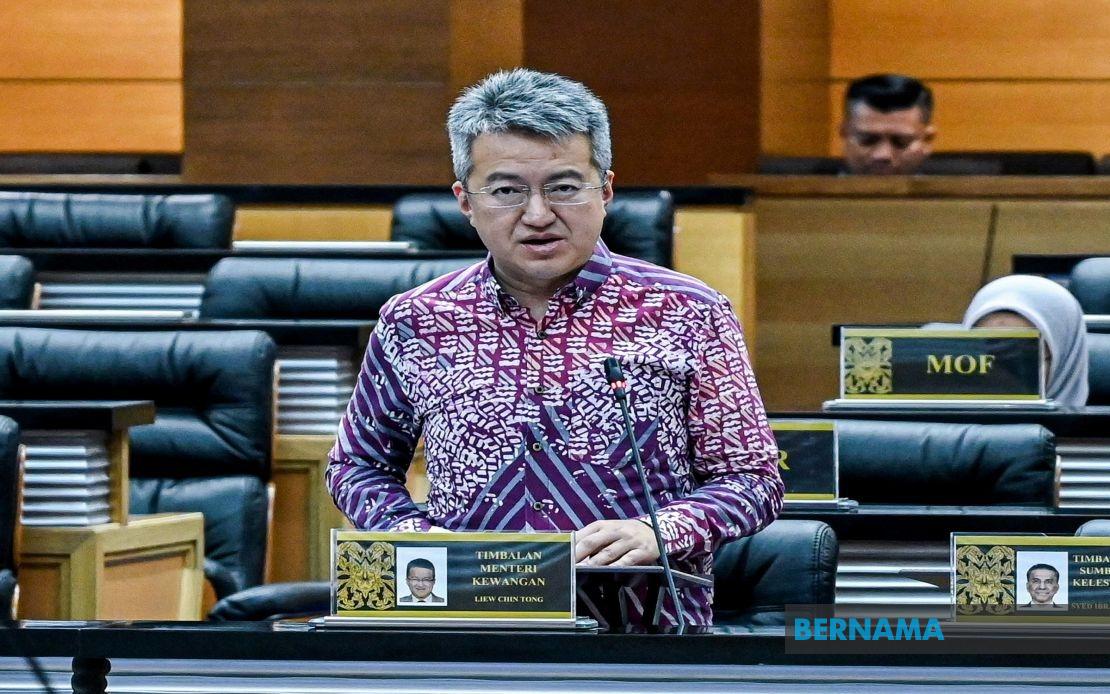
The Malaysian government is undertaking a comprehensive examination of whether elderly care facilities should be relieved from the eight per cent sales and service tax, signalling growing recognition of affordability pressures facing families managing aged parent care. Deputy Finance Minister Liew Chin Tong disclosed during parliamentary proceedings that his ministry, working jointly with the Ministry of Women, Family and Community Development, has committed resources to this analysis, which will determine whether such an exemption should proceed.
The impetus for this policy review stems from legislative pressure brought by lawmakers concerned about the cumulative financial impact of taxation on care services. Ipoh Timor member of parliament Lee Chuan How elevated the matter in the Dewan Rakyat, highlighting that families already straining under elevated living costs now face additional levies when accessing registered elderly care services provided by facilities under the Social Welfare Department's purview. The arithmetic is stark: care centres typically charge monthly fees around RM2,500, and the eight per cent service tax translates into tangible monthly increases that compound substantially over the years of care required by elderly Malaysians.
The government's analytical framework will move beyond blanket calculations to examine service differentiation within the elderly care sector. Liew explained that officials will classify care centres according to whether they deliver foundational care services or premium-tier offerings, recognising that economic impact varies substantially across demographic groups accessing different service tiers. This granular approach reflects acknowledgment that a single tax treatment may not equitably address all situations within the broader elderly care ecosystem. The distinction matters significantly for middle-income Malaysian households, where care facility fees represent a meaningful proportion of disposable household income.
What elevates this from routine budgetary consideration to pressing policy matter is the vulnerability dynamics involved. Policymakers are conscious that those utilising elderly care services—both the elderly themselves and their adult children managing care decisions—occupy economically precarious positions relative to the overall population. The government's stated concern that the service tax should not "adversely affect or burden vulnerable groups already facing a high cost of living" reflects acknowledgment that regressive taxation effects require corrective policy attention. For many Malaysian families, the choice between accessing professional care services and stretching household finances creates genuine hardship.
The consultation architecture underpinning this review signals seriousness about evidence-based policymaking. Rather than issuing directives from Putrajaya offices, Liew committed his ministry to conducting site visits to actual care facilities, engaging directly with operators who understand ground-level pressures. These working visits, undertaken collaboratively with the community development ministry, will generate qualitative data about operational realities that statistical models cannot fully capture. Operators can articulate how taxation decisions cascade through their business models, affecting staffing capacity, facility maintenance standards, and ultimately service quality available to elderly residents.
The broader context for this initiative involves Malaysia's evolving demographic landscape. The country's population is ageing measurably, with projections indicating significant expansion of the elderly cohort over coming decades. As traditional multigenerational household structures become less dominant in urbanised areas, the elderly care centre sector has expanded correspondingly. This structural shift transforms what was once a niche service into mainstream infrastructure. Policy decisions made now about taxation and regulatory frameworks will shape whether this essential sector remains accessible to middle-income Malaysians or becomes increasingly bifurcated between premium private facilities and underfunded public provision.
Financial ministers globally confront similar dilemmas regarding taxation of essential services. The tension between revenue maximisation and distributional fairness becomes acute when services address fundamental human needs like aged care. Malaysia's approach—subjecting such care to uniform sales and service taxation rather than implementing sector-specific exemptions—differs from frameworks in comparable economies. Some jurisdictions have carved carve-outs for essential social services, treating them similarly to healthcare or educational institutions. The current Malaysian review implicitly questions whether elderly care warrants reclassification within the tax hierarchy.
The parliamentary discussion generating this initiative also illuminates how legislative pressure on economic policy operates within Malaysia's system. Opposition and backbench members utilising parliamentary procedures to raise constituent grievances create mechanism for policy reconsideration by executive branches. Lee Chuan How's intervention exemplifies how elected representatives translate family-level financial anxieties into formal legislative discourse, compelling ministerial response. The Deputy Finance Minister's willingness to commit to site visits and further analysis represents acknowledgment that such concerns command serious governmental engagement.
The timeline for completion remains unstated, with Liew indicating only that stakeholder feedback will be absorbed before finalisation. This open-ended commitment reflects either genuine policy complexity or, more likely, the competing budgetary pressures within government finance. Any tax exemption for elderly care facilities would reduce revenue collections, requiring either offsetting tax increases elsewhere or expenditure reductions in other programmes. Such trade-offs require careful calibration across cabinet constituencies with divergent spending priorities. The Finance Ministry must balance this concern against political pressure to demonstrate responsiveness to household economic distress.
For elderly care operators and families currently navigating the system, this study represents both opportunity and uncertainty. Operators may invest resources in demonstrating their economic challenges and operational realities, hoping to influence final recommendations toward exemption. Families considering whether to access care services face lingering taxation uncertainty. The multi-month study period creates a holding pattern where utilisation decisions may be deferred pending policy clarity. This extended deliberation period itself carries economic consequences, potentially affecting sector planning and investment decisions.
The outcome will carry symbolic significance beyond its direct budgetary implications. An exemption would signal governmental prioritisation of elderly welfare within the tax structure, aligning taxation policy with social development objectives. Conversely, maintaining uniform taxation across all services would reflect Treasury-dominant framing emphasising revenue stability over distributional considerations. Malaysian policymakers will ultimately judge whether elderly care provision constitutes ordinary commercial service appropriately subject to standard taxation or essential social infrastructure warranting preferential tax treatment. That determination will reverberate across the sector and influence how families access this increasingly critical service.

