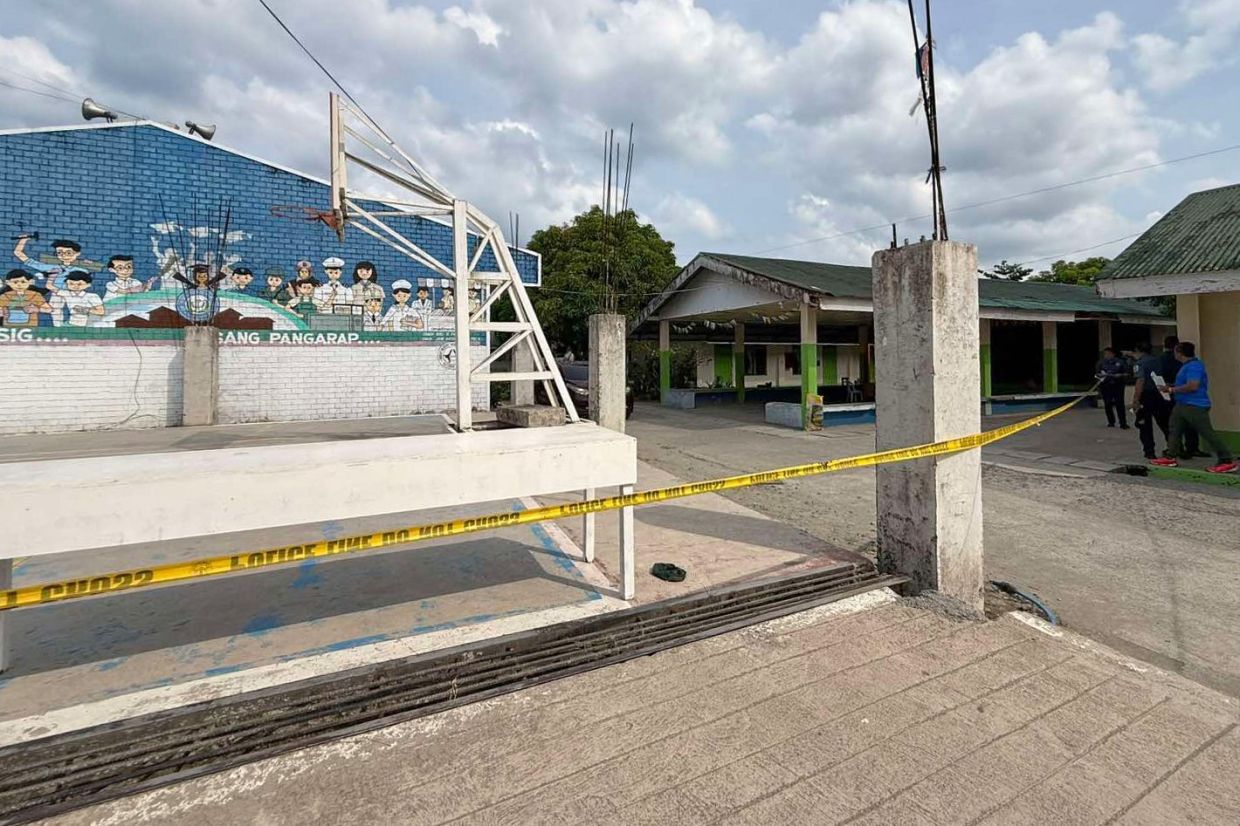
A 14-year-old female student has been taken into custody by Philippine authorities for allegedly threatening an attack on her school via social media, in what appears to be a copycat incident following the deadly Tacloban City shooting earlier in the week. Interior Secretary Jonvic Remulla announced the detention at a press briefing in Camp Crame on Thursday, June 25, revealing that operatives from the Philippine National Police Criminal Investigation and Detection Group apprehended the Grade 10 student from Tolosa National High School after receiving a tip from Senator Bam Aquino regarding her threatening social media post from Wednesday night.
The specific language of the threat posted by the teenager painted a chilling picture of intended violence. The message read: "Hello. Send this to your friends. Yo, from Tolosa, prepare yourselves, especially to you, as you owe me. Get ready. I will disrupt the school. You won't know me, but you will recognise me. There is no time nor day. Be prepared for whoever gets shot or stabbed. We don't care. Good luck to you at Tolosa National High School." The inflammatory nature of the posts, combined with their timing just days after an actual school shooting in the same region, immediately triggered law enforcement attention and raised concerns about potential copycat violence.
Investigators discovered that the minor had created multiple Facebook accounts to spread her threatening message more widely, a tactic that amplified the reach and severity of the threat. However, the accounts and posts were quickly deleted once authorities made contact with the student, according to Remulla. The minor's identity was confirmed through detailed social media analysis and corroborating information provided by concerned community members who reported the posts to authorities. This digital investigation highlights the challenge facing police in tracking and documenting threats that are deliberately deleted by perpetrators before law enforcement can preserve evidence.
The young student presented significant obstacles to the investigation itself. Remulla noted that she was hesitant and uncooperative during questioning, primarily due to fear of the consequences she might face. Her parents, when approached by the Tolosa Municipal Police Station, refused to cooperate and provide information about the incident, further complicating the authorities' efforts to understand the motivations behind the threat. This family resistance to engagement with law enforcement is not uncommon in cases involving minors and raises questions about whether parental support and early intervention could have prevented such behaviour.
Ultimately, the minor could not be formally charged with any crime due to the protections afforded by Republic Act No. 9344, the Juvenile Justice and Welfare Act, which shields minors from criminal prosecution for certain offences. The Department of Social Welfare and Development took custody of the student, and she was subsequently released into the care of her parents. This outcome reflects the delicate balance Philippine law attempts to strike between public safety and the rehabilitation of young offenders, though it also underscores the limitations facing authorities when confronting online threats from juveniles.
Remulla indicated that investigators believe personal and family problems may have driven the student to post the threats, rather than any genuine intention to carry out violence. Following engagement with her family, officials determined that "the threat appears to be neutralised and inactive." Critically, investigators found no evidence of an organised plan, involvement of other individuals, or most importantly, access to firearms by either the teenager or her family members. This assessment provided some reassurance that the threat, while serious, was unlikely to materialise into actual violence, though the psychological impact on the school community remained significant.
The Tolosa incident cannot be viewed in isolation; it emerged directly in the shadow of a significantly more devastating attack. San Jose National High School in Tacloban City was the site of a school shooting just Monday, June 22, carried out by two students aged 14 and 15. That attack resulted in three students being killed and at least 20 others wounded, making it one of the deadliest school shooting incidents in recent Philippine history. The proximity in time and geography of the two incidents, separated by less than a week and occurring in the same region, strongly suggests a contagion effect whereby the Tolosa student may have been inspired or emboldened by the Tacloban shooting.
A particularly noteworthy detail that authorities emphasised is that all individuals involved in both incidents were reported to be "avid fans" of GoreBox, a violent video game that has faced increasing scrutiny from authorities. Following the Tacloban shooting, the Cybercrime Investigation and Coordinating Centre moved swiftly to temporarily ban the game, attempting to remove what officials view as a potential source of inspiration or desensitisation to violence. This action reflects broader concerns across the Asia-Pacific region about the relationship between violent media consumption and real-world violence, particularly among young people, though the causal links remain debated among researchers and psychologists.
For Malaysian readers, these incidents carry particular relevance given the geographic and cultural proximity of the Philippines and the shared experience of Southeast Asian nations grappling with youth violence and school security. The cases highlight how social media platforms can rapidly amplify threats and potentially inspire copycat incidents, a challenge transcending national borders. The difficulty Malaysian authorities might face in responding to similar threats is underscored here: the legal protections for minors, the challenge of engaging uncooperative families, the rapidity with which digital evidence is deleted, and the psychological impact on entire school communities all represent obstacles that regional law enforcement agencies must prepare for.
The incident also raises broader questions about school security protocols in the Philippines and Southeast Asia more generally. With three confirmed fatal school shootings or shooting incidents occurring in rapid succession, whether authorities are adequately prepared with preventative measures, threat assessment procedures, and rapid response protocols becomes increasingly pressing. The Tolosa case suggests that early warning signs and community reporting mechanisms can work—Senator Aquino's tip led to swift police action—yet families and schools must be equally engaged in recognising and reporting concerning behaviour among young people.
Moving forward, authorities in the Philippines and across Southeast Asia face a complex challenge: how to protect schools and students from credible threats while simultaneously avoiding either ignoring genuine danger signs or overreacting to juvenile expressions of anger or desperation. The Tolosa student's case, while resolved without violence, demonstrates that serious intervention and family engagement remain essential tools in preventing tragedy. For Malaysia and neighbouring countries, the lesson is clear: integrated approaches involving schools, families, law enforcement, and social services are essential in addressing the underlying issues that lead young people to threaten or perpetrate violence in educational settings.

