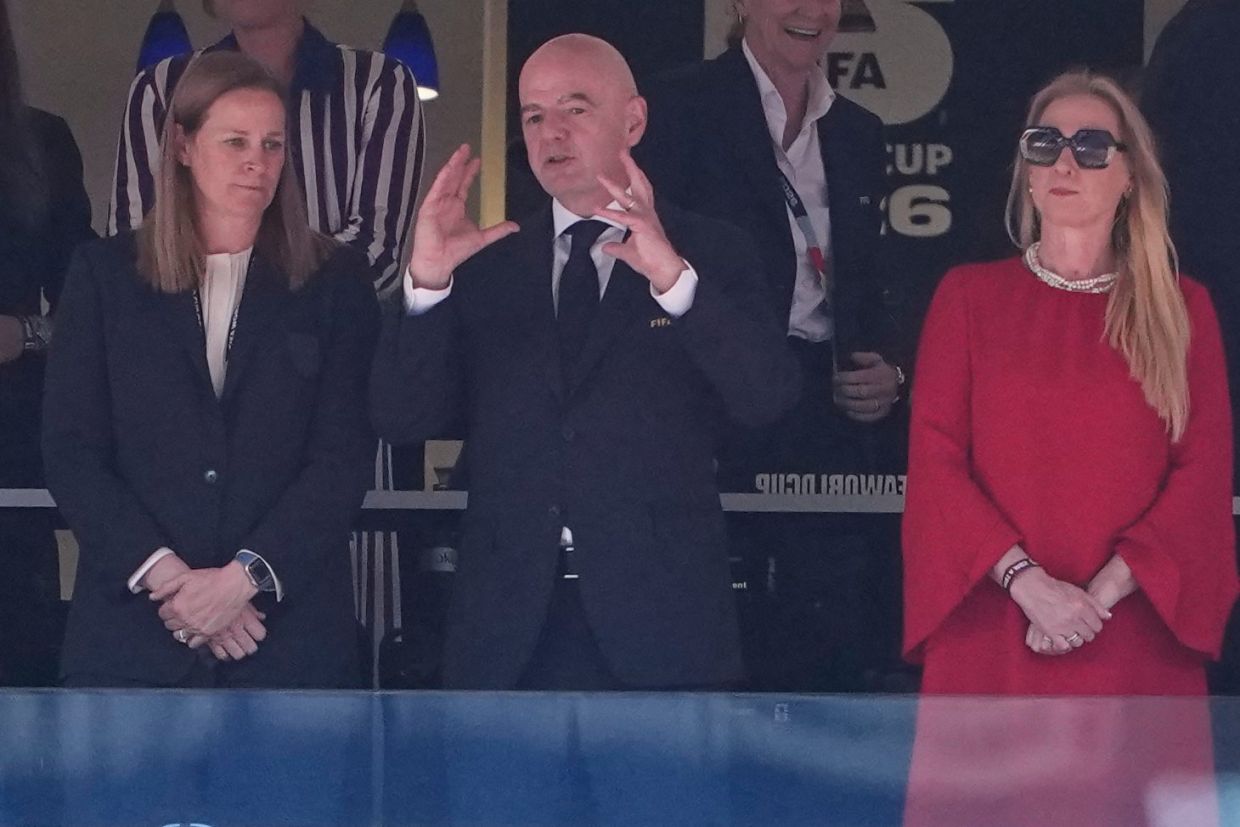
FIFA's grip on world football remains firm despite mounting criticism over how the governing body has managed the ongoing 2026 World Cup. Gianni Infantino, the organisation's 56-year-old president, has weathered a succession of disputes that would challenge most international sports administrators, yet his position has only strengthened as the tournament progresses and revenue streams accelerate. The controversies—ranging from prohibitively expensive match tickets to the reinstatement of a suspended American player following intervention by President Donald Trump—have failed to dent FIFA's financial trajectory or member support for Infantino's continued leadership.
The financial picture offers a compelling explanation for FIFA's apparent indifference to reputational damage. The 2026 World Cup is projected to generate approximately $9 billion in direct revenue for FIFA, a substantial increase of roughly $2 billion compared to the 2022 Qatar tournament. This expansion in earnings stems partly from the tournament's new 48-team format, which replaced the traditional 32-team structure and allows for more matches and extended competition periods. The expanded prize pool, now reaching $871 million, ensures that participating nations receive guaranteed minimum payouts of $12.5 million simply for attending, fundamentally altering the financial calculus for smaller football associations worldwide.
The implications for Southeast Asian nations and smaller football federations extend well beyond the tournament itself. Cape Verde, a West African nation of fewer than 600,000 people, has earned over $21 million from its historic World Cup participation—an amount representing approximately 0.75 percent of the country's entire annual GDP. For many football associations across Asia, Africa, and the Caribbean, FIFA's expanded distribution model represents a critical revenue stream that funds grassroots development, national team operations, and administrative functions. This dependency creates structural incentives for member federations to maintain backing for Infantino's administration, effectively insulating him from meaningful challenge through voting mechanisms where each of FIFA's 211 member associations holds equal weight.
The Trump intervention in the Folarin Balogun case crystallises the broader tension between FIFA's commercial and regulatory functions. After the American striker received a red card that would have barred him from competition, Trump reportedly contacted Infantino directly, resulting in the player's reinstatement. The episode triggered international condemnation from football figures including former Liverpool manager Jurgen Klopp, who characterised the resolution as fundamentally undermining the sport's integrity. Politicians from the United Kingdom and Belgium demanded Infantino's resignation, framing the situation as evidence that FIFA prioritises relationships with powerful nation-states over neutral administration of sporting rules.
Yet within days of Belgium's 4-1 victory over the United States, media focus on the eligibility dispute evaporated entirely. This pattern of temporary outrage followed by institutional amnesia reflects FIFA's structural insularity and the organisation's successful evolution into something resembling a multinational corporation rather than a regulatory body accountable to external scrutiny. Nick De Marco, a sports lawyer specialising in international football governance, articulated the deeper concern: the question is no longer whether specific decisions are technically justified, but whether FIFA has fundamentally compromised its credibility as an impartial arbiter of the sport's rules and regulations.
The commercial beneficiaries of the expanded tournament extend far beyond FIFA itself. Concession operators managing food and beverage services within stadiums are experiencing unprecedented revenue gains, with data indicating that fans are spending up to $100 per person during matches—nearly double the average expenditure during National Football League games in the United States. Advertisers have benefited materially from FIFA's introduction of mandatory hydration breaks, effectively transforming football's traditional two-half structure into an American-style four-quarter format that creates additional commercial opportunities and aligns with broadcast preferences in the lucrative North American market.
Host cities across the tournament's three nations have experienced measurable economic stimulus despite pre-tournament complaints about infrastructure costs and organisational burdens. Bank of America data capturing credit and debit card transactions during the tournament's opening weeks showed year-on-year spending increases of 6.3 percent in host cities overall, with non-local visitor spending surging 16.7 percent. These figures suggest that whatever controversies engulf FIFA's governance, the tournament itself delivers tangible economic benefits that reinforce local political support for the organisation's expansion agenda.
Infantino's position heading toward the 2027 FIFA Congress in Rabat, Morocco, appears virtually unassailable. He is running for his third term unopposed, with federations representing Asia, South America, and Africa already pledging support. The Moroccan congress location itself underscores his dominance—Morocco is one of the countries hosting the subsequent World Cup, meaning the election occurs in a jurisdiction with direct financial stakes in Infantino's continued leadership. The Royal Moroccan Football Federation has publicly lauded his work in developing African football, exemplifying the pattern of deference from member associations that have benefited substantially from expanded tournament structures and revenue distribution.
The expansion to 48 teams has generated measurable benefits beyond pure financial metrics. Nine African teams reached the knockout stage of the 2026 tournament, representing genuine progress toward global representation and breaking patterns of European and South American dominance. The tournament has also showcased standout hospitality from host nations, moving away from the logistics criticisms that surrounded the previous two World Cups in Russia and Qatar. Stadiums have maintained full attendance despite elevated ticket prices, suggesting that improved presentation and expanded access through the larger format have partially offset fan complaints about affordability.
Infantino inherited FIFA at a moment when the organisation faced existential reputational crisis following the corruption scandal that engulfed his predecessor Sepp Blatter. The 2015 scandal, pursued aggressively by American federal prosecutors, fundamentally damaged FIFA's public standing. Infantino's appointment promised reform, and he has delivered marginal transparency improvements and expanded institutional accountability mechanisms. However, his tenure has simultaneously demonstrated that genuine institutional reform and aggressive commercialisation are not necessarily compatible objectives. The Trump intervention case exemplifies this fundamental incompatibility—effective governance requires impartial rule enforcement, yet commercial maximisation in the American market creates incentives to accommodate political pressure from the world's most powerful nation.
The durability of Infantino's position ultimately rests on FIFA's ability to deliver value to its diverse stakeholder constituencies. For major football nations pursuing World Cup hosting rights, Infantino has expanded the tournament's scope and profitability. For smaller federations, he has dramatically increased financial returns from participation. For broadcast networks and commercial partners, he has restructured the tournament to accommodate advertising requirements and viewing preferences aligned with the American market. This successful balancing act explains why, despite thunderous condemnation from football purists and sporting integrity advocates, Infantino faces no meaningful internal opposition and retains unwavering support from the voting majority within FIFA's member federation structure.

