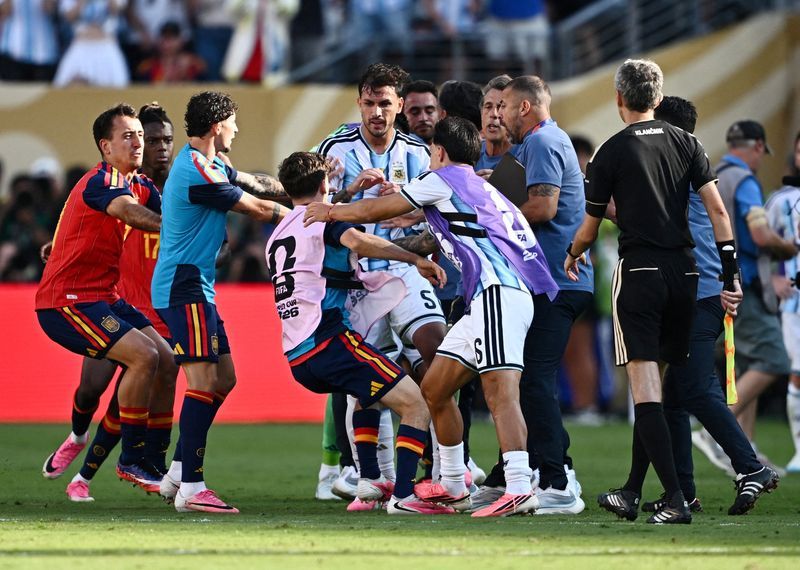
The world football governing body FIFA has initiated a formal investigation into a violent post-match confrontation that erupted following Spain's hard-fought 1-0 World Cup final triumph over Argentina in extra time. The decision to launch disciplinary proceedings represents FIFA's commitment to maintaining standards of conduct in international football, particularly at the sport's most prestigious tournament. A disciplinary and ethics prosecutor has been appointed to lead the inquiry, which will examine the circumstances that led to the on-field brawl and determine whether specific players or officials bear responsibility for the altercation.
Spain secured their second World Cup title when winger Ferran Torres struck in extra time, delivering a decisive blow to Argentina's hopes of claiming football's most coveted trophy. However, the match had already descended into controversy before the winning goal, with tensions simmering throughout an increasingly fractious encounter between the two teams. The appointment of a prosecutor signals that FIFA views the subsequent brawl as a serious breach of conduct that warrants thorough examination rather than dismissal as mere post-match emotion.
The incident that sparked the wider confrontation occurred when Argentina midfielder Leandro Paredes clashed with Spanish players Eric Garcia and Gavi immediately after the final whistle. Rather than remaining isolated, this initial confrontation rapidly escalated into a broader brawl involving multiple players from both sides. The physical nature of the exchange, characterised by shoves and aggressive posturing, suggested that frustrations had been building throughout the match rather than erupting spontaneously in defeat.
Argentina had already faced numerical disadvantage when midfielder Enzo Fernandez received a red card in the 93rd minute of normal time for a second yellow card offence. Playing with ten men during the extra-time period would have added to the pressure and frustration experienced by the Argentine squad. This disciplinary situation set the stage for the emotional intensity that characterised the final moments of the contest, potentially contributing to the volatility that followed Spain's goal.
The immediate aftermath of the brawl saw both teams requiring physical separation, indicating that officials needed to intervene to prevent further escalation. Argentina's coach Lionel Scaloni attempted to restore calm among his players during and after the incident, demonstrating the serious nature of what had unfolded on the pitch. Despite his efforts, the damage to the match's reputation had already occurred, with global audiences witnessing scenes inconsistent with the professionalism expected at World Cup finals.
For Malaysian football fans and Southeast Asian observers, this incident carries significance beyond mere sporting spectacle. The investigation will establish important precedents regarding player conduct at major tournaments and may influence how disciplinary measures are applied across international football competitions. The outcome could affect how other national teams approach high-pressure knockout matches, particularly regarding player behaviour during emotionally charged moments. Malaysia's own players, who regularly compete against teams from South America and Europe in qualification campaigns and friendlies, will benefit from clarity about acceptable standards of conduct.
FIFA has not specified a timeframe for concluding the investigation, meaning that final determinations regarding potential suspensions or fines remain uncertain. The absence of a deadline suggests that the governing body intends to conduct a thorough examination rather than rush to judgment. This approach, while potentially frustrating for those seeking quick resolution, reflects FIFA's recognition that the incident's seriousness warrants careful consideration of all evidence and testimony.
The investigation may extend beyond simply identifying which players initiated or participated in the brawl. Disciplinary prosecutors typically examine contributing factors, including whether match officials adequately controlled the game during the build-up to the incident. Questions about whether earlier confrontations were properly managed could influence conclusions about responsibility for the post-match altercation. Such contextual analysis helps distinguish between momentary lapses in composure and systemic failures in maintaining match discipline.
The incident also raises questions about the emotional and psychological intensity of World Cup finals, where national pride, career-defining opportunities, and immense pressure converge. While not excusing player misconduct, this context helps explain why such incidents occur at the tournament's pinnacle moments. For football administrators across Asia, understanding these pressures becomes relevant as developing nations continue to strengthen their competitive capabilities and face increasingly contentious matches against elite football nations.
The broader implications for international football governance are considerable. FIFA's willingness to pursue formal disciplinary action demonstrates that even at football's grandest stage, where drama and emotions naturally run high, standards of behaviour remain non-negotiable. This sends a message to players worldwide that post-match violence, regardless of circumstances or emotions involved, will not be overlooked or minimised. The investigation's conclusions may establish guidelines affecting how future World Cup tournaments are managed and how teams prepare players for the psychological demands of knockout competition.
For the players involved, the investigation represents an opportunity for their national associations and clubs to review their conduct management protocols. Understanding what leads otherwise professional athletes to engage in on-field violence during crucial moments can inform training and preparation strategies. Southeast Asian football communities, which have occasionally experienced similar incidents in regional competitions, can learn from how FIFA addresses such situations at the highest level of professional sport.

