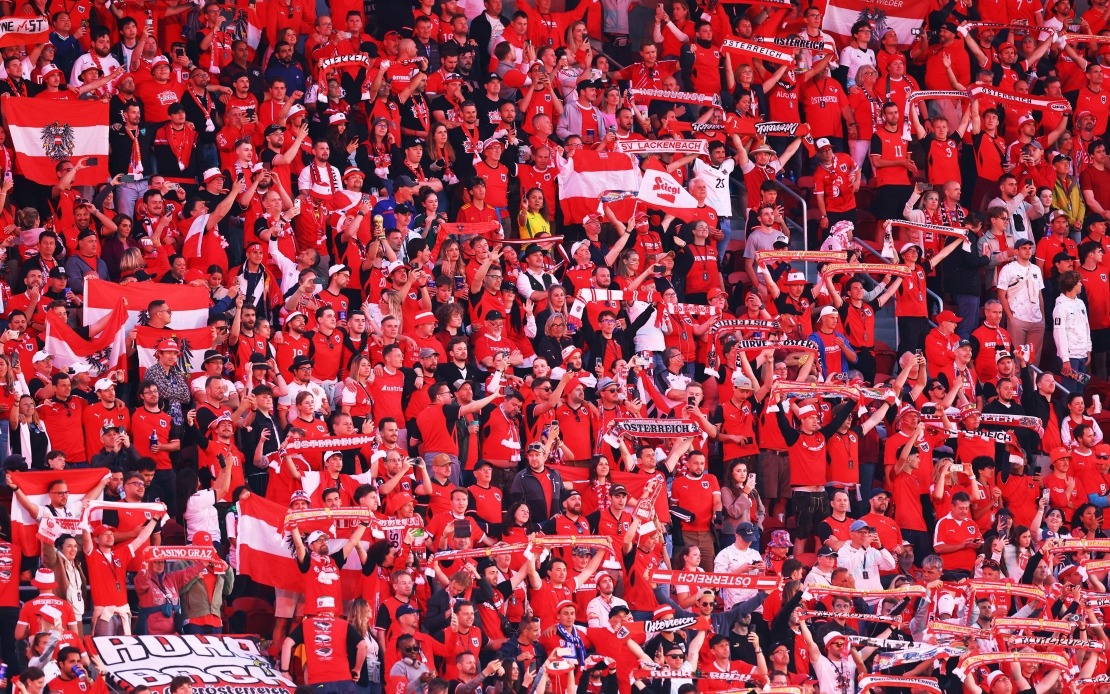
The expanded World Cup format in the United States, Canada, and Mexico has delivered record-breaking numbers across multiple categories, according to FIFA's official accounting released late Sunday. The tournament's restructured 48-team format has fundamentally altered the scope of global football's premier event, generating unprecedented attendance figures and consumption patterns that reflect the competition's expanded scale and reach throughout North America.
The 72 group stage matches attracted a cumulative attendance of 4,644,549 spectators, marking a significant increase from the 1994 tournament held in the United States, which drew 3,587,538 fans across 52 matches. This represents a gain of more than one million additional attendees, underscoring the broader appeal of the expanded format and the expanded geographic coverage across three nations. The higher total attendance demonstrates FIFA's successful strategy in distributing matches across multiple venues and countries to maximize fan accessibility and engagement.
However, the per-match attendance figures reveal a more nuanced picture of fan interest. The 1994 tournament recorded an average attendance of 68,991 spectators per game, while the current edition's average stands at 64,508. This distinction is particularly relevant for stadium utilization and economic planning—despite drawing more fans overall, the expanded format has resulted in lower average crowds at individual matches. For Malaysian analysts and sports administrators, this metric suggests that simply increasing the number of matches does not guarantee proportionally higher attendance at each venue, a consideration that applies to regional tournament planning across Southeast Asia.
The offensive firepower displayed throughout the group stage has also set new benchmarks. A total of 215 goals were scored across the 72 matches, establishing an average of three goals per game. This comparison to the 2022 Qatar tournament—which featured 32 teams, 64 matches, and 179 goals (averaging 2.8 per game)—indicates that the expanded format has encouraged more attacking football or revealed systematic differences in defensive organization at the group stage level. The increased goal-scoring rate carries implications for broadcast appeal and spectator entertainment value, metrics that national football associations carefully monitor when evaluating competition formats.
The player participation figures underscore the tournament's global reach. The 48 teams collectively fielded 999 players until Canadian captain Alphonso Davies entered the match during Canada's knockout-stage victory over South Africa on Sunday, making him the 1,000th distinct player to participate in this edition. This symbolic milestone illustrates how the expanded format has broadened opportunities for nations beyond traditional World Cup powerhouses to field competitive squads, though it also raises questions about competitive balance and whether increased participation necessarily translates to higher-quality football.
Consumption patterns at stadiums paint a picture of fan behavior and event infrastructure. Vendors sold 2.8 million beers and nearly one million bottles of water across all stadium venues, alongside 300,000 hot dogs. These figures provide crucial data for tournament organizers planning food and beverage operations—the ratio of alcoholic to non-alcoholic beverages, in particular, reflects regional drinking preferences and climate considerations relevant to North American audiences. For Malaysian event planners evaluating how to host large-scale tournaments, these consumption benchmarks offer practical insights into provisioning requirements and revenue opportunities.
Beyond the stadiums themselves, the official fanfests established throughout the United States, Canada, and Mexico attracted over 5.5 million visitors—a figure that substantially exceeds the stadium attendance. These designated celebration zones consumed more than 2 million alcoholic beverages and nearly 2 million soft drinks, indicating that the tournament's economic and social impact extended well beyond match venues into broader urban entertainment ecosystems. This decentralization of fan engagement represents a significant evolution in World Cup event strategy, distributing tourism revenue and spectator spending across multiple cities and regions rather than concentrating it at stadium locations.
The cumulative data reveals how an expanded tournament structure generates both quantitative and qualitative shifts in global football consumption. The 4.6 million stadium attendees combined with 5.5 million fanfest visitors demonstrates that FIFA's format expansion successfully attracted new audiences while maintaining engagement among traditional supporters. For Southeast Asian football stakeholders considering larger regional competitions or World Cup qualifying tournaments, these statistics offer valuable benchmarks for projecting attendance, infrastructure requirements, and economic returns.
The increase in total goals and the distribution of matches across three nations also reflect strategic decisions about tournament structure with long-term implications. By expanding from 32 to 48 teams, FIFA expanded the pool of nations capable of reaching the World Cup, creating pathways for smaller football federations to gain mainstream visibility. This expansion carries particular resonance for Southeast Asian nations, several of which remain outside traditional World Cup qualification pathways and could benefit from similar structure changes in regional competitions.

