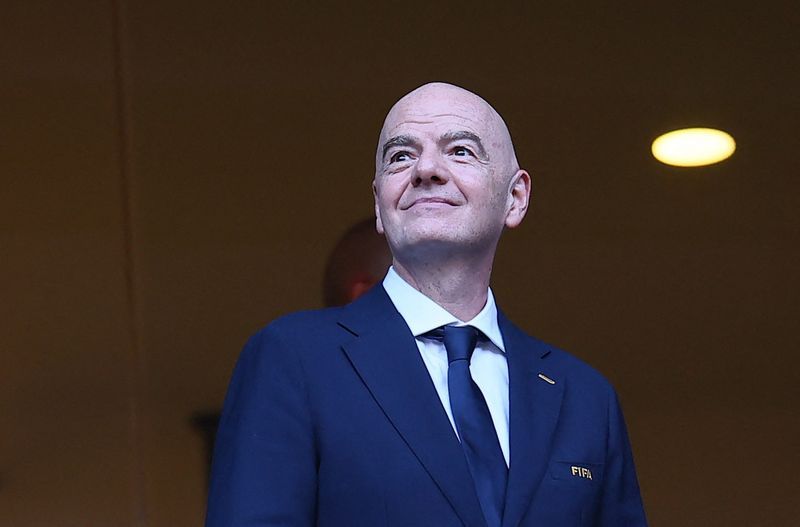
FIFA President Gianni Infantino confronts an unprecedented political crisis within world soccer's governing structure following his retreat from a contentious proposal to privatise a portion of World Cup commercial rights. The Swiss-Italian administrator, who has commanded the federation since 2016, shelved plans to raise $4.2 billion through a new commercial entity after only three days of mounting institutional rebellion across the sport's regional power blocs. His decision to withdraw the scheme came too late to salvage the diplomatic damage, leaving his reelection campaign severely compromised heading towards the FIFA Congress scheduled for Morocco in March 2025.
The abandoned proposal represented an audacious attempt to inject private capital into the World Cup ecosystem for the first time in the tournament's history. Rather than strengthening his position, the initiative fractured Infantino's carefully constructed coalition of support built across continental confederations. Five European national associations—prominently including England's Football Association—have formally rescinded their endorsement of his leadership, whilst Denmark announced it would never support his candidacy regardless. This defection from Europe's wealthy federations signals a fundamental breach in the alliance that sustained his previous campaigns.
Infantino's core remaining backing now relies largely on associations from less developed regions of global soccer. Morocco, Qatar, Kuwait, Lebanon, and Sri Lanka have publicly pledged continued support, reflecting the financial incentive structure embedded within the failed proposal. The scheme promised individual national federations between $20 million and $40 million in dividend payments beginning January 2025 as inducements to endorse the commercial restructuring. This approach—leveraging FIFA's substantial resources to reward poorer associations—had historically proven effective for Infantino and his predecessors Joao Havelange and Sepp Blatter in building majorities among the 211 voting national bodies at FIFA Congress.
The intervention of regional confederations represents the most immediate threat to Infantino's tenure. UEFA, which oversees European soccer, and CONCACAF, responsible for North and Central American competitions, issued unequivocal statements declaring lost confidence in his leadership. The Asian Football Confederation, traditionally more deferential toward FIFA administration, stopped short of outright opposition but condemned the proposal's announcement without adequate consultation as "totally unacceptable." According to reporting by The Times of London, these three confederations may coordinate efforts to paralyse FIFA operations and establish rival competitions should Infantino refuse to resign—a scenario of extraordinary gravity for the world game.
Infantino's most pressing tactical objective involves preventing an Extraordinary Congress, which opponents could convene by securing written requests from 43 or more member associations. Such a special session would allow forced discussion of his leadership and potentially trigger an early election. With seven months remaining before the scheduled March Congress, he must simultaneously defend against immediate threats whilst reconstructing fractured relationships with major stakeholders. The document preservation letter UEFA sent to FIFA regarding all materials connected to the proposal signals preparation for potential legal action, adding another layer of institutional pressure.
The confederation resistance exposes fundamental tensions within FIFA's governance architecture. Infantino fashioned his political dominance by channeling resources toward developing soccer nations in Africa, Asia, and the Caribbean, regions that collectively command substantial voting blocs. This strategy proved effective because poorer associations depend heavily on FIFA distributions to sustain operations. Conversely, wealthy European federations generate substantial independent revenues and possess greater leverage within continental competitions. The failed proposal attempted to simultaneously satisfy both constituencies through private investment, but instead alienated the more powerful confederation representing Europe's economic interests.
Finding a viable alternative candidate to challenge Infantino presents practical difficulties for opposition forces. Nominations close on November 18, allowing only months for potential challengers to emerge and campaign. Any credible candidate must appeal simultaneously to the financial interests of developing soccer nations whilst maintaining legitimacy among established European federations and major tournament hosts. The candidate must also demonstrate capacity to manage FIFA's increasingly complex commercial relationships, compliance obligations, and tournament logistics. These competing requirements have historically limited the field of viable candidates.
For Malaysian readers and Southeast Asian stakeholders, this crisis carries significant implications. The AFC represents ASEAN nations' collective voice in global soccer governance, and its tentative positioning between outright opposition and tacit support reflects broader uncertainty about FIFA's future direction. Malaysian football's development depends substantially on FIFA development programs and competition pathways that the federation administers. Continued instability within FIFA leadership could disrupt allocations of development resources or delay major competition scheduling decisions affecting regional competitions and national team preparations.
The collapse of Infantino's commercial proposal also signals deeper questions about FIFA's institutional transparency and decision-making processes. The failure to consult adequately with confederation leadership before unveiling the scheme—particularly given its magnitude—suggests procedural governance failures that extend beyond one administrator. Reform initiatives advocated by the AFC and other bodies may eventually reshape how FIFA approaches major policy decisions. Southeast Asian federations participating in AFC deliberations regarding institutional restructuring will likely influence these reform discussions, potentially gaining enhanced consultation rights in FIFA governance.
Infantino's political resilience should not be underestimated. His previous campaigns survived scandal and opposition through effective deployment of FIFA's financial resources and strategic alliance-building among majority voting blocs. The federation's commercial revenues remain substantial, and many developing associations still depend on regular FIFA distributions. However, the unified confederation criticism represents a qualitatively different challenge than previous opposition, combining institutional power with legitimate governance grievances rather than merely competing leadership personalities. Whether Infantino can rebuild sufficient support through compromise initiatives or whether confederations successfully force his departure remains uncertain, but the era of his unchallenged authority has definitively concluded.

