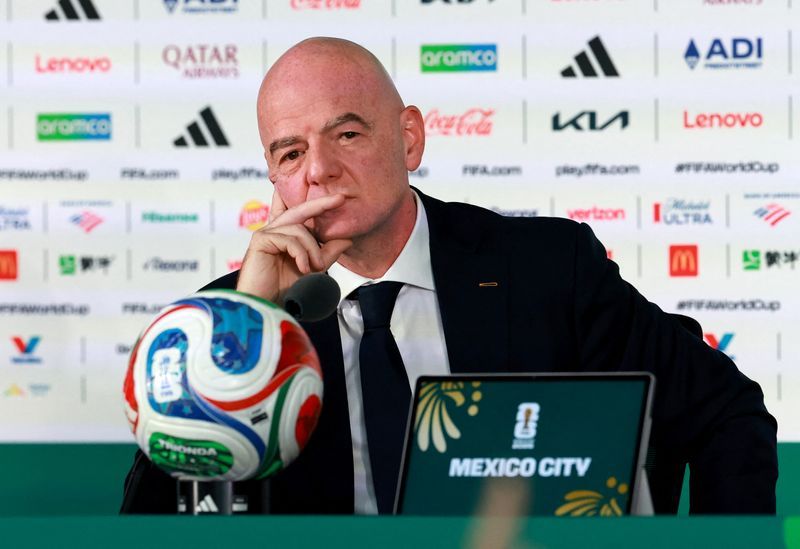
The dust may be settling on FIFA's worst internal upheaval under Gianni Infantino's presidency, but the underlying tensions over how world soccer is governed show no signs of disappearing before the 2027 presidential election. A gathering of FIFA's leadership in Rabat this week offered public reassurance that the organisation has weathered the storm of criticism sparked by its abandoned proposal to monetise future World Cup commercial rights. Yet beneath the surface of expressed unity lies a fundamental challenge that promises to reshape how the game's governing body conducts business: member nations and key stakeholders have made clear they will no longer accept top-down decision-making presented as fait accompli.
FIFA's apology to its 211 member associations represented a marked shift in tone from the organisation's earlier defensiveness. The governing body acknowledged that the controversial commercial proposal "should have been handled differently" and admitted that national federations felt excluded from the process that might have radically altered how World Cup revenues are distributed. The statement stressed that FIFA never intended to sideline the Council or its associations, yet the very need for such a clarification underscores how badly the initiative was communicated. What was meant to be a strategic financial manoeuvre became a flashpoint for resentment among nations that felt their voice was irrelevant to FIFA's planning.
The immediate response to the outcry includes a formal review of the processes that led to the debacle, with findings to be presented at the Council's next meeting. This procedural step is intended to prevent future missteps by examining how decisions flow through FIFA's bureaucracy and where consultation breakdowns occurred. However, FIFA's insistence that all actions technically complied with existing regulations suggests the organisation views the problem as one of communication rather than structural defect. This interpretation will likely frustrate critics who see the episode as symptomatic of deeper governance problems that cannot be fixed by tweaking memo templates or extending consultation timelines.
The resistance to FIFA's decision-making approach extends well beyond the abandoned commercial scheme. European Leagues, representing over 1,300 clubs across the continent, has levelled complaints about an unrealistically compressed four-week assessment window for evaluating a separate proposal to expand the 2030 World Cup from 48 to 64 teams. This organisation framed its criticism in blunt terms: stakeholders are repeatedly presented with decisions rather than being genuinely consulted on them. For emerging football markets in Southeast Asia and Africa, where club development increasingly depends on participating in larger competitions, the tournament expansion carries significant implications, yet such regions often lack the institutional leverage that European Leagues can deploy.
FIFA's response has been to warn critics that it will "no longer tolerate any attacks on its integrity, good governance and due process"—a statement that rings somewhat hollow given the very circumstances that prompted the warning. The organisation's defensive posture suggests institutional resistance to the deeper accountability that stakeholders are demanding. While FIFA correctly notes that technical compliance with its own rules does not automatically constitute good governance, the distinction offers little comfort to federations that feel their interests are routinely subordinated to FIFA's strategic vision. For smaller nations, particularly those in the developing world, this imbalance in power and information remains a persistent frustration.
Infantino emerged from the Rabat meeting with his immediate political objective secured: public endorsement from FIFA's management board and Secretary General Mattias Grafstrom. The pair were photographed together at a women's Africa Cup of Nations match, smiling and giving thumbs-up to dispel any lingering perception of internal discord. Grafstrom had previously sent staff a memo lamenting the "sad and reproachable series of events", though he notably avoided naming Infantino directly, instead musing philosophically that "individuals, unstable moments and unfortunate episodes come and go". This calculated display of unity was essential for Infantino as he prepares for his bid to secure a fourth term through 2031 at FIFA's presidential election in Morocco next March.
Yet the political durability Infantino has demonstrated should not be mistaken for institutional vindication. UEFA, European soccer's governing body, has openly questioned his leadership, while confederation critics have surfaced from CONCACAF, which oversees the game across North and Central America and the Caribbean, and the Asian Football Confederation. These organisations represent football's most developed markets and carry significant economic weight within FIFA's decision-making structures. Infantino's advantage lies not in unanimous support but in the absence of a credible alternative challenger and in his continued backing from smaller associations, particularly across Africa and Asia, where FIFA's development funding remains crucial to national football programmes. This coalition has proven sufficient to insulate him from the immediate threat of removal, but it does not resolve the governance questions that have become unavoidable.
For Malaysian readers and the broader Southeast Asian context, the FIFA governance debate carries practical implications beyond internal politics. Decisions about tournament expansion, commercial structures, and development funding directly affect how the region's football ecosystem evolves. When FIFA makes major announcements about World Cup participation or development grants with minimal consultation, Southeast Asian federations often discover they have little influence over outcomes that will shape their sport's future. The Rabat controversy has illustrated both the limits of smaller nations' power within FIFA and the growing cost of that marginalisation to the organisation's legitimacy.
The promised reforms and increased scrutiny of decision-making processes will likely become standard fixtures of FIFA's next major initiatives. Any proposal touching on commercial strategy, tournament structure, or governance reform can now expect significantly greater demands for transparency and genuine consultation rather than performative engagement. This shift represents a genuine constraint on FIFA's operational freedom, though whether it will produce substantive changes in how power is distributed remains uncertain. Infantino may have survived this crisis, but he has done so at the cost of having his leadership style subjected to unprecedented examination by the world's football stakeholders.

