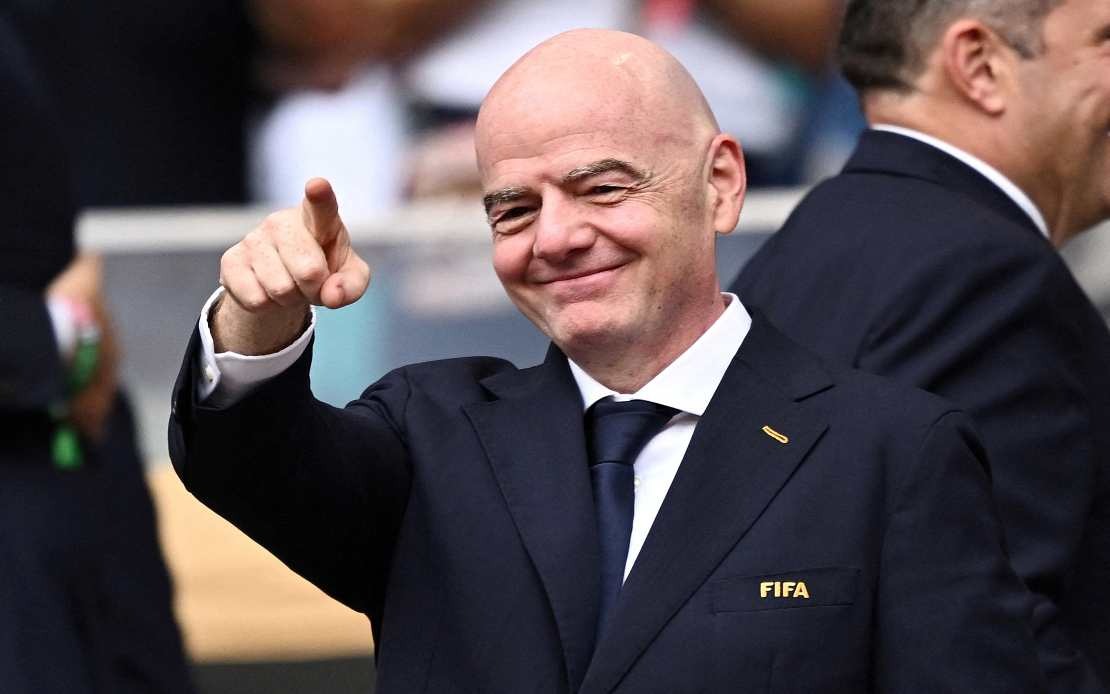
FIFA's distribution of pre-prepared letters endorsing President Gianni Infantino's record ahead of his re-election campaign has raised fresh questions about the sport's governing body and its approach to leadership accountability. The templated correspondence, which highlighted the incumbent president's contributions to sports infrastructure development and advancement of women's football initiatives, was circulated to national football associations prior to the quadrennial World Cup tournament scheduled for the United States, Mexico and Canada. The letters featured pre-printed signatures and titles belonging to association presidents, though the arrangement did not extend uniformly across all affiliated organisations worldwide.
This orchestrated communications strategy emerged during a particularly turbulent period for FIFA's senior leadership. In July, the organisation unveiled an ambitious financial restructuring plan centred on the sale of approximately 20 per cent equity stake in a newly-created subsidiary entity that would consolidate control over FIFA's lucrative media rights and commercial licensing arrangements, encompassing all associated World Cup broadcasting and sponsorship revenues. The proposed divestment was designed to generate approximately US$4.2 billion in immediate capital, fundamentally reshaping the financial architecture of world football's administrative centre.
The identity of potential investors in this stake acquisition became a focus of intense media scrutiny and concern amongst football administrators. Reports indicated that a fund controlled by Joshua Kushner, brother of Jared Kushner who maintains familial ties to United States President Donald Trump, stood as a leading prospect to acquire the equity position. The prospect of such significant commercial control being transferred to American-based interests, particularly those with tangential connections to the Trump family, generated considerable apprehension within international football governance circles and amongst stakeholder nations.
The controversy surrounding this commercial proposal rapidly escalated into an open confrontation between FIFA's leadership and Europe's most influential confederation. UEFA, representing the continent's 55 affiliated national associations, announced in response that all member organisations would impose a comprehensive boycott of FIFA-sanctioned tournaments unless and until the media rights monetisation scheme was completely withdrawn from consideration. This represented an unprecedented assertion of collective leverage by Europe's footballing bodies against FIFA's central authority, signalling profound institutional discord at the highest levels of the sport.
The convergence of these developments—the pre-written endorsement letters, the contentious commercial restructuring proposal, and UEFA's decisive boycott threat—painted a portrait of an organisation grappling with legitimacy questions and internal resistance to its leadership direction. For Malaysian football stakeholders and Southeast Asian administrators observing from the region, these events underscored fundamental governance vulnerabilities within FIFA's operational framework. The practice of distributing templated letters with pre-inscribed signatures represented a departure from transparent democratic procedures that national associations might reasonably expect when evaluating their confederation's executive leadership.
Reports emerging from multiple news outlets suggested that Infantino personally faced mounting pressure from football associations spanning the global football landscape, with some sources indicating the president contemplated resignation as a potential resolution to the institutional crisis. The intensity of this pushback reflected deeper anxieties within the international football community regarding the direction of FIFA's commercial strategy and the concentration of decision-making authority within the presidential office. Rather than functioning as a collegial body incorporating diverse stakeholder perspectives, FIFA's structure appeared increasingly dominated by executive initiatives developed with minimal meaningful consultation.
For Malaysia's Football Association and other Southeast Asian governing bodies, this institutional turbulence at FIFA carries direct implications for tournaments, commercial opportunities, and governance precedents that cascade throughout regional football systems. The region's football organisations maintain substantial interests in FIFA's administrative decisions, whether concerning tournament scheduling, broadcasting rights allocation, or capacity-building initiatives. When FIFA's central governance mechanisms function sub-optimally or lack transparency, these weaknesses inevitably affect how resources and opportunities flow to smaller confederations and developing football nations.
The episode also illuminated broader patterns concerning how established sporting institutions manage leadership transitions and respond to constituent pressure. The resort to pre-written endorsement letters suggested a defensive posture rather than confident engagement with legitimate scrutiny. Organisations demonstrating genuine institutional health typically welcome substantive evaluation of executive performance, soliciting candid assessments and engaging thoughtfully with dissenting viewpoints. Conversely, circumventing transparent deliberation through manufactured consensus letters indicates anxiety about subjecting leadership to authentic scrutiny.
The financial restructuring initiative itself represented a significant departure from FIFA's traditional revenue model and governance philosophy. Rather than maintaining direct control over media rights exploitation—a fundamental source of the organisation's financial power and independence—the proposal would have transferred meaningful economic interests to external capital providers. For an international sports federation, such equity dilution carries governance ramifications extending far beyond balance sheet considerations, potentially compromising the organisation's capacity to pursue strategic objectives aligned exclusively with global football's collective interests.
Moving forward, FIFA's institutional credibility rests substantially on how leadership responds to the mounting criticism and the coordinated European boycott threat. Transparent acknowledgment of governance shortcomings, genuine incorporation of constituent perspectives into future decision-making processes, and withdrawal of the contested commercial proposal would signal genuine commitment to institutional reform. Conversely, doubling down on executive prerogatives and attempting to manage dissent through manufactured consensus would likely deepen the legitimacy crisis and invite further challenges from regional confederations.
For Malaysian football observers and Southeast Asian sports governance specialists monitoring these developments, the FIFA situation offers instructive lessons regarding the importance of transparent institutional procedures, meaningful stakeholder consultation, and leadership accountability in large international organisations. As the region's football administrations navigate their own governance challenges and institutional evolution, the cautionary example of FIFA's current troubles underscores the risks of concentrating authority without robust checks and of pursuing ambitious commercial initiatives without securing genuine constituent support.

