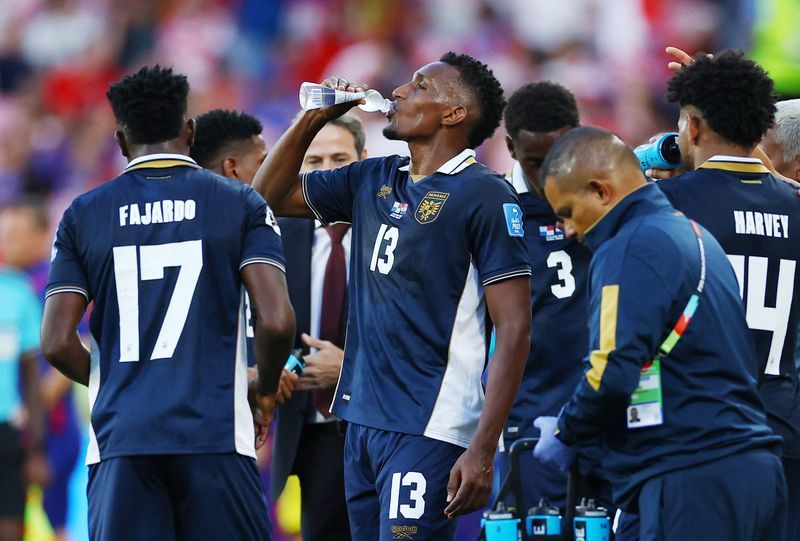
FIFA president Gianni Infantino has moved to quell mounting controversy surrounding the introduction of mandatory hydration breaks at the World Cup, flatly rejecting claims that the governing body deployed the stoppages as a vehicle for generating additional revenue. Speaking on Wednesday, Infantino characterised the three-minute breaks scheduled at the 22nd and 67th minutes of every match as a straightforward response to the sporting demands posed by heat across the North American venues, rather than any attempt to exploit commercial opportunities.
The hydration breaks have proven divisive since the tournament began, drawing sharp criticism from players, coaches, and supporters who argue that the interruptions fundamentally alter the rhythm and character of football. Several high-profile managers have taken issue with the rule, with England's Thomas Tuchel suggesting the breaks "interrupt and change the identity of the football match" by introducing artificial pauses that disrupt tactical flow. Uruguay coach Marcelo Bielsa went further, arguing that subdividing matches into smaller temporal segments undermines what he considers the essential nature of the sport—continuous, uninterrupted play across ninety minutes.
Central to the controversy is the observation that broadcasters have capitalised on these stoppages by introducing additional advertising segments, creating new commercial windows during matches. This reality has fuelled scepticism among observers who suspect FIFA deliberately introduced the breaks with revenue generation in mind, transforming what appears to be a welfare measure into a disguised commercial enhancement. The optics have been particularly damaging given that broadcast rights agreements constitute one of football's most lucrative revenue streams, and any opportunity to expand advertising inventory carries significant financial implications.
Infantino's response directly addresses this perception. He stated categorically that "there is no additional revenue for FIFA, as all commercial agreements were signed well in advance. So, this is not a financial issue for us." This assertion hinges on the timing of broadcast contracts—namely, that commercial terms were negotiated before the hydration breaks were implemented, meaning FIFA cannot claim incremental income from the expanded advertising inventory. Whether this technical distinction satisfies sceptics remains unclear, particularly given that broadcasters themselves do generate additional revenue from the extra advertising slots, even if FIFA does not directly benefit.
The governing body's position also emphasises that the breaks serve a secondary tactical function beyond hydration. The scheduled stoppages provide coaching staff with designated moments to deliver in-match instructions and make tactical adjustments without burning timeouts or waiting for natural play stoppages. This feature has attracted criticism from those who contend it fundamentally changes how football is managed during play, granting coaches periodic "reset" moments to reorganise their teams. Critics worry this erodes the spontaneity and adaptive decision-making that characterise elite football, replacing it with more controlled, choreographed adjustments.
Yet some prominent voices in football have acknowledged the rationale behind the innovation, even if harbouring reservations about blanket application. Spain coach Luis de la Fuente and Netherlands captain Virgil van Dijk have indicated they understand the intent to protect player welfare in extreme heat, but have questioned whether the breaks remain necessary in cooler conditions or at venues with climate control. This nuanced position recognises the legitimate health concerns while advocating for contextual flexibility rather than universal implementation.
Infantino framed the breaks primarily as a welfare and equity measure. He emphasised that the World Cup's compressed schedule—thirty-nine days encompassing up to eight matches per team—creates extraordinary physical demands on players. The periodic breaks provide opportunities for genuine recovery and hydration, particularly critical in high-temperature environments where dehydration poses genuine health risks. By this logic, opposing the breaks becomes morally indefensible if the alternative is exposing players to potential heat-related injury.
The FIFA president also introduced a competitive equity argument to justify the universal application of the breaks. He contended that allowing hydration breaks only in hotter matches would create an inequitable situation where some coaches enjoy designated tactical windows while others do not, based solely on ambient temperature. Standardising the breaks across all matches ensures all teams compete under identical conditions, eliminating any advantage derived from environmental variation. This reasoning appeals to the fundamental principle of sporting fairness—that victory should reflect quality and strategy, not circumstantial advantages.
Regarding the actual impact on match quality, Infantino suggested the breaks have not noticeably diminished the intensity or pace of matches. He indicated that players have demonstrated the capacity to maintain high-level performance throughout games despite the interruptions, implying that fears about reduced competitive quality may be overblown. Whether independent analysis of match data supports this assertion has not yet emerged, and many coaches and analysts remain unconvinced that stoppages fail to affect tactical momentum and rhythm.
For Malaysian and Southeast Asian readers, the debate carries particular relevance. The region encompasses diverse climates, from tropical humidity to air-conditioned stadiums, and the discussion about environmental factors in football has local dimensions. Additionally, the tension between sporting integrity and commercial interests—a central theme of Infantino's defence—reflects broader debates about how globalised sports governance bodies balance player welfare, competitive fairness, commercial viability, and the experiences of fans consuming the sport through various media.
The controversy also illustrates how regulatory changes in elite sport, regardless of stated justifications, interact with commercial ecosystems in ways that defy clean separation. Even if FIFA genuinely prioritised player welfare and competitive equity, the fact that broadcasters captured additional commercial value from the breaks inevitably shapes public perception and trust. Infantino's technical argument about contractual timing may be legally sound but does little to resolve underlying scepticism about whether commercial considerations influenced the decision-making process.