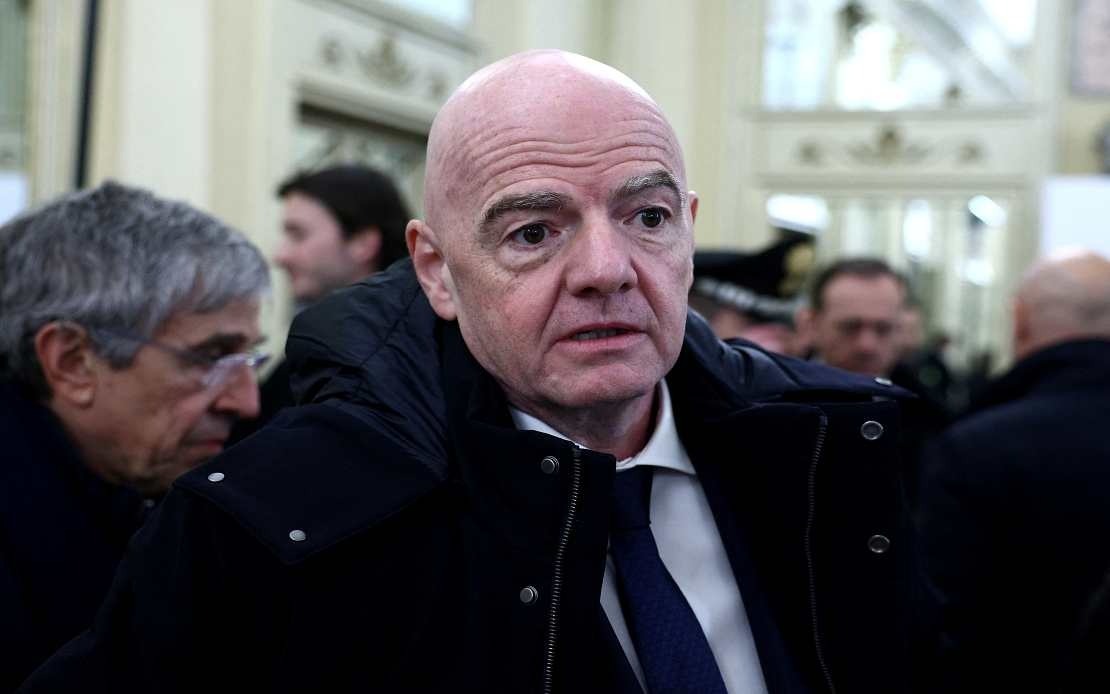
The International Olympic Committee has received a formal complaint against FIFA president Gianni Infantino, with human rights group FairSquare alleging he has systematically violated Olympic Charter rules governing political impartiality in his role as an IOC member. The complaint, submitted in July, centres on Infantino's conduct surrounding World Cup disciplinary decisions and his interactions with political figures, raising fresh questions about governance standards at world football's governing body.
FairSquare's allegations specifically reference the handling of a high-profile player discipline case involving a one-match suspension that was subsequently suspended by FIFA's disciplinary committee, permitting the athlete to compete in a crucial World Cup knockout fixture. The group contends that this decision came suspiciously close to direct communication between FIFA's president and a sitting head of state, creating an appearance of improper political influence over supposedly independent sporting processes.
The Swiss FIFA chief has consistently maintained that his organisation's disciplinary mechanisms operate with complete autonomy and that no external pressure influenced the outcome. FIFA has provided no detailed explanation regarding the reversal of the original ban, leaving a transparency gap that has invited scrutiny from multiple quarters. This silence has fuelled speculation about whether proper procedures were genuinely followed or whether political considerations shaped the final determination.
FairSquare's formal submission to the IOC identifies five explicit violations of Olympic Charter neutrality provisions, alongside "prima facie" evidence suggesting two additional serious transgressions. The breadth of the allegations indicates a pattern rather than isolated incidents, though the primary focus remains on the specific disciplinary case and the circumstances surrounding its resolution. The complaint effectively argues that Infantino's conduct contradicts fundamental principles he pledged to uphold upon joining the IOC in 2020.
This is not FairSquare's first attempt to raise concerns about Infantino's conduct. In December, the organisation submitted a nearly identical complaint directly to FIFA's own ethics committee, a move that appeared to gain traction when the Norwegian Football Federation subsequently wrote to FIFA's ethics body requesting formal consideration of the allegations. The escalation to the IOC represents a significant intensification of pressure, effectively bypassing FIFA's internal mechanisms and appealing to the broader Olympic movement's governance standards.
International political attention has amplified the controversy significantly. On June 29, fifty members of the European Parliament collectively addressed the FIFA ethics committee, urging it to investigate FairSquare's allegations thoroughly and provide transparent findings. This intervention by lawmakers from across Europe underscores the international dimension of the dispute and suggests that concerns about FIFA's governance extend well beyond sports administration circles into formal diplomatic channels.
The timing of these complaints carries particular significance for Southeast Asian football governance. As nations across the region continue developing their sporting institutions and participating in international competitions, the conduct standards established at FIFA's highest levels set precedents that influence how discipline and fairness are administered globally. If political interference in disciplinary outcomes becomes normalised at the world's largest football body, regional federations may face pressure to accommodate similar dynamics.
Infantino's position as an IOC member creates a direct accountability mechanism independent of FIFA's internal structures. The Olympic movement has long maintained stricter standards regarding political neutrality, making the IOC complaint potentially more consequential than FIFA's ethics process alone. Should the IOC substantiate FairSquare's allegations, it could trigger sanctions or require remedial action that FIFA would struggle to dismiss as merely a football matter.
The complaint highlights a fundamental tension in modern international sports governance: the intersection of geopolitical power and sporting neutrality. Even if Infantino acted with completely proper intentions, the proximity of presidential communication to disciplinary decisions creates optics that damage confidence in institutional independence. This perception problem proves as damaging as substantive wrongdoing, particularly when organisations depend on credibility for legitimacy.
For Malaysian football stakeholders and Southeast Asian federations more broadly, this saga offers important lessons about institutional safeguards. The necessity of genuine independence for disciplinary committees, transparent documentation of decision-making processes, and clear separation between political relationships and sporting governance cannot be overstated. As the region develops its competitive football infrastructure, establishing robust governance frameworks now prevents the corruption of processes that becomes difficult to unwind once compromised.
The investigation's outcome remains uncertain, though the convergence of complaints from multiple respected sources—human rights organisations, European parliamentarians, and national federations—suggests the concerns merit serious consideration rather than dismissal. Whether the IOC pursues substantive investigation or treats this as an internal FIFA matter will itself send important signals about how seriously the Olympic movement takes governance standards among its member organisations and officials.

