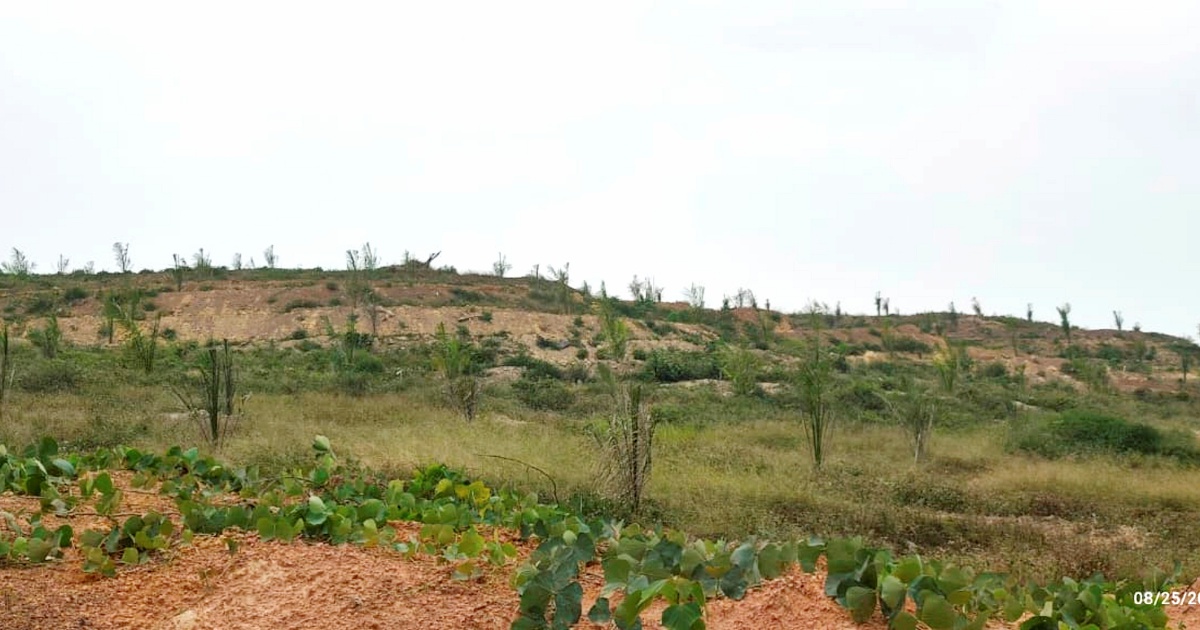
Residents of Felda Palong 7 in Jempol have escalated concerns about the standard of oil palm seedlings to the Malaysian Anti-Corruption Commission, drawing attention to what they characterise as systemic quality issues in agricultural inputs affecting smallholder productivity. The complaint centres on the supply of substandard and non-uniform seedlings, a matter that touches on the fundamental viability of farming operations across one of the nation's established Federal Land Development Authority settlements.
The decision to involve Malaysia's premier anti-corruption watchdog signals that settlers believe the seedling supply challenges may extend beyond simple agricultural quality control failures into territory involving potential misconduct or mismanagement. Such escalation reflects growing frustration within the Felda community, where farmers depend heavily on reliable inputs to sustain yields and livelihoods. Oil palm cultivation remains central to many Felda schemes, and the consistency and genetic quality of seedlings directly determines orchard performance over decades.
Felda Palong 7, situated in Negeri Sembilan's Jempol district, serves as home to smallholding farmers whose operations hinge on institutional support structures that should guarantee baseline standards for supplied materials. When seedlings arrive non-uniform in size, vigour, or genetic characteristics, early-stage disparities compound throughout the plantation cycle, creating uneven maturation, variable fruit yield, and management complications that affect profitability at harvest. Farmers lacking resources for replanting or supplementary inputs face particularly acute consequences.
The specificity of the complaint—targeting both poor quality and lack of uniformity—suggests these are distinct but interconnected problems. Poor quality may encompass disease susceptibility, stunted root development, or weakened plants unlikely to establish successfully in field conditions. Non-uniformity, meanwhile, creates operational headaches; farmers cannot adopt standardised planting densities or implement synchronised maintenance regimes across holdings if seedlings vary materially in developmental stage or vigour. This heterogeneity translates into elevated labour costs and reduced operational efficiency.
Within Malaysia's palm oil sector, seedling supply chains typically involve state-controlled entities, private nurseries, or hybrid models managing propagation and distribution to smallholders. Quality control checkpoints should exist at multiple stages—nursery production, health certification, transport, and pre-planting inspection. The presence of such widespread complaints suggests potential gaps in these oversight mechanisms, whether through inadequate testing protocols, breached storage conditions during logistics, or insufficient quality assurance at the point of delivery to farmers.
The MACC's involvement introduces an investigative dimension that could explore whether procurement practices, supplier selection, or budget allocation decisions may have compromised seedling quality standards or allowed substandard material to reach farmers. Institutional procurement processes, if inadequately competitive or transparent, can sometimes result in cheaper suppliers being awarded contracts despite inferior output. Such concerns have been raised periodically within Felda's institutional history, underscoring the importance of transparent processes and rigorous vetting.
For Malaysia's broader agricultural policy landscape, this complaint highlights vulnerabilities in the support infrastructure available to smallholders engaged in commodity production. Unlike large plantation companies capable of maintaining dedicated nurseries and quality control operations, Felda settlers and independent smallholders rely on institutional supply chains that should function reliably as public goods. When these systems fail, consequences ripple through rural economies already facing headwinds from volatile commodity prices and climate uncertainties.
The timing of such complaints also merits consideration. If seedling distribution problems persist across planting seasons without resolution, they indicate systemic rather than isolated failures. Repeated issues would suggest inadequate corrective mechanisms or accountability frameworks within the entities responsible for supply. Felda's evolving role—balancing its original mandate as a development agency with commercial imperatives—sometimes creates tensions that may affect service quality standards for constituent farmers.
Regionally, oil palm cultivation challenges resonate across Southeast Asia, where productivity and sustainability concerns increasingly intersect with smallholder welfare. Malaysia's Felda scheme has historically served as a model for settlement-based agricultural development, but its continued effectiveness depends on member institutions delivering promised services. Seedling supply quality directly affects the scheme's credibility and effectiveness as a development instrument.
The MACC report also represents a potential avenue for institutional accountability and process improvement. Investigations could yield recommendations for strengthening procurement standards, enhancing supplier audits, or implementing farmer feedback mechanisms that allow early detection and correction of supply chain breakdowns. Such institutional learning becomes valuable beyond Felda Palong 7, potentially benefiting other settlements and smallholder schemes across the country.
As the anti-corruption commission conducts its inquiry, the underlying issue—ensuring that Felda settlers and other smallholders receive quality agricultural inputs—remains central to rural sustainability and food security objectives. The complaint underscores that institutional arrangements supporting agricultural development cannot function effectively when baseline material quality standards slip. How the MACC findings are translated into corrective action will largely determine whether such reports prompt meaningful improvements or fade into bureaucratic archives.

