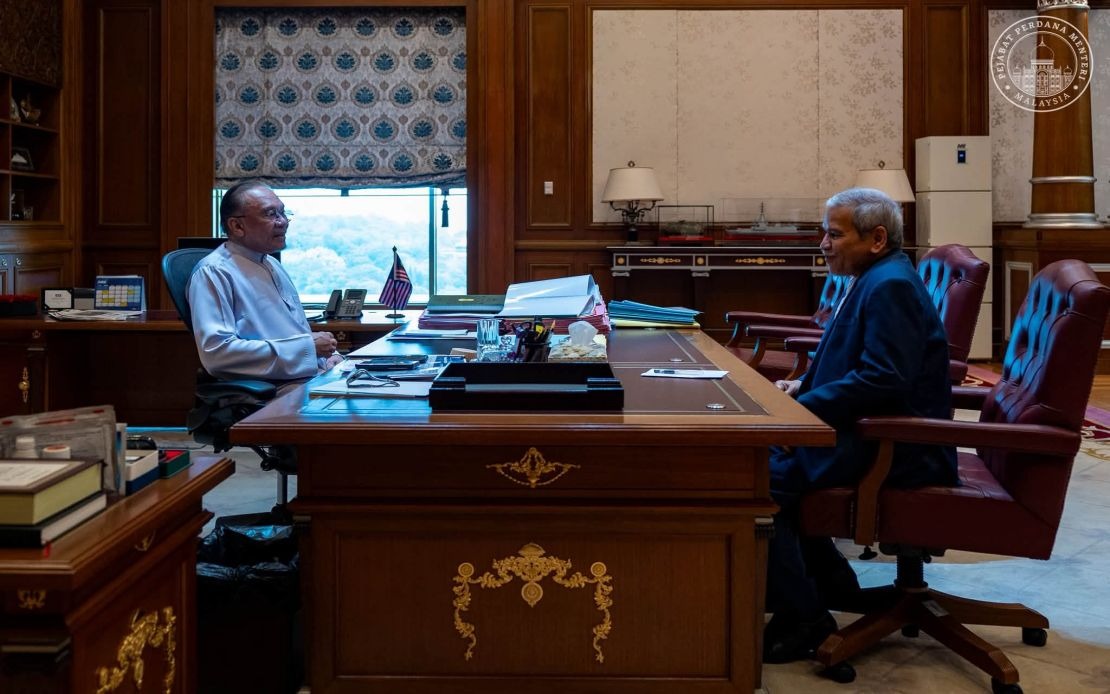
Prime Minister Datuk Seri Anwar Ibrahim has underscored the critical importance of sustaining and reinforcing the Federal Land Development Authority as a cornerstone institution dedicated to advancing the living standards and dignity of its settlers and their dependents. He made these remarks during a recent courtesy visit from newly appointed FELDA chairman Tan Sri Ahmad Badri Mohd Zahir at his office in Putrajaya, signalling continued government commitment to one of Malaysia's oldest rural development schemes.
The timing of Anwar's intervention comes as FELDA navigates a transition in leadership. Tan Sri Ahmad Badri commenced his tenure as FELDA chairman on July 15, taking over from Datuk Seri Ahmad Shabery Cheek, whose three-year mandate concluded at the end of June. The leadership change presents an opportune moment for the government to reiterate its strategic priorities for an institution that historically played a pivotal role in Malaysian agricultural and rural development.
As both Prime Minister and Finance Minister, Anwar articulated a dual-track agenda for FELDA's future direction. He emphasized that simultaneously enhancing the material welfare of every cohort of settlers—from longstanding residents to newer beneficiaries—must proceed in tandem with modernization efforts aimed at fortifying FELDA's competitive position within domestic and regional agricultural markets. This balancing act reflects the complex challenge facing agricultural development schemes in Southeast Asia as they contend with climate variability, fluctuating commodity prices, and shifting demographic patterns among rural communities.
A particular focus of Anwar's message centred on the necessity of addressing the distinctive obstacles encountered by younger settlers and their families within the FELDA ecosystem. This demographic concern underscores a broader anxiety across Malaysian agricultural development bodies regarding youth engagement and retention in farming livelihoods. As younger generations increasingly migrate to urban centres seeking white-collar employment, institutions like FELDA confront mounting pressure to demonstrate viable economic pathways and modern amenities that can retain talent within the agricultural sector.
In his public statement disseminated via social media, Anwar expressed confidence that Ahmad Badri possesses the capability and commitment required to execute the necessary institutional restoration and capacity-building initiatives. The Prime Minister's endorsement suggests that the incoming chairman has been carefully selected to navigate complex operational and social challenges while maintaining the ideological commitment to rural upliftment that has historically defined FELDA's mission since its establishment decades ago.
The government's pledge of sustained backing for FELDA represents more than symbolic political support. Anwar explicitly committed that the MADANI administration—the current government's policy framework emphasizing managed growth and prosperity for all citizens—will furnish comprehensive resources and policy support to enable FELDA's continued advancement. This assurance holds particular significance for the estimated hundreds of thousands of settler families whose livelihoods depend directly on FELDA's operational effectiveness and financial viability.
FELDA's relevance extends beyond the immediate welfare of settler communities. As Malaysia pursues greater food security and agricultural self-sufficiency amid global supply chain uncertainties, government-sponsored development schemes remain instrumental in mobilizing rural land and labour towards national strategic objectives. The institutional capacity to adapt traditional agricultural practices to contemporary environmental and market realities therefore assumes heightened importance in the context of Malaysia's long-term economic resilience.
The organizational challenges confronting FELDA reflect broader difficulties facing agricultural extension and development institutions throughout Southeast Asia. Many such bodies were established during earlier industrialization phases and must now reposition themselves within economies where agricultural represents a diminishing but strategically significant sector. Successfully executing this transition while maintaining social commitments to existing beneficiaries demands skilled leadership, adequate funding, and policy coordination across multiple government agencies—precisely the ingredients Anwar's remarks suggest the MADANI government intends to provide.
Ahmad Badri's appointment arrives against a backdrop of ongoing scrutiny regarding the effectiveness of land distribution schemes in delivering genuine prosperity to intended beneficiaries. Persistent concerns about indebtedness, land disputes, and inadequate support services have periodically surfaced in Malaysian public discourse, underscoring that institutional strengthening must encompass not merely capital investment but also governance improvements and accountability mechanisms that ensure settler voices shape organizational priorities.
Looking forward, the success of FELDA under its new leadership will likely be measured through multiple lenses: the financial health of settler enterprises, demographic sustainability of scheme participation, adaptation to climate-related agricultural challenges, and contribution to national food production targets. Anwar's emphasis on balancing social welfare objectives with economic competitiveness suggests the government recognizes that FELDA cannot persist as primarily a poverty alleviation instrument; it must simultaneously function as a productive agricultural enterprise capable of generating adequate returns for both settlers and the broader economy.

