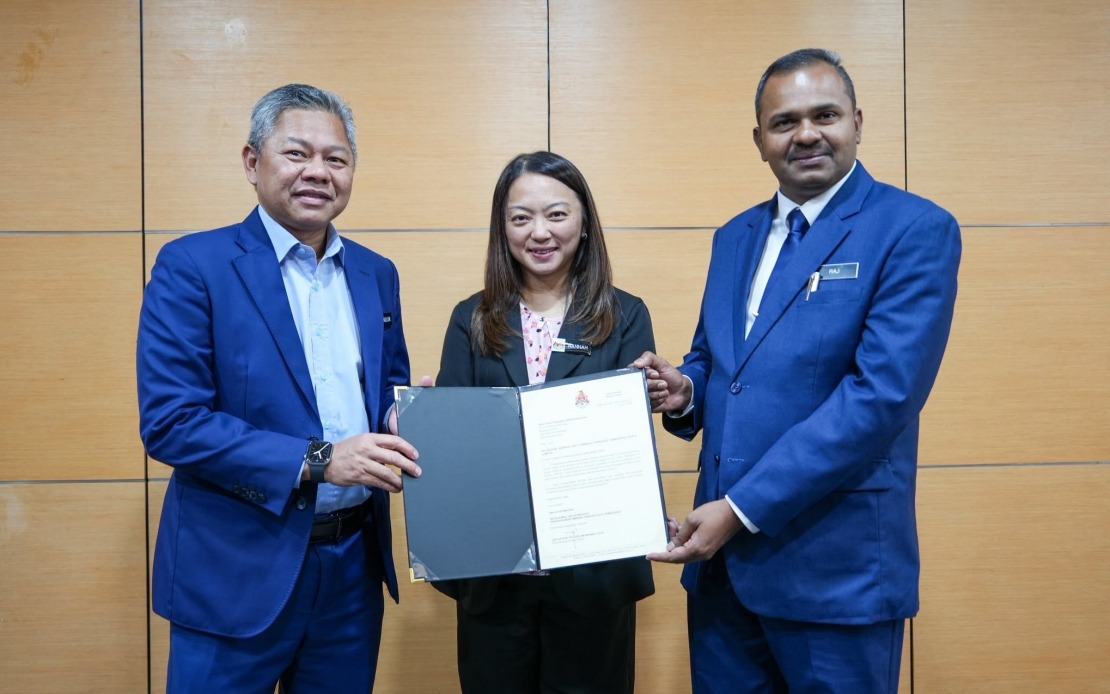
Federal Territories Minister Hannah Yeoh has extended her congratulations to S. Thiyagaraj following his appointment to the Kuala Lumpur City Advisory Board, signalling confidence in the former corrections professional's capacity to contribute meaningfully to the capital's governance framework. The appointment, formally presented by Kuala Lumpur Mayor Datuk Seri Fadlun Mak Ujud, marks another chapter in the administration's efforts to strengthen advisory mechanisms within city governance structures.
In her statement, Hannah emphasised the importance of approaching the role with rigour and ethical commitment. She underscored that board members must demonstrate complete integrity alongside professional competence, framing these qualities as essential foundations for serving the urban population effectively. Her remarks reflect a broader institutional emphasis on ensuring that governance bodies maintain public trust through consistent adherence to established standards.
Thiyagaraj brings substantial experience from his two-decade tenure within Malaysia's correctional system. His career with the Prisons Department spanning from 2005 until 2023 positioned him in the Technical Intelligence and Investigation Unit, where he rose to the rank of Assistant Superintendent. This background in institutional administration, compliance, and investigative operations potentially equips him to engage with complex city management issues from a structured, systematic perspective.
The Kuala Lumpur City Advisory Board functions as a consultative mechanism designed to enhance the Mayor's decision-making process on matters ranging from urban administration to city development initiatives. By bringing external perspectives and expertise into these deliberations, the board serves as a counterbalance to internal departmental thinking, fostering more comprehensive policy consideration. Hannah's remarks reinforced this understanding, noting that board members bear considerable responsibility in strengthening governance transparency and responsiveness.
The appointment reflects an intentional strategy within Malaysia's governance apparatus to draw expertise from diverse professional backgrounds into advisory roles. By recruiting individuals from law enforcement and corrections sectors, the administration signals that urban governance increasingly requires input from specialists accustomed to navigating complex organisational challenges. Thiyagaraj's investigative background may prove particularly valuable when the board examines city safety, compliance with regulations, and institutional accountability matters.
For Kuala Lumpur residents, such appointments carry practical significance beyond ceremonial recognition. The city's continued development as a major regional hub depends substantially on effective coordination between the municipal administration, advisory bodies, and community representatives. Each new board member potentially influences priorities regarding infrastructure maintenance, public services, environmental standards, and urban planning decisions that directly impact daily life across the city's diverse neighbourhoods.
Hannah's emphasis on professionalism and transparency in her statement mirrors broader institutional commitments to improving governance standards across federal territories administration. As the responsible minister overseeing Kuala Lumpur's municipal affairs, her public endorsement of new advisory board members serves to legitimate their authority while establishing clear performance expectations. This approach encourages incoming members to understand their appointments not as honorary positions but as substantive responsibilities requiring active engagement.
The composition of advisory boards in major Malaysian cities has increasingly attracted public attention as stakeholders seek greater insight into governance processes. Appointments like Thiyagaraj's, when publicised and contextualised appropriately, contribute to demystifying how cities like Kuala Lumpur incorporate diverse expertise into administrative decision-making. Transparent appointment processes and clear articulation of members' qualifications help citizens understand that advisory positions are merit-based rather than politically arbitrary.
Thiyagaraj's transition from corrections administration to municipal governance advising illustrates how institutional expertise can transfer across government sectors. The systematic thinking, compliance focus, and organisational knowledge developed within the Prisons Department may translate effectively to addressing challenges within city administration. His presence on the board potentially enriches discussions regarding public order, security infrastructure, and institutional accountability within the urban context.
Looking forward, the appointment sequence occurring within Kuala Lumpur's governance structure suggests the administration remains committed to refreshing advisory mechanisms with experienced professionals. As the capital continues navigating post-pandemic recovery, infrastructure expansion, and evolving citizen expectations around service delivery, the calibre of advisory board membership becomes increasingly consequential. Hannah's public confidence in Thiyagaraj reflects institutional expectations that his appointment will contribute positively to these ongoing governance challenges.

