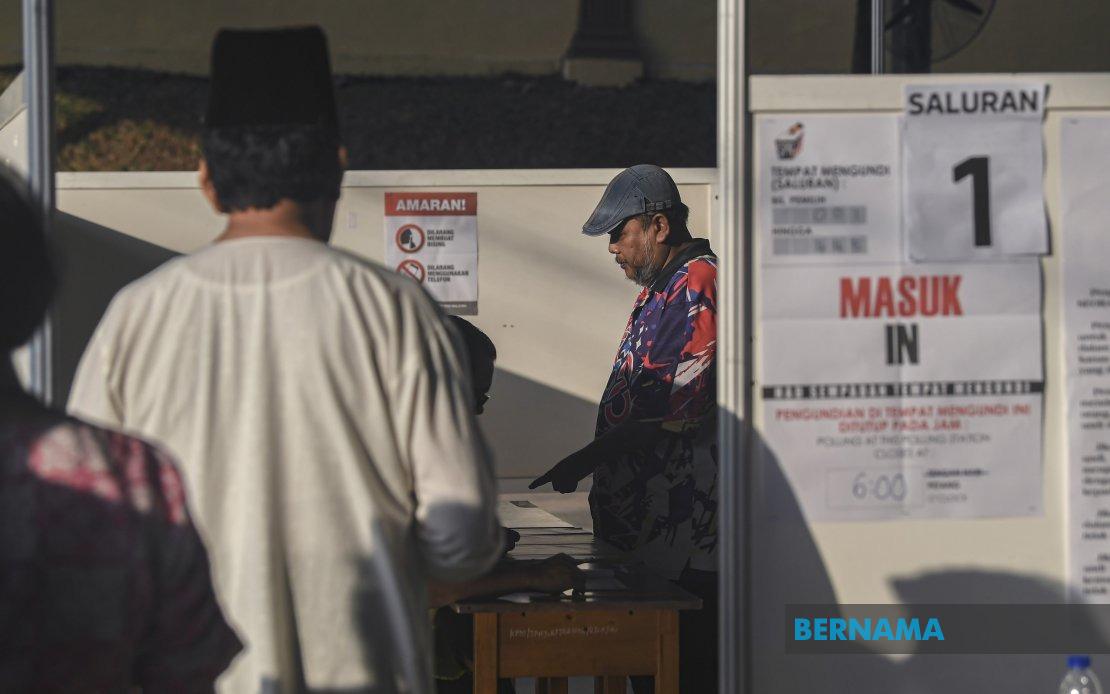
A succession of federal cabinet ministers and their deputies participated in voting during Johor's 16th state election on July 11, underscoring the significant political moment unfolding across the southern peninsula. The staggered arrivals of high-ranking officials at polling stations throughout the day reflected both their civic responsibility and the widespread attention the election commanded across the nation's political establishment.
Datuk Seri Azalina Othman Said, who helms the Minister in the Prime Minister's Department (Law and Institutional Reform) portfolio, was among the first federal leaders to mark her ballot, arriving at Sekolah Kebangsaan Bandar Penawar in Pengerang at 8.15 am. Her early participation set the tone for other ministerial-level officials who would follow throughout the morning, each casting votes at polling centres convenient to their respective constituencies across the state.
Defence Minister Datuk Seri Mohamed Khaled Nordin exercised his electoral franchise at Sekolah Kebangsaan Rinting 1 in Masai approximately fifteen minutes after Azalina's appearance, while Plantation and Commodities Minister Datuk Seri Dr Noraini Ahmad voted at Sekolah Menengah Kebangsaan Dato' Onn in Batu Pahat by mid-morning. These simultaneous voting activities across geographically dispersed locations underlined the scale of the electoral exercise and the Federal Territory representation within Johor's boundaries.
Deputy Works Minister Datuk Seri Dr Ahmad Maslan cast his ballot at Sekolah Kebangsaan Seri Bahagia in Benut, whilst Deputy Communications Minister Teo Nie Ching appeared at Sekolah Jenis Kebangsaan Cina (SJKC) Kulai Besar shortly before 9.30 am. The appearance of diverse political representation, spanning multiple ministerial departments and reflecting different demographic constituencies, illustrated the cross-cutting nature of the electoral stakes involved.
The voting infrastructure supporting this electoral exercise was substantial. A total of 1,076 polling centres had been established throughout Johor, equipped collectively with 4,889 distinct polling streams to manage the anticipated flow of voters. These facilities operated in synchronised fashion, opening their doors at precisely 8 am across all locations simultaneously, ensuring uniform commencement of the democratic exercise across the state regardless of geographic or demographic considerations.
The electoral register for this contest encompassed 2.7 million registered voters, representing a significant cross-section of Johor's adult population eligible to participate in determining the state's next government. The scale of this franchise reflected decades of demographic growth within the state and expanding political engagement across urban, semi-urban, and rural constituencies. For Malaysia's southern industrial and agricultural heartland, this electoral moment carried implications for development priorities, economic strategies, and governance approaches that would shape the state's trajectory for the subsequent term.
The voting process was scheduled to proceed until 6 pm, providing a ten-hour window for the electorate to exercise their democratic rights. This extended timeframe accommodated working voters, rural populations requiring travel time, and others for whom early or late voting periods might prove more convenient. The logistical coordination required to maintain operational integrity across nearly five thousand polling streams demanded meticulous planning and substantial governmental resource allocation.
The election followed the conclusion of an intensive fourteen-day campaign period that had ended at midnight the previous night. During this fortnight, political parties had competed vigorously to present their visions, articulate policy positions, and mobilise their respective support bases across the state's diverse constituencies. The transition from campaign mode to voting day marked the culmination of months of political preparation, candidate selection, and strategic positioning among the various contesting parties.
For Malaysian political observers and Southeast Asian analysts tracking electoral dynamics within the region's established democracies, the Johor election represented a significant barometer of political sentiment within one of Malaysia's most economically significant states. The voting behaviour demonstrated across the 1,076 polling centres would provide insight into prevailing voter preferences, the effectiveness of competing political messages, and the durability or flux of existing political alignments within the state's electorate. The outcome would carry resonances extending beyond Johor's borders, potentially influencing calculations regarding Federal government stability and the relative positioning of major political coalitions within the broader Malaysian political landscape.

