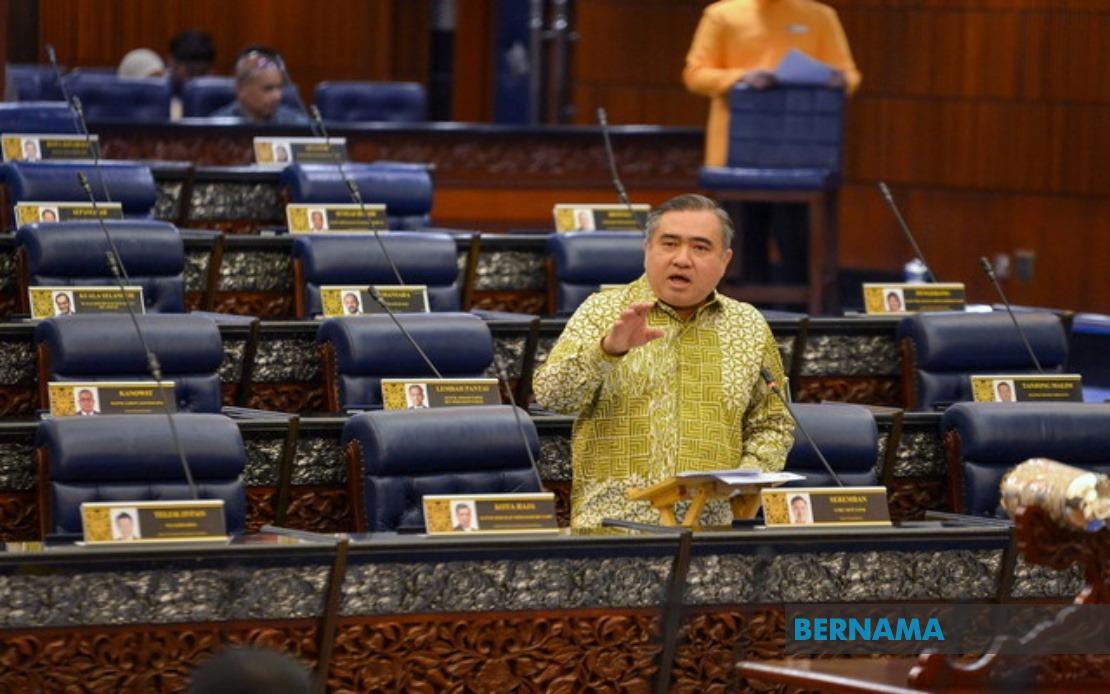
Transport Minister Anthony Loke has announced that the Federal Government will provide financial support for Johor's Elevated Autonomous Rapid Transit (E-ART) project, settling months of uncertainty about how one of the country's most ambitious transport initiatives would be financed. Speaking during Parliament's oral question-and-answer session, Loke disclosed that while the appointed consortium would initially bear the project's costs, independent viability assessments have determined that relying solely on private sector financing would render the massive infrastructure undertaking unworkable. This acknowledgment represents a significant shift in the government's approach to large-scale transport infrastructure, recognizing that mega-projects of national importance may require direct public investment despite the traditional preference for private-sector-led models.
The announcement comes as the government navigates competing demands for transport improvement across Malaysia while managing fiscal constraints. Johor, as a state directly connected to Singapore through major transport corridors, faces unique infrastructure pressures driven by cross-border traffic flows and rapid urbanization. The E-ART system is envisioned as a transformative solution to address these pressures, but its estimated cost and complexity have consistently raised questions about financial sustainability under purely commercial arrangements. Loke's confirmation that federal funding will supplement or replace private financing indicates the government views this project as strategically essential rather than commercially optional, reflecting a broader recognition that regional connectivity and urban mobility serve national economic interests that justify public investment.
The detailed framework for financing remains subject to ongoing negotiations between the government, the appointed consortium, and relevant stakeholders. Key aspects still under discussion include the precise financial commitment required from the Federal Government, the repayment mechanism across the concession period, and how costs and revenues will be allocated between public and private entities. Loke indicated that once these negotiations conclude, the agreed terms will be presented to the Cabinet for formal consideration and approval before any Concession Agreement is finalized. This staged approach suggests the government wants to ensure parliamentary and public scrutiny of the financing structure while protecting commercial negotiations from premature disclosure. For Malaysian readers, this deliberate process signals that despite the minister's commitment to funding, the specific terms affecting taxpayers and future users remain unsettled and subject to Cabinet-level decision-making.
The project timeline remains ambitious despite financing uncertainties. Loke stated that the E-ART is expected to reach completion within four years from issuance of the Letter of Acceptance, assuming negotiations conclude and approvals proceed without significant delay. This schedule places the project's completion potentially in 2028 or 2029, contingent on when formal acceptance occurs. The timing assumes normal construction progress and no major unforeseen challenges, though mega-infrastructure projects in Malaysia and the region have frequently experienced delays. For Johor residents and businesses, this timeline matters significantly because it will overlap with the opening of the Johor Bahru-Singapore Rapid Transit System (RTS) Link, scheduled for January 2027. The gap between the RTS Link's commencement and the E-ART's expected completion creates a window of potentially several years when the RTS Link will operate without complementary rapid transit infrastructure, potentially creating bottlenecks or uneven capacity distribution across the transport network.
Loke addressed this overlap directly by outlining a comprehensive traffic dispersal strategy developed jointly by the Transport Ministry and the Johor government. Rather than waiting for the E-ART's completion, authorities are accelerating improvements to existing public transport infrastructure to manage expected increases in travel demand. The BAS.MY service network will expand from its current footprint to encompass 28 dedicated routes featuring 254 buses, with a significant portion being electric vehicles. This expansion reflects both environmental commitments and the government's desire to provide modern, cleaner transport options alongside traditional offerings. The Stage Bus Service Transformation (SBST) 2.0 programme represents another layer of this strategy, dedicating 157 buses specifically to the critical Johor Bahru Sentral and Bukit Chagar routes, which are slated to commence operations in early 2027, synchronizing with the RTS Link's launch. These initiatives suggest the government recognizes that the E-ART cannot be treated as a standalone solution and that transitional measures are essential to prevent service gaps.
Rail capacity expansion forms another pillar of the interim strategy. Loke disclosed that the Transport Ministry is actively procuring 12 additional KTM Komuter Southern train sets, though approval processes remain pending. While awaiting formal clearance, the ministry launched the Shuttle Selatan service on June 16, connecting Kulai-Kempas-Johor Bahru and Kempas-Pasir Gudang with a capacity of 14 daily trips. This interim service demonstrates the government's willingness to deploy creative solutions using existing assets while permanent capacity expansions move through approval stages. For commuters in southern Johor, the Shuttle Selatan provides immediate relief, though its eventual integration with larger rail expansion plans remains unclear. The temporary nature of these solutions underscores the genuine capacity crunch that E-ART is intended to address and the pressing need for permanent, high-capacity infrastructure that can sustain long-term regional growth.
Fare policy emerged as a critical concern during supplementary questioning from opposition MP Rusdan Rusmi, who raised whether the government intends to implement fare ceilings across public transport projects. Loke confirmed that fares for all public transport projects remain under government control, effectively functioning under regulated pricing structures. The minister acknowledged that controlled fares reduce projects' financial competitiveness and necessitate government funding injections to sustain operations, creating a deliberate trade-off between affordability and commercial viability. This position reflects a policy choice to prioritize accessibility over profitability, ensuring that improved transport infrastructure benefits lower-income users rather than primarily serving affluent commuters able to afford market rates. For Malaysian readers concerned about transport costs, this commitment provides reassurance that expansion of public transport capacity will be accompanied by efforts to keep fares within reach of working and lower-middle-class populations who depend on public systems.
The broader context of Loke's announcements reveals a government attempting to balance multiple competing pressures: fiscal sustainability, regional development, cross-border connectivity, and social equity. Johor's position as Malaysia's gateway to Singapore makes its transport infrastructure a national-level concern extending beyond local or state-level considerations. Congestion and inefficient connectivity damage not only Johor's economy but also Malaysia's broader commercial relationship with Singapore and the region's logistics networks. The E-ART project thus serves not merely local needs but national strategic interests in maintaining Johor's role as an economic engine and cross-border hub. Federal funding, from this perspective, represents an investment in national competitiveness rather than subsidy of a local project, justifying public resources despite the project's lack of commercial self-sufficiency.
The negotiations ahead will prove critical in determining whether federal involvement strengthens or complicates project delivery. Hybrid public-private models introduce complexity around risk allocation, cost-sharing, and accountability that purely public or purely private models avoid. The appointed consortium's role will need careful definition: if the private partner carries significant financial exposure, delays and cost overruns will threaten its viability; if the Federal Government assumes most financial risk, taxpayers bear the burden of commercial underperformance. How Cabinet ultimately structures these arrangements will signal the government's commitment to success and its confidence in the project's underlying assumptions about demand, costs, and benefits.
For Southeast Asian observers, Johor's E-ART development exemplifies broader regional trends toward government-backed transport megaprojects as urbanization outpaces private sector investment capacity. Singapore's highly developed transport system has long influenced planning in neighboring regions, and Johor's infrastructure ambitions reflect recognition that competitive regional positioning requires modern connectivity. The shift from purely commercial models toward government-supported hybrid structures mirrors similar moves across ASEAN, from Indonesia's mass rapid transit expansions to Thailand's rail initiatives. Malaysia's experience with E-ART will likely inform similar projects elsewhere in the region, making the financing and delivery outcomes particularly significant for peer nations evaluating their own transport strategies.
The practical implications for Johor residents and workers extend beyond mere convenience. Efficient, affordable transport shapes residential location choices, labor market access, and business competitiveness. The combination of E-ART, expanded bus services, enhanced rail capacity, and the RTS Link creates the potential for a genuinely integrated transport network that could transform daily life across southern Johor and its connections to Singapore. Conversely, if these projects fail to integrate effectively or if implementation lags significantly, the anticipated benefits may not materialize, leaving residents facing continued congestion despite substantial public investment. The government's commitment to funding and timeline announcements represent promises whose fulfillment will occupy transport policy debates for years ahead.

