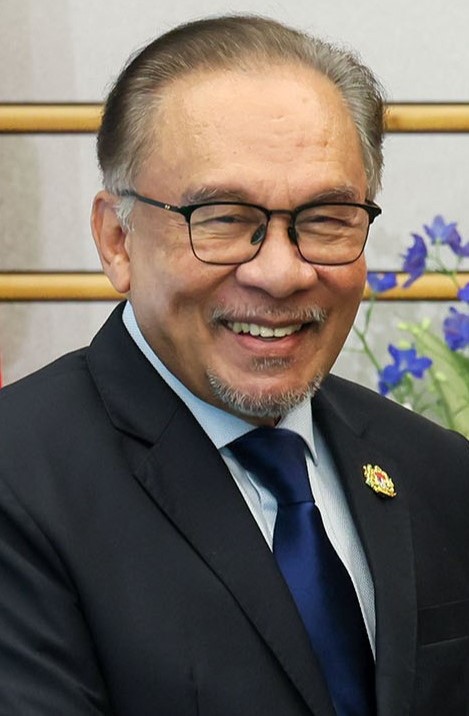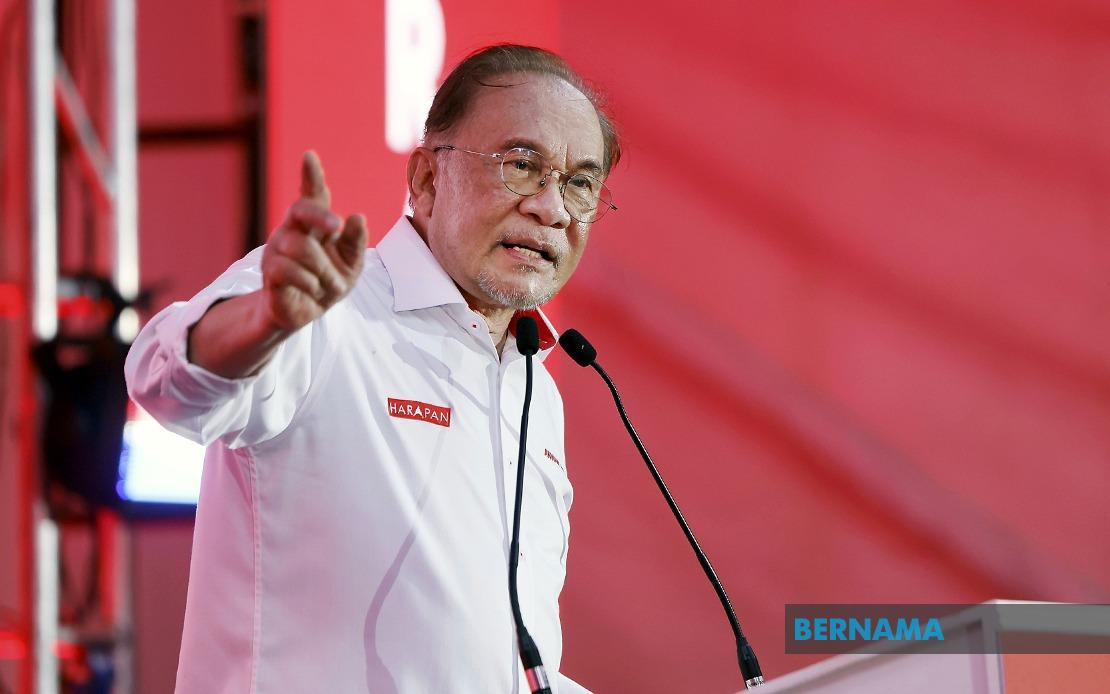
Prime Minister Datuk Seri Anwar Ibrahim unveiled figures demonstrating what he characterises as the Federal government's substantial financial commitment to Johor's advancement, asserting during a campaign event in Tangkak that the state receives more in federal disbursements than it contributes in tax revenue. Speaking at a Pakatan Harapan candidate announcement for the Johor State Election, Anwar drew on Finance Ministry data to establish a narrative of equitable federal distribution, one he views as essential context for voters evaluating the MADANI Government's track record in the state.
The Prime Minister, who also holds the Finance portfolio, presented a straightforward accounting: between 2023 and 2025, Johor channelled approximately RM14 billion into federal revenue streams. In return, the Federal government dispersed RM16 billion across a spectrum of initiatives encompassing infrastructure development, administrative operations, and welfare programmes targeted at Johor residents. This RM2 billion differential, Anwar argued, reflects deliberate policy choices to ensure the state receives proportionally generous treatment compared to its fiscal contribution, a point he emphasised was necessary to counter what he implicitly suggested were misconceptions about federal-state resource flows.
Breaking down the operational dynamics further, Anwar highlighted significant year-on-year increases in the annual operating expenditure Johor receives from Putrajaya. Under the preceding administration, the state secured between RM6 billion and RM7 billion annually for operational costs. This baseline has expanded substantially under the MADANI Government to RM8.7 billion, representing a material uplift in the resources available for civil service salaries, maintenance of state infrastructure, and routine governance activities. The Prime Minister positioned this expansion as tangible evidence of his government's willingness to elevate financial support beyond historical precedent, thereby signalling enhanced federal confidence in Johor's developmental priorities.
Development expenditure trajectories paint an even more pronounced picture of resource reallocation. Johor's development allocation more than doubled from RM2.3 billion in 2022 to RM4.8 billion in 2026, a trajectory that underscores the government's ambition to fund major capital projects, infrastructure modernisation, and long-term economic initiatives within the state. This near-doubling occurs even as the government manages competing demands across Malaysia's peninsula and East Malaysia, where Sabah and Sarawak command larger total allocations reflecting their geographical vastness and historical underinvestment patterns. Within this constrained fiscal environment, Johor's fourth-year doubling of development resources warrants examination as a strategic choice with political implications.
When combined, Johor's operating and development expenditure placements position the state as a tertiary priority in federal allocation hierarchies for 2026, trailing only Sabah and Sarawak but ahead of other significant population centres. This ranking carries implications for infrastructure competition and political perceptions. Federal allocation decisions inevitably reflect calculations about electoral returns, demographic concentration, and strategic economic zones. Johor's position as the nation's second-most populous state, combined with its pivotal position in cross-straits commerce and regional integration, likely justifies elevated allocations independent of pure fiscal contribution metrics.
Beyond headline development and operating expenditure figures, Anwar referenced Johor's standing within two assistance schemes designed to provide direct monetary relief to households. Under the Sumbangan Tunai Rahmah and Sumbangan Asas Rahmah programmes, Johor ranks second only to Selangor in total assistance distributed. These cash transfer mechanisms, implemented across the MADANI Government's tenure, constitute welfare investments that directly enhance household purchasing power and represent a distinctly different category of federal commitment compared to capital projects. The emphasis on this metric suggests the government wishes to highlight poverty alleviation efforts alongside infrastructure development.
The political context surrounding these figures demands consideration. Anwar's presentation occurred specifically at a Pakatan Harapan candidate announcement for Johor State Election proceedings, embedding the financial narrative within electoral competition. Johor, traditionally regarded as Barisan Nasional stronghold despite demographic shifts, represents contested political territory where federal allocation announcements carry amplified significance for voter assessments of which coalition delivers material benefits. By quantifying federal commitments in monetary terms before the campaign intensifies, the Prime Minister attempts to establish the baseline argument that his government has invested substantially in Johor's welfare and development trajectory.
The comparison between historical and contemporary allocation levels merits deeper scrutiny regarding sustainability and underlying economic conditions. Operating expenditure increases from RM6-7 billion to RM8.7 billion partially reflect inflation and cost-of-living pressures on government service delivery costs rather than proportional expansion of services. Similarly, development expenditure commitments must eventually transition to operational support phases; infrastructure projects initiated at higher spending levels require sustained recurrent budget allocations to remain functional, potentially creating medium-term fiscal pressures on future budgets unless revenue growth accompanies expenditure expansion. Whether Johor's increased allocations represent sustainable baseline shifts or cyclical peaks depends partly on broader fiscal consolidation trajectories that the MADANI Government will navigate during its remaining term.
For Malaysian observers evaluating federal fiscal equity across states, the Johor case illustrates the complexity underlying centre-periphery resource negotiations. Johor's economic productivity and revenue contributions to federal coffers necessarily anchor discussions about recipient status, yet the government's strategy of allocating more than a state contributes remains defensible when contextualised within development equalisation objectives, infrastructural backlogs, or population dynamics. The RM16 billion versus RM14 billion comparison, while numerically straightforward, obscures questions about allocation efficiency, project selection criteria, and whether distributed resources achieve their intended developmental outcomes within Johor communities.
Moving forward, these figures establish federal claims about commitment that will require validation through tangible project delivery and community-level impacts. Anwar's emphasis on quantitative allocation metrics reflects a government seeking to contest electoral narratives through fiscal evidence rather than programmatic details. Whether Johor voters prioritise the magnitude of federal allocations or the quality of resulting services and infrastructure quality remains the crucial political variable that these campaign-period statistics ultimately cannot resolve.