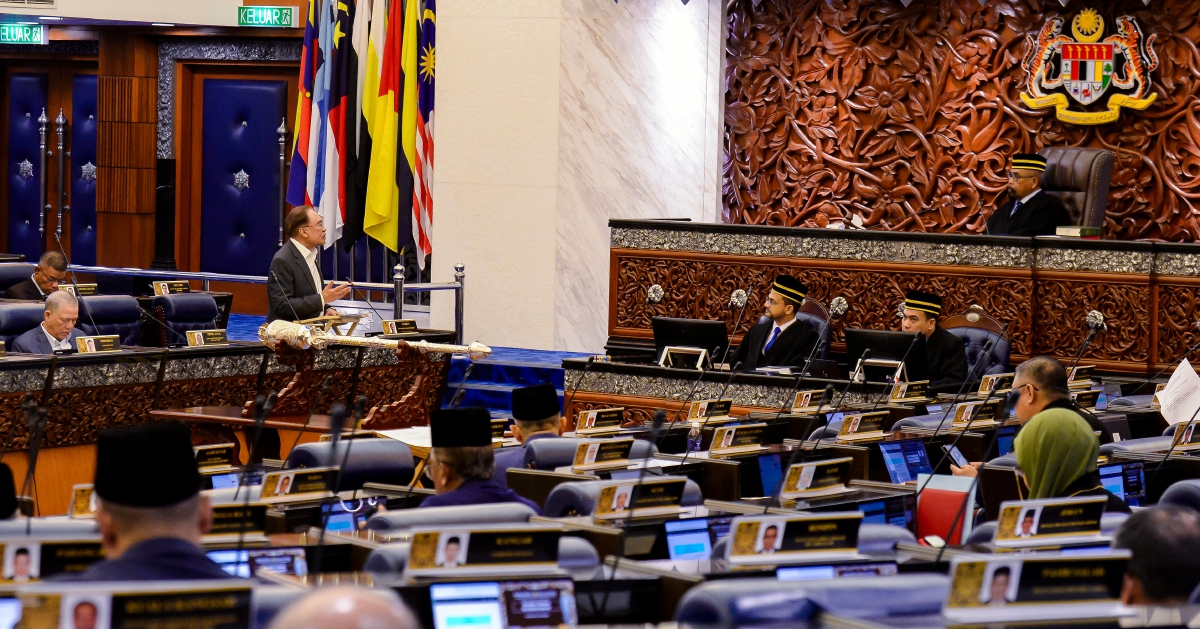
Prime Minister Datuk Seri Anwar Ibrahim has signalled a significant shift in how the federal government will handle finances tied to state-level decisions, declaring that Kuala Lumpur cannot be routinely expected to cover additional expenditures that arise from actions taken by state administrations. The statement reflects growing concern within the federal administration about the mounting pressures on the national budget when state governments implement programmes or policies without securing central government co-funding agreements beforehand.
Anwar's position touches on a longstanding tension in Malaysia's federal system, where responsibility for funding major services is often ambiguous between Putrajaya and the state capitals. Healthcare, education, infrastructure and social welfare programmes frequently involve overlapping jurisdictions, creating situations where expenditures initiated at state level ultimately require federal resources to sustain operations or cover shortfalls. The Prime Minister's remarks suggest the administration intends to establish more transparent mechanisms for determining which tier of government bears financial responsibility for new initiatives.
The fiscal strain on the federal budget has intensified as Malaysia navigates post-pandemic economic recovery while managing persistent demands for development spending across the country. State governments, particularly those controlled by different political parties from the federal administration, have occasionally pursued independent agendas that generate unexpected costs flowing upwards to the national treasury. Without formal agreements delineating financial accountability, the federal government has frequently found itself absorbing expenses it did not approve or budget for during the initial planning stage.
For Malaysian readers accustomed to seeing resources concentrated in federal hands, Anwar's statement carries practical implications. It suggests that future state projects—whether new hospitals, schools, or welfare schemes—will face tighter scrutiny at the federal approval stage. Residents in states with limited independent revenue bases may need to reconcile expectations about service availability and quality with the reality that new state-initiated programmes may not automatically receive federal backing if costs exceed original estimates.
The timing of this declaration matters significantly within Malaysia's political landscape. With elections potentially approaching and multiple state governments pursuing divergent agendas, Anwar's stance establishes a clearer framework for federal-state relations moving forward. States will need to demonstrate either sufficient internal revenue capacity to fund their own projects or secure explicit federal support through formal arrangements before launching new initiatives. This approach could reshape how state-level policy is conceived, forcing administrations to think more carefully about sustainability and long-term financing.
The federal-state funding question also intersects with Malaysia's broader fiscal challenges. The national debt remains elevated, constraining the federal government's flexibility in absorbing unexpected costs. Budget deficits have narrowed somewhat in recent years, but resources remain stretched across competing priorities including defence, debt servicing, and maintaining existing federal programmes. When state decisions create unforeseen federal liabilities, they directly compete with other national spending priorities and complicate Putrajaya's macroeconomic management objectives.
For Southeast Asia more broadly, Anwar's position reflects a pattern seen across the region where federal systems struggle with clearly delineating fiscal responsibility. Countries including Indonesia and India grapple with similar issues regarding how far central governments should subsidise state-level decisions. Malaysia's experience offers relevant lessons for federal democracies attempting to maintain fiscal discipline while respecting state autonomy and diversity in governance approaches.
The practical implementation of Anwar's principle will prove crucial. The federal government will need to establish explicit criteria for when it will co-fund state initiatives versus when it will decline. Without clear guidelines, disputes will inevitably emerge, potentially straining federal-state relationships and creating uncertainty for state administrators planning development programmes. A transparent framework would benefit all stakeholders by establishing predictable rules rather than case-by-case negotiations.
State governments controlling substantial independent revenue sources—particularly those with significant oil and gas reserves or thriving commercial sectors—may find this approach less constraining than states relying primarily on federal allocations. This could inadvertently widen fiscal disparities between resource-rich and resource-poor states unless the federal government balances its fiscal conservatism with redistribution mechanisms ensuring equitable development across all regions. The challenge lies in enforcing accountability for state spending while maintaining Malaysia's commitment to nationwide development.
Anwar's statement also reflects lessons learned from previous episodes where state-level spending decisions created fiscal surprises at the federal level. By establishing firmer boundaries now, the Prime Minister seeks to avoid repeating patterns where unforeseen state liabilities forced federal retrenchment or reallocation of budgeted resources. This represents a more disciplined approach to managing the intergovernmental fiscal relationship, one that prioritises predictability and mutual accountability over ad hoc problem-solving.
Looking ahead, state governments will need to adjust their planning processes to account for this new fiscal reality. Proposals for major new programmes will require detailed financial sustainability plans and either demonstrated internal revenue capacity or secured federal commitment before implementation. This shift should ultimately strengthen fiscal governance across Malaysia by forcing more rigorous evaluation of state spending proposals at conception rather than managing crises after programmes launch and costs escalate unexpectedly.

