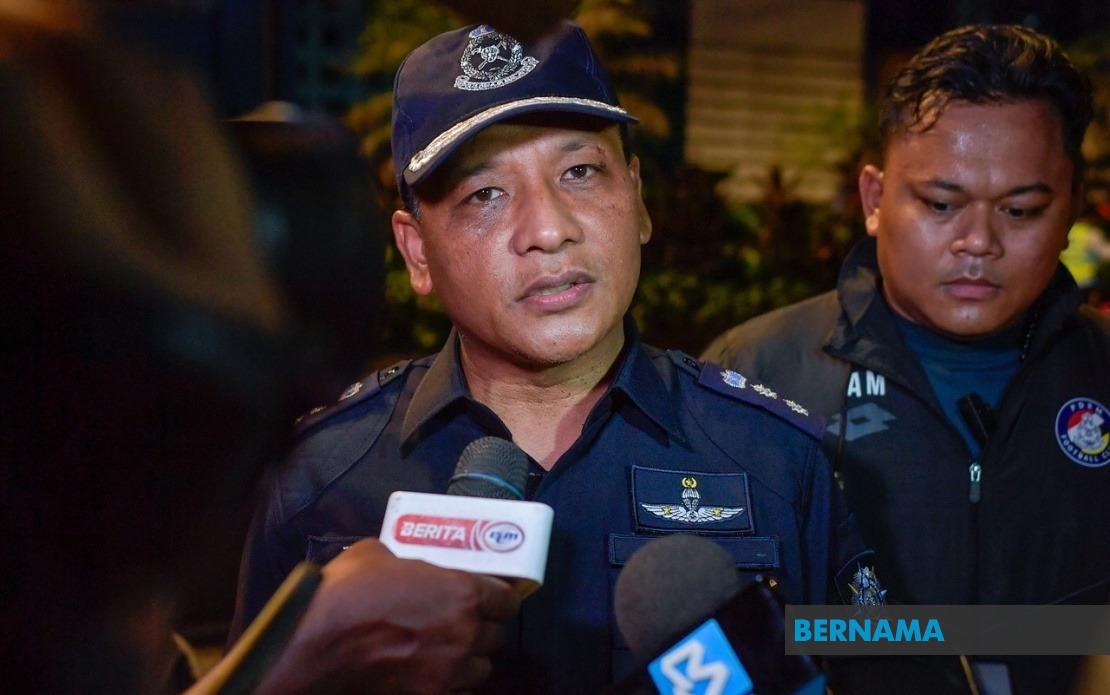
The Kuala Lumpur Traffic Investigation and Enforcement Department has advanced its inquiry into a pre-dawn collision that claimed three lives to Malaysia's legal authorities. The case file covering the incident involving an Immigration Department vehicle will reach the Attorney General's Chambers on August 20, according to department chief ACP Mohd Zamzuri Mohd Isa, setting the stage for formal charging decisions by prosecutors.
The tragedy unfolded at approximately 1 am on Jalan Sultan Ismail when a Kuala Lumpur Immigration Department truck, colloquially known as a "Black Maria", entered a traffic junction against a red signal while operating its emergency beacon and siren. The vehicle was positioned to assist with enforcement operations against illegal residents in the Chow Kit area at the time. The truck's trajectory brought it into the path of a Proton Saga whose driver was proceeding through the intersection under a green light, triggering a catastrophic collision that set the truck careening across the roadway.
The impact proved devastating for a family caught in the vehicle's path. Shaik Mohd Firdaus Shaikh Yahya, aged 53, and two of his daughters—Siti Nor Sazlin, 25, and Siti Darwisyah Auni, 12—were declared dead at the scene. His wife, Norhayati Razali, 55, sustained severe injuries and remains hospitalized under intensive care at Kuala Lumpur Hospital. An additional vehicle, an Inokom Matrix, was also struck during the sequence of events, though details regarding occupants remain limited.
Police have secured temporary custody of both drivers involved in the collision. The Immigration Department truck operator and the Proton Saga driver were remanded for one day following their apprehension, with investigators treating the matter as a potential breach of the Road Transport Act 1987, specifically Section 41(1), which addresses dangerous driving causing death and injury. This legislative framework carries substantial penalties and allows prosecutors discretion in determining the severity of charges to pursue.
The decision to escalate the case to the Attorney General's Chambers follows consultations between the Traffic Investigation and Enforcement Department and the Kuala Lumpur Prosecution Director's office. The Head of the General Crime and Public Order Division will now assess the evidence and determine whether formal charges are warranted, with both the prosecuting officer and investigating officer presenting their findings for judicial consideration. This procedural step is standard for cases involving fatalities and potential corporate liability through government agencies.
The circumstances surrounding the collision raise critical questions about emergency vehicle operations in urban environments. The truck's decision to proceed through a red light, despite activating warning systems, highlights the ongoing tension between rapid response requirements and public safety protocols. Malaysian traffic regulations establish clear hierarchies for emergency vehicle privileges, yet drivers remain bound by duty-of-care obligations to minimize harm when executing such maneuvers.
For families affected by road traffic incidents in Malaysia, this case illustrates the investigative and prosecutorial processes that follow fatal collisions. The involvement of a government agency adds a layer of complexity, as both individual driver accountability and potential institutional responsibility become considerations for authorities. Questions may emerge regarding training standards, operational procedures, and whether protocols adequately balanced enforcement urgency against civilian protection.
The incident occurred amid broader discussions about road safety in Kuala Lumpur, where traffic density and mixed-use corridors like Jalan Sultan Ismail present ongoing hazards. Multi-vehicle collisions involving heavy vehicles typically result in elevated casualty figures, as the mass and momentum of trucks limit collision mitigation. The presence of a family group at the junction during early morning hours suggests they may have been traveling home or to an early engagement.
Once the Attorney General's Chambers completes its review, charging decisions could range from traffic violations to culpable homicide charges, depending on prosecutorial assessment of driver negligence and causation. Malaysian courts have previously examined similar cases involving emergency vehicles, establishing precedent for balancing operational necessities against recklessness standards. The outcome will likely influence how government agencies and emergency services structure their operational guidelines going forward.
Beyond the immediate legal proceedings, this tragedy underscores persistent challenges in Malaysia's road safety framework. While enforcement operations targeting illegal immigration serve legitimate government objectives, the human cost of conducting such operations during night hours in busy urban areas warrants institutional reflection. Families and communities across the Klang Valley will follow developments in this case closely, as the resolution may prompt broader policy discussions about emergency vehicle protocols and urban traffic management.

