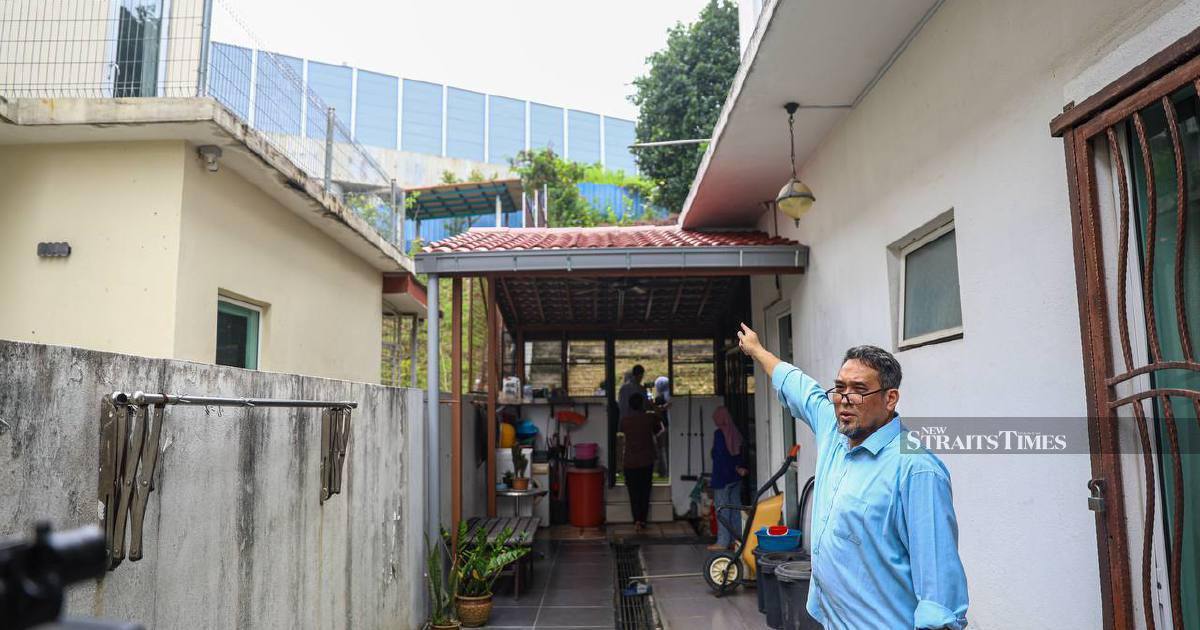
A family in Kuala Lumpur has initiated legal proceedings seeking RM1.33 million in compensation from three entities connected to the East Coast Rail Link (ECRL) project, asserting that ongoing construction activities have endangered their residence and weakened its structural framework. The lawsuit represents a growing concern among residents living in proximity to major infrastructure development zones, where the boundary between necessary construction and residential safety has increasingly become contested ground.
The East Coast Rail Link, one of Malaysia's most significant transport infrastructure projects, forms part of broader national development objectives aimed at improving connectivity between the east and peninsular regions. This dual-track railway scheme stretches across several states and involves substantial earthworks, tunnelling operations, and ground stabilisation measures that inevitably affect surrounding properties. For residents whose homes sit near construction corridors, the project's implementation has transformed daily life into an uncertain experience marked by vibration, noise, and structural concerns that extend well beyond conventional inconvenience.
The family's decision to pursue formal legal action highlights the tension between infrastructure advancement and residential protection that characterises rapid development in urban and semi-urban Malaysia. While national development agendas prioritise ambitious projects like ECRL to enhance regional competitiveness and economic integration, affected householders contend they bear disproportionate personal costs without adequate safeguards or compensation mechanisms. This particular case exemplifies how individual families find themselves navigating complex legal terrain when attempting to secure accountability from large institutional entities.
Structural damage claims arising from construction work typically involve detailed technical assessment to establish causation and quantify harm. Engineers and surveyors must examine foundation stability, crack patterns, foundation settlement, and alignment changes to determine whether construction methodology directly compromised the property's integrity. Such investigations become particularly complicated when properties have pre-existing vulnerabilities or when multiple construction projects operate simultaneously in the same vicinity, making definitive attribution challenging.
Malaysia's regulatory framework governing construction impact mitigation has evolved considerably, yet enforcement remains inconsistent across different states and local authorities. Contractors and project operators are generally required to conduct baseline surveys, implement vibration monitoring systems, and maintain regular inspection protocols for nearby structures. However, the effectiveness of these protective measures often depends on rigorous implementation, adequate resourcing, and genuine commitment to resident welfare rather than mere procedural compliance.
The RM1.33 million claim likely encompasses multiple categories of loss and damage, potentially including structural repairs, diminished property value, relocation expenses, health impacts from prolonged stress and noise exposure, and loss of amenity rights. Quantifying such comprehensive harm requires forensic property valuation, engineering assessments, and documentation of the family's lived experience, transforming the dispute into a multifaceted examination of how infrastructure projects affect residential quality of life.
For residents across Malaysia living near large-scale construction zones, this lawsuit carries implications extending beyond the specific parties involved. Successful claims establish precedent that developers and contractors cannot dismiss property damage as an inevitable consequence of progress, thereby incentivising more careful project management, enhanced protective measures, and genuine engagement with affected communities before problems escalate. Conversely, unsuccessful litigation might discourage future claims and entrench a pattern where residents absorb costs while beneficiaries of infrastructure development avoid accountability.
The three defendants named in the action represent different institutional layers within the ECRL project ecosystem. Their varied involvement—whether as primary contractor, engineer, or project manager—determines the nature of their respective liabilities and the evidence required to establish their responsibility. This differentiated accountability structure reflects how modern infrastructure projects distribute roles across multiple organisations, sometimes creating confusion about who ultimately bears responsibility when things go wrong.
Moreover, this case intersects with broader Malaysian concerns about transparency and public consultation in major development projects. Communities increasingly demand meaningful engagement regarding infrastructure impacts, not token consultation after decisions have been made. The family's resort to litigation suggests that earlier negotiation, mediation, or grievance mechanisms either did not exist or failed to resolve concerns satisfactorily, pointing to systemic gaps in how Malaysia manages the interface between development and residential protection.
The lawsuit's progression through Malaysia's legal system will take considerable time and require substantial evidence gathering. During this period, the family remains exposed to ongoing construction impacts while uncertainty about the project's timeline and their home's future creates sustained emotional and financial stress. This extended limbo exemplifies how the dispute resolution process itself becomes part of the burden imposed on affected residents.
Beyond the immediate financial claim, this dispute raises important questions about how Malaysia balances infrastructure ambitions with individual property rights and residential dignity. As the nation pursues interconnected development across multiple states, ensuring that construction proceeds without systematically harming families living nearby requires more robust protective frameworks, genuine accountability mechanisms, and recognition that infrastructure benefits cannot be equitably distributed if some residents bear all the burdens while others claim all the advantages.

