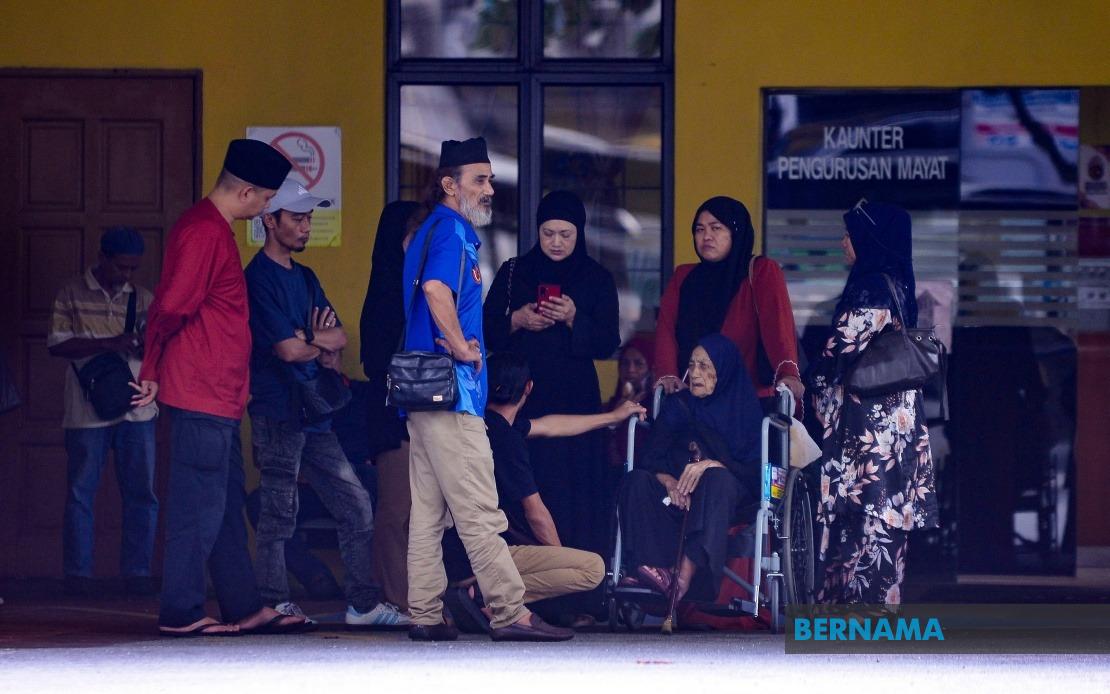
A family member of those killed in a fatal collision involving a Malaysian Immigration Department lorry at Maju Junction on Jalan Sultan Ismail has demanded a full and transparent investigation into the incident. Mohd Nadzri Razali, 69, whose brother-in-law died in the early morning crash, expressed concerns about the circumstances surrounding the accident and called for justice for his relatives who lost their lives.
The tragedy claimed three lives in the pre-dawn incident that unfolded around 1 am when an Isuzu Black Maria immigration vehicle was en route from the Kuala Lumpur Immigration Office to Chow Kit for an enforcement operation targeting undocumented migrants. According to available accounts, the lorry traversed the Maju Junction intersection with its beacon lights and siren activated, but allegedly proceeded through on a red traffic signal. A Proton Saga travelling on a green light was unable to avoid the immigration vehicle and collided with it directly at the junction.
The force of the collision sent the lorry spinning out of control across the intersection. In its path were four pedestrians from the same family who were struck by the vehicle, along with an Inokom Matrix multi-purpose vehicle. The chaos of the moment resulted in three deaths at the scene: Shaik Mohd Firdaus Shaikh Yahya, 53; and his daughters Siti Nor Sazlin, 25, and Siti Darwisyah Auni, 12. His wife, Norhayati Razali, 55, sustained severe injuries and remains hospitalized in the Intensive Care Unit at Kuala Lumpur Hospital.
Mohd Nadzri has specifically raised the allegation that the immigration lorry ran a red light at the collision point, emphasizing this as a critical factor in the investigation. Speaking from his home in Taman Aman Fasa 2, Mambang Di Awam, he stressed the importance of establishing the full facts surrounding the traffic signal status and the circumstances that led to the intersection being traversed when the signal was against the immigration vehicle. His insistence on transparency reflects a broader concern about accountability in such incidents involving government vehicles.
The condition of Norhayati Razali remains a matter of concern for the family. While reports indicate she has regained consciousness, the extent of her injuries remains uncertain. Mohd Nadzri expressed uncertainty about whether hospital authorities will permit her discharge and mentioned the family's preference to transfer her to either Hospital Ipoh or Teluk Intan for continued medical care. The decision will ultimately depend on her medical status and the assessments made by attending physicians.
The loss compounds an already difficult period for the family. Just months before this incident, on May 30, the family had suffered another bereavement, losing a different family member. Mohd Nadzri, who lives in the same residential area as his sister's family, described the sudden loss of three relatives simultaneously as profoundly shocking and devastating. He noted that he had last seen them approximately two weeks prior to the accident, when they had travelled together to Teluk Bakong in Ayer Tawar to clean the graves of deceased family members.
The family has made arrangements for the burial of the three victims. They plan to lay all three remains to rest in a single grave at the Muslim Cemetery in Kampung Air Hitam Labu, Kampar, reflecting the close bonds that connected them. This decision to bury them together represents both a practical and symbolic acknowledgement of their familial unity.
The incident has been classified for investigation under Section 41(1) of the Road Transport Act 1987, which addresses motor vehicle offences. This statutory framework will guide the official inquiry into whether any traffic violations occurred and what role, if any, they played in precipitating the accident. The investigation will examine the actions of both the immigration lorry and the Proton Saga, though early indications focus on the potential red light violation by the government vehicle.
The tragedy raises broader questions about the use of emergency beacon lights and sirens by government vehicles and the extent to which they exempt drivers from standard traffic regulations. The incident at Maju Junction appears to exemplify a scenario where these safety features, intended to alert other road users and facilitate rapid transit, may have created a false sense of security that contributed to the fatal outcome. Understanding how such signals interact with mandatory traffic compliance remains crucial for preventing similar incidents.
For the family and the wider public, this incident underscores the need for rigorous accountability mechanisms when government-operated vehicles are involved in accidents. Mohd Nadzri's call for transparency resonates with broader concerns about administrative accountability and public safety. As the investigation proceeds, the findings may establish important precedents regarding the circumstances under which emergency vehicle privileges should be exercised and the responsibilities incumbent upon government drivers to ensure public safety even while responding to operational imperatives.

