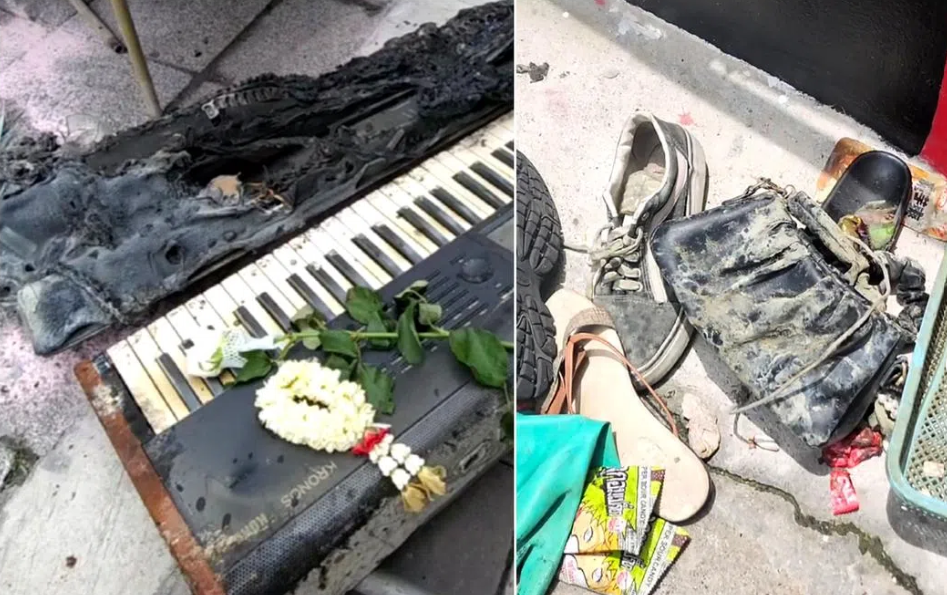
Suwanna Saeteaw's world collapsed when she recognised her sister's mobile phone among the recovered belongings broadcast on television news coverage of the Rong Beer Na Lat Phrao bar fire. The sight of Jarawee Sermsiri's device, instantly familiar to the 38-year-old, shattered her fragile hope that the 25-year-old had managed to escape the inferno that consumed the establishment near midnight on July 12. When Suwanna dialled the number with trembling hands, a rescue worker picked up from the other end. By that evening, as she spoke to journalists while holding back tears, she had already spent hours moving between hospitals and forensic centres, consulting survivor lists and dreading what she might discover about her sister's fate.
Across Bangkok's sprawling landscape, dozens of families found themselves trapped in a nightmare of uncertainty that July 13, desperately piecing together fragments of information as they moved between medical facilities and identification centres. The fire's death toll had climbed to 28 people, with more than 70 injured, establishing this tragedy as Thailand's deadliest blaze in nearly two decades. The comparison is haunting: the Santika nightclub fire that erupted during New Year festivities in 2009 claimed 67 lives and injured over 200, yet the deadly efficiency of this more recent fire has shaken the nation and reignited questions about whether safety standards have genuinely improved in the intervening years.
The anguish facing families extended beyond the immediate search for survivors. Authorities had begun the painstaking process of collecting DNA samples to identify victims, but officials cautioned that results would require approximately three days to process. For people whose loved ones had vanished into smoke and flames, this timeline felt glacial. Suwanna articulated the emotional torture many families endured: waiting three days seemed impossibly long, prompting desperate searches through hospitals and emergency facilities in hopes of finding some trace of their missing relatives receiving treatment somewhere in the city's medical network.
The physical evidence at the scene painted a picture of sudden, chaotic panic. Abandoned shoes and bags still littered the ground outside the charred concrete structure where patrons had fled in terror as flames advanced and thick black smoke engulfed the entire building. Investigators meticulously examined the wreckage, searching for clues about how a fire could spread so rapidly through an establishment that had reportedly passed inspection just months earlier in April. The venue operated as a licensed restaurant within a single-storey concrete building, and authorities estimated approximately 300 customers were present when the fire started, though the bar typically accommodated 600 to 700 patrons on regular evenings.
Bangkok Governor Chadchart Sittipunt emerged as a key figure in the official investigation, telling reporters that several critical factors demanded examination. Specifically, authorities were investigating whether emergency exits had been obstructed or blocked, and whether combustible ceiling materials may have accelerated the fire's spread and intensity. Chadchart noted that flames reached the ceiling with remarkable speed, and that smoke likely constituted the primary cause of death for many victims. This observation proved particularly significant given the structural and material composition of the venue itself.
Police investigations revealed disturbing details about the evacuation scenario and building vulnerabilities. National police chief Kitrat Panphet disclosed that the majority of deceased victims were discovered in the toilet areas, suggesting that when panic set in and darkness descended, people became disoriented and unable to locate proper exits. More alarmingly, Kitrat reported that investigators found one exit door obstructed by a shelf, effectively reducing the egress capacity to single-file evacuation, an unconscionable safety bottleneck in a venue packed with hundreds of people. The police chief also directed scrutiny toward the building's electrical wiring systems and questioned whether decorative materials may have contributed fuel to the rapidly spreading flames.
A structural engineer who inspected the devastated venue immediately after the fire offered technical insights into the disaster's mechanics. Amorn Pimanmas, president of the Thailand Structural Engineers Association, identified the combination of low ceilings and polyurethane foam decorations as particularly catastrophic factors. These combustible materials apparently allowed toxic smoke to accumulate at dangerous concentrations, trapping occupants in conditions that made escape impossible. Yet Amorn's most damning observation concerned enforcement rather than legislation: Thailand possesses adequate fire safety laws, but the genuine problem lies in the inconsistent and insufficient implementation of these regulations across entertainment venues.
Testimonies from those who frequented the establishment before the fire corroborated these structural and safety concerns. Chaiyo Piwisol, a 30-year-old waiter who had visited the bar on three previous occasions, described it as perpetually cramped and congested, with narrow doorways that had always made him uncomfortable. The abundance of decorative elements—hanging lights, ornaments suspended from ceilings, and miscellaneous fixtures—suggested to him that more rigorous safety measures should have been mandatory. The bar had prioritised aesthetic appeal and capacity over the fundamental ability to evacuate people safely during emergencies.
Prime Minister Anutin Charnvirakul visited the scene and acknowledged what he termed "blind spots" in the venue's design, areas where no visible fire escape route existed. While urging the public to await official investigation findings, he issued a stern warning: there would be no leniency if any laws had been violated. His statement reflected broader political pressure to demonstrate decisive action on a matter affecting public safety and national reputation. The tragedy had moved beyond a single incident to become a referendum on Thailand's commitment to enforcing fire safety standards across entertainment establishments.
The human cost of these systemic failures became visceral in survivor accounts. Panathaporn Thongyord, a 19-year-old who managed to escape, lost a close friend in the inferno. She recounted her friend's final words, an instruction to leave immediately and not attempt a rescue: the friend prioritised Panathaporn's survival over her own. They had grown up together, spent countless nights in each other's homes, and shared years of accumulated memories. Now Panathaporn's grief mingled with questions about basic accountability: she wanted to understand why the back door could not be opened, why exits that should have been accessible were instead rendered inaccessible, and whether those responsible would face genuine consequences.
For Suwanna and families like hers, the weeks ahead promised agonising uncertainty mixed with diminishing hope. The search through hospitals continued, though each passing hour made reunion less probable. She held to her conviction that her sister might still be alive, receiving care somewhere in Bangkok's medical system, but the discovery of Jarawee's phone had sown terrible doubts. The tragedy exposed not merely individual negligence but systemic indifference to safety standards that should have prevented such loss of life. As investigations proceeded and authorities promised accountability, the real measure of change would come not from official statements but from whether Thailand's entertainment venues would genuinely implement the protective measures that could have spared these families their heartbreak.

