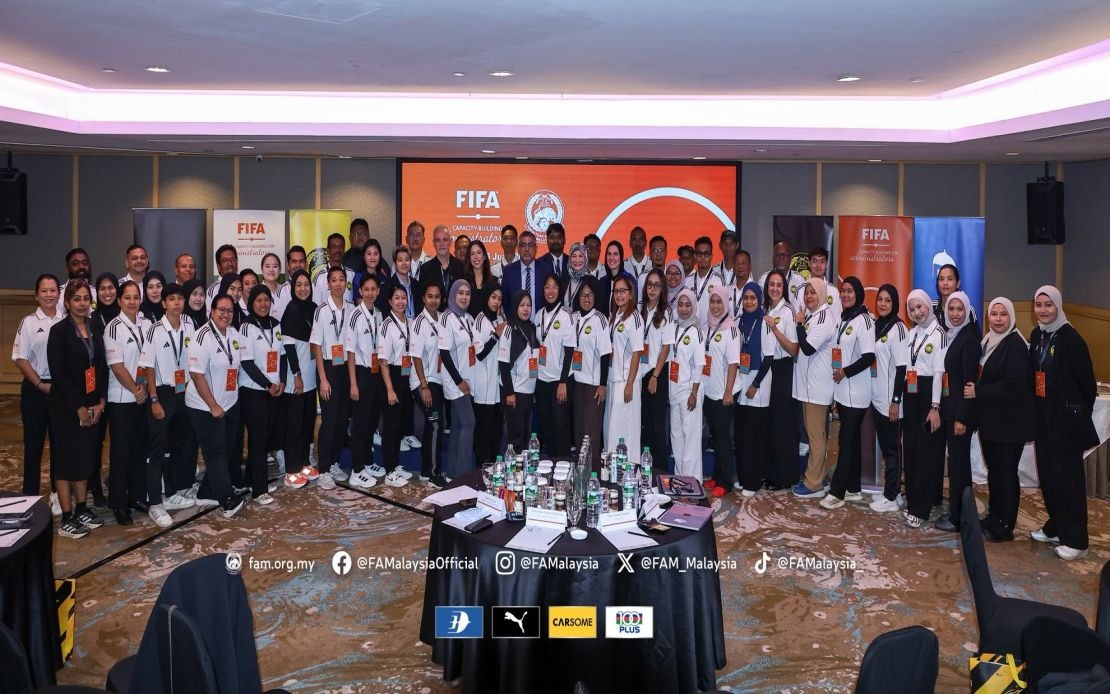
The Football Association of Malaysia has begun a significant capacity-building initiative designed to elevate standards in women's football administration, recognising that sustainable development of the sport requires investment in management and leadership beyond technical training. Starting on June 23, the FIFA Capacity-Building For Administrators 2026 programme represents FAM's commitment to creating robust support frameworks that will enable women's football to flourish at both club and national levels across the country.
The four-day programme, conducted in collaboration with FIFA, brings together two international experts—Safia Abdeldayem and Pema Choden Tshering—whose specialisation in women's football development positions them to guide Malaysian administrators through contemporary best practices. This international dimension is crucial, as it exposes participants to global standards while allowing them to contextualise solutions within Malaysia's own football environment. The involvement of FIFA signals confidence in FAM's strategic direction and underscores the governing body's priority on strengthening women's football throughout Asia.
The curriculum addresses four interconnected dimensions essential to modern football administration. The Women's Leadership module focuses on equipping managers and administrators with skills to navigate complex organisational challenges, foster inclusive team environments, and manage diverse stakeholders. Women's Competition training ensures participants understand fixture scheduling, tournament formats, and competition management tailored to women's football's specific contexts. The Club and Players' Rights component educates administrators on contractual obligations, welfare protections, and dispute resolution mechanisms, creating accountability throughout the system. Strategic Planning modules enable participants to develop long-term visions for their organisations, allocating resources effectively and measuring progress against clear benchmarks.
FAM's emphasis on strengthening off-field structures reflects a maturing understanding within Malaysian football governance that technical excellence among players means little without corresponding excellence in administration. Teams require professional management of travel logistics, medical protocols, media relations, and financial resources. Club governance directly influences player welfare, contract compliance, and career development pathways. When administrative systems fail, even talented players find themselves in precarious positions. By professionalising the management layer, FAM creates conditions where skilled athletes receive appropriate support and development opportunities.
The programme's timing aligns with broader regional momentum in women's football. Southeast Asian nations are increasingly investing in women's leagues and national team development, recognising both the commercial potential and the social significance of expanding sporting opportunities. Malaysia's participation in this FIFA initiative demonstrates its commitment to matching regional peers and avoiding administrative deficiencies that could undermine on-field performance. Countries like Thailand and Vietnam have made substantial strides; Malaysia's proactive approach to administrative capacity-building positions the nation competitively.
The presence of Datuk Suraya Yaacob, who serves as FIFA Women's National Team Competitions Committee member and AFC Women's Football Committee representative, signals high-level institutional support for this initiative. Her dual roles at FIFA and AFC provide direct lines to international football governance, ensuring Malaysian developments integrate with continental strategies. Datuk Noor Azman Rahman's participation as FAM secretary-general demonstrates executive commitment to the programme's success and integration within broader federation planning. Soleen Al-Zoubi, the Women's Football Technical Director, brings specialist knowledge of women's football development, ensuring technical and administrative perspectives align throughout the training.
The programme targets a critical gap in Malaysian women's football. Many club managers and administrative officers have learned their roles through practical experience rather than formal training in modern management methodologies. Some may lack awareness of international standards regarding player welfare, financial transparency, and governance structures. Others may struggle to balance developmental objectives with competitive pressures. This structured intervention provides standardised knowledge and benchmarking opportunities that elevate the entire ecosystem.
FAM's strategic vision explicitly recognises that sustainable growth requires expanding the pool of skilled women leaders throughout the football industry. This reflects international evidence suggesting that women's football development stalls when administrative structures remain under-resourced or lack sufficient female leadership. By intentionally building women leaders in management and administration, FAM creates role models and mentors for younger participants entering the sport. The multiplier effect of having capable women administrators extends beyond individual organisations to cultural normalisation of female leadership in Malaysian football governance.
The initiative connects directly to FIFA's global women's football agenda. International football governance increasingly prioritises women's football development as both a social investment and commercial opportunity. FIFA's provision of expert trainers and curriculum development reflects this institutional commitment. Malaysia's participation in such programmes strengthens its relationship with FIFA and positions it favourably for future support, investment, and technical assistance. Regional competitions and qualifying tournaments often reward nations demonstrating systematic development approaches; administrative excellence contributes to this perception.
For Malaysian women footballers, this programme creates tangible benefits through improved team management and club governance. Professional administrators who understand player development, welfare protocols, and career pathways create environments where athletes can focus on performance improvement. Clear competition structures reduce uncertainty and enable better long-term planning. Transparent club governance and players' rights frameworks provide security and predictability. These administrative improvements directly translate into better training environments, clearer career progression, and enhanced overall professionalism.
The programme also addresses generational knowledge transfer within Malaysian football administration. Experienced team managers and administrative officers participating in the training become multipliers, sharing knowledge with colleagues and junior staff. FAM's intentional focus on creating more skilled administrators and women leaders throughout the football industry suggests systematic succession planning. Rather than relying on individual expertise, the federation is building institutional capacity distributed across numerous organisations and individuals.
Looking forward, the success of this programme will be measured not just by participant satisfaction but by observable changes in how women's football teams and clubs operate throughout Malaysia. Improvements in administrative documentation, clearer communication of club policies, enhanced financial transparency, and better player welfare protocols would indicate meaningful impact. FAM's commitment to expanding opportunities and empowering women in football governance positions Malaysia to compete effectively regionally while creating more professional and sustainable conditions for women's football development.