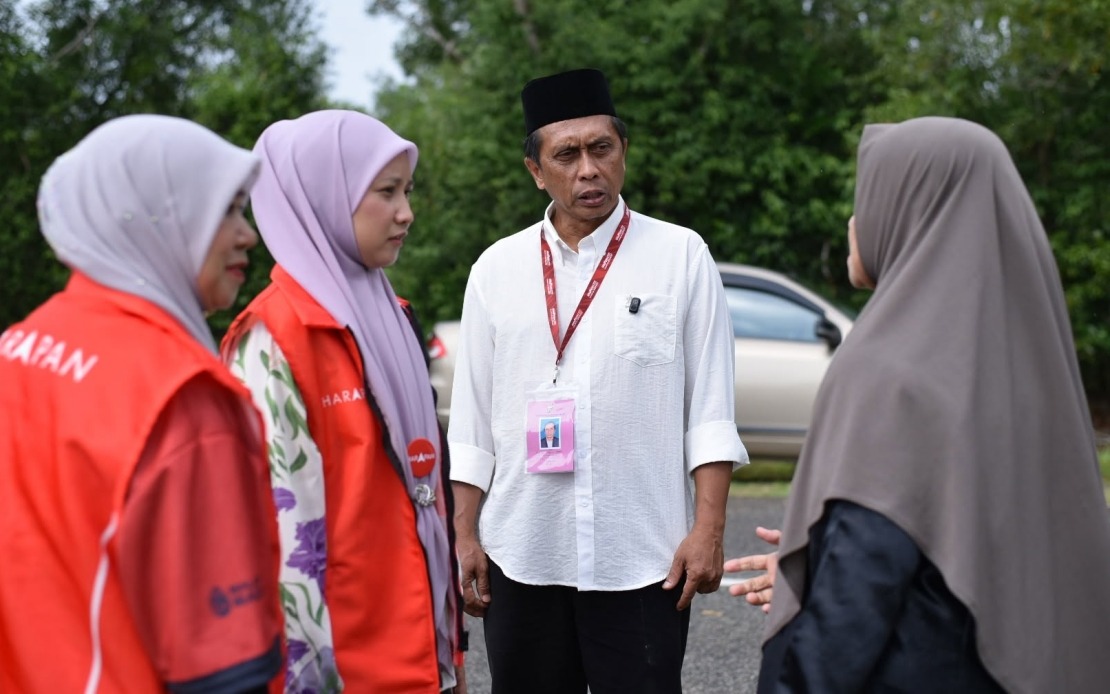
Pakatan Harapan is entering the 16th Johor state election with genuine aspirations to capture Tanjung Surat, a constituency long considered secure territory for Barisan Nasional. The coalition's candidate Faizul Abdul Ghani, 56, has rejected characterisations that PH is merely making up the numbers in this contest, asserting instead that he is mounting a serious bid to unseat the incumbent, Aznan Tamin. Speaking ahead of polling on July 11, Faizul presented an analysis of shifting sentiment within the constituency that he believes presents an opportunity for a significant upset in what has historically been a BN stronghold.
According to Faizul, the political dynamics in Tanjung Surat have undergone noticeable transformation at grassroots level, with an increasing proportion of voters now inclining towards the opposition coalition. This reorientation of support, he suggested, creates realistic conditions for PH to achieve what would be a notable victory in an area traditionally resistant to political change. His optimism appears grounded in direct engagement with constituents rather than speculative analysis. The candidate emphasised that his approach transcends the conventional binary of contest difficulty, instead focusing on the fundamental principle of contesting every seat with the intention of winning, regardless of historical voting patterns.
Faizul's campaign strategy has incorporated an explicitly cross-party appeal designed to broaden his electoral base beyond traditional PH supporters. This pragmatic approach has apparently yielded encouraging responses from voters across the political spectrum, indicating that anti-incumbent sentiment or dissatisfaction with BN's stewardship may transcend traditional partisan divisions. The willingness of some BN-inclined voters to consider an alternative represents a significant development in Malaysian state politics, where incumbent parties often maintain dominance through entrenched local networks and resources.
The Tanjung Surat campaign has not proceeded without friction. During the opening week of the election period, PH's campaign materials were subjected to sabotage, with posters and promotional items damaged or removed. Rather than viewing such incidents as discouraging developments, Faizul has contextualised them within his longer history with Pakatan Keadilan Rakyat, spanning nearly 27 years. He recalled previous election cycles marked by more severe instances of campaign material destruction, including burning and deliberate discarding. This historical perspective appears to have inoculated him against treating current disruptions as extraordinary provocations or portents of electoral difficulty.
The approach Faizul has instructed his campaign machinery to adopt emphasises resilience and strategic focus. Rather than responding to provocative incidents with counter-escalation or public grievance-airing, he has directed party workers to maintain patience, avoid reactive engagement, and concentrate their efforts on direct voter interaction. This discipline reflects recognition that campaign narratives dominated by conflict allegations typically favour incumbent parties seeking to frame opposition candidates as disruptive or unserious, whereas consistent, positive engagement with constituents maintains focus on substantive policy contrasts.
Following extensive preliminary groundwork across virtually all localities within Tanjung Surat, the PH campaign has now shifted emphasis toward consolidating the support it has already cultivated. The emphasis on repeated engagement with certain areas suggests recognition that converting initial interest into solid electoral commitment requires sustained contact and relationship-building. This phase of the campaign prioritises deepening rather than broadening the electorate's engagement with the PH message and candidate.
Faizul's policy platform reflects attention to local economic grievances and development aspirations. He has identified the fishing community as a priority constituency, particularly in Sungai Rengit, where he proposes addressing practical impediments to their livelihoods including bureaucratic delays in fishing licence approval and the deteriorating state of essential maritime infrastructure such as breakwaters and jetties. These are not abstract policy objectives but concrete problems affecting immediate economic security and productivity within a historically significant economic sector for the region.
Tourism development constitutes the second major plank of Faizul's development vision for Tanjung Surat. He has identified Sungai Rengit, Batu Layar, and Tanjung Belungkor as localities possessing considerable unrealised tourism potential. Rather than treating tourism infrastructure as primarily serving external visitors, his approach emphasises income generation for local homestead operators and traders through economic development rooted in local assets. This framing positions tourism as a vehicle for grassroots economic improvement rather than an externally-imposed development model.
The broader electoral context comprises a substantially contested 56 state seats in Johor, with 172 candidates contesting the positions. The distribution of candidates across constituencies reflects the genuine competitiveness of the election, indicating that major parties are fielding candidates across most or all constituencies despite the certainty that many will finish without parliamentary representation. Tanjung Surat's characterisation as a potentially vulnerable BN seat, therefore, carries particular significance within a state election otherwise dominated by questions regarding overall coalition performance.
Faizul's declared optimism and commitment to winning rests on an assessment of transformed grassroots sentiment that, if accurate, would represent a meaningful breach in BN's traditional Johor dominance. Whether the polling results validate his confidence or prove it optimistic will become apparent following the July 11 elections, but his determination to contest seriously rather than participate symbolically reflects broader patterns of electoral competition in Malaysia becoming genuinely contested rather than predetermined across most constituencies.

