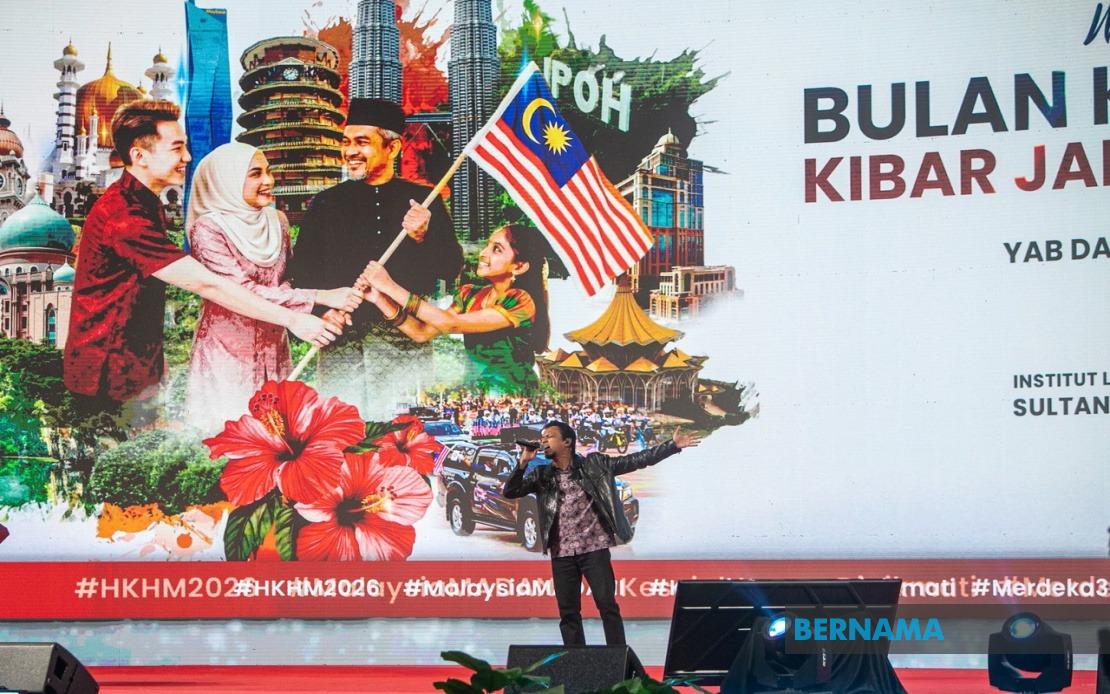
Malaysian recording artist Faizal Tahir's latest composition, 'Aku Berjanji', has been designated as the official theme song for National Month and the Fly the Jalur Gemilang Campaign 2026 (MPBKKJG 2026). The announcement arrived during the campaign's official launch held at the Sultan Azlan Shah Ministry of Health Malaysia Training Institute, marking a significant recognition for the artist in his nearly two-decade career.
The two-minute-29-second track premiered to audiences at the launch event, introducing Malaysians to what organisers hope will become an anthem for the nation's forthcoming celebrations. Faizal and his production team invested approximately one month in crafting the final composition, with preliminary conceptual work beginning as early as May of the previous year. The timeline reflects the deliberative approach taken to ensure the song would authentically capture the essence of Malaysia's national identity.
According to Faizal, 'Aku Berjanji' weaves together lyrical themes centring on collective purpose, national cohesion, and profound affection for Malaysia's sovereignty and territorial integrity. Speaking to media representatives following the launch ceremony, the artist expressed gratitude for the opportunity to contribute his artistic talents to the nation's commemorative efforts. He emphasised that after nearly two decades navigating Malaysia's competitive music industry, receiving such a commission represented a meaningful acknowledgment of his creative work and cultural relevance.
The selection of 'Aku Berjanji' reflects broader governmental efforts to harness popular music as a vehicle for strengthening patriotic sentiment ahead of National Month celebrations. By choosing an established domestic artist rather than commissioning an ensemble or foreign act, authorities signal an investment in homegrown talent and a desire to connect with audiences through locally resonant cultural production. This approach aligns with regional trends in Southeast Asia, where governments increasingly employ music and entertainment to reinforce national messaging and civic participation.
Faizal's trajectory within Malaysia's entertainment landscape provides context for understanding the significance of this appointment. His rise to national prominence began in 2006 when he achieved runner-up status in the televised talent competition 'One In A Million', a programme that shaped the careers of numerous Malaysian performers and established itself as a cultural institution. That early television exposure catalysed his subsequent development as a recording artist and public figure, positioning him within the upper echelon of Malaysia's contemporary music establishment.
The creation of 'Aku Berjanji' demonstrates the collaborative nature of contemporary music production in Malaysia, with Faizal acknowledging contributions from his broader production team rather than claiming sole authorship. This collective approach mirrors industry standards across Southeast Asia, where successful recording artists typically work alongside composers, arrangers, and producers to achieve desired sonic and emotional outcomes. The involvement of multiple creative voices likely strengthened the composition's ability to resonate across Malaysia's diverse demographic and cultural landscape.
National Month campaigns hold particular significance within Malaysia's civil calendar, serving as focal points for collective reflection on national achievements, aspirations, and shared values. The Fly the Jalur Gemilang initiative, which encourages widespread display of the national flag throughout residential and commercial spaces, transforms abstract patriotic concepts into tangible, visible demonstrations of national pride. By pairing this visual campaign with an original musical composition, organisers create multimedia reinforcement of patriotic messaging, appealing to citizens through multiple sensory channels simultaneously.
For Faizal, the commission represents opportunity to extend his artistic legacy beyond conventional commercial recording into the domain of national cultural contribution. Many recording artists view such official appointments as validation of their status within national cultural hierarchies, opportunities to associate their personal brands with governmental institutions and values. This appointment may enhance Faizal's standing within Malaysian society while simultaneously elevating public awareness of his contemporary work among demographics that might not typically follow commercial music releases.
The song's thematic emphasis on unity and sovereignty carries particular resonance within Malaysia's contemporary political and social environment. National Month celebrations traditionally serve as occasions for setting aside partisan divisions and emphasising shared citizenship and common purpose. By anchoring 'Aku Berjanji' to these unifying concepts rather than narrow ideological positions, Faizal's composition ostensibly appeals across Malaysia's religious, ethnic, and political divides—an ambitious goal that reflects the aspirational function of national anthems and commemorative cultural productions.
Looking forward, 'Aku Berjanji' will likely receive substantial broadcast exposure across Malaysian media platforms throughout National Month 2026, from commercial radio stations to government-sponsored public service announcements. This concentrated media presence will introduce the composition to audiences well beyond those who traditionally consume Faizal's commercial recordings, potentially establishing the song as a lasting cultural touchstone for the 2026 national celebrations. The extended distribution also creates opportunities for the track to circulate within Southeast Asian media markets, particularly among Malaysian diaspora communities seeking connection to home culture and contemporary national developments.
The selection of 'Aku Berjanji' ultimately reflects Malaysia's ongoing engagement with popular music as a tool for civic engagement and national meaning-making. By commissioning established domestic artists to create commemorative works, government institutions acknowledge music's powerful capacity to move audiences emotionally and to encode political messages within accessible, memorable artistic forms. For Faizal Tahir, the appointment caps a career trajectory that began with televised talent competition success and culminates in official recognition as a custodian of national cultural expression during a significant commemorative moment.

