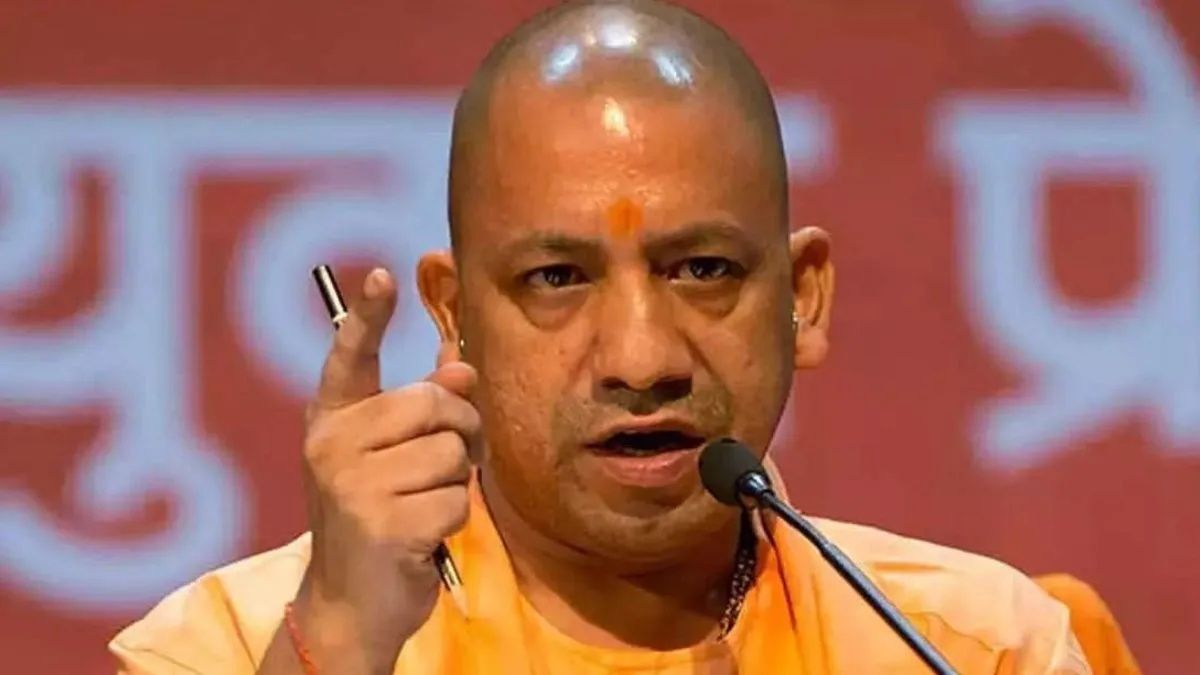
The Chief Minister of Uttar Pradesh, Yogi Adityanath, issued a forceful statement defending the integrity of the Ram Janmabhoomi Teerth Kshetra after authorities registered an initial complaint related to missing donations at the sacred site. Speaking at a public event in Deoria on Friday, he made it clear that the state government views any manipulation of religious devotion as a serious transgression that demands accountability. His remarks came shortly after a Special Investigation Team submitted its findings on the matter, prompting state authorities to commence formal action based on the inquiry's recommendations.
The Chief Minister's intervention signals the political sensitivity surrounding the Ram Temple, which remains at the intersection of religious faith and electoral politics in India's most populous state. Ayodhya's temple complex, completed in 2023 after decades of legal and political disputes, has become a symbol of Hindu nationalist politics under the Bharatiya Janata Party government that Adityanath leads. The alleged misappropriation of devotional contributions threatens to undermine the temple's standing as a purely sacred institution rather than a flashpoint for partisan controversy. The state leadership appears determined to contain any reputational damage by projecting swift, decisive intervention.
During his address in Deoria, Adityanath framed the donation controversy within a broader historical narrative, invoking India's spiritual traditions and the Ram Temple's significance to Hindu civilisation. He positioned Ayodhya as emblematic of Sanatan Dharma—the Hindu philosophical and religious framework—and implored the public to protect its sanctity from malicious attacks. This rhetorical strategy transforms what might ordinarily be treated as a straightforward case of financial irregularity into a matter of protecting collective religious identity against perceived enemies. The Chief Minister's language deliberately elevated the investigation beyond a standard administrative inquiry into something closer to a spiritual defence.
Adityanath directed withering criticism at the Indian National Congress and the Samajwadi Party, two of the state's principal opposition movements, characterising them as historical opponents of the Ram Temple project itself. He recalled that Congress leaders had questioned the historical existence of Ram, while the Samajwadi Party deployed legal arguments against the temple's construction. These references remind voters of the decades-long dispute over the Ayodhya site, where a mosque stood before its demolition in 1992 prompted communal violence. By connecting present-day critics of the government's handling of donations to past opposition to the temple, Adityanath attempted to delegitimise any scrutiny as emanating from anti-Hindu political forces rather than genuine institutional concerns.
The Chief Minister escalated his accusations by alleging that opposition parties had committed serious communal offences during their periods in power, citing incidents including firing on Ram Navami processionists, restricting Krishna Janmotsav celebrations, banning the Kanwar Yatra pilgrimage, and inciting riots during Durga Puja. He referenced the Lar riot, a communal incident from the Samajwadi Party era, as evidence of their pattern of targeting Hindu religious observances. These charges, whether historically accurate or contested, served to establish a stark moral dichotomy between the current regime and its predecessors on matters of religious freedom. The strategy effectively reframes the donation scandal as a peripheral concern compared to the alleged religious persecution under previous administrations.
For Malaysian and Southeast Asian readers following Indian politics, this controversy illuminates how religious institutions in South Asia often become entangled with state power and partisan competition. Unlike Malaysia's constitutionally protected system of Islamic religious governance under state sultans, India's Hindu temples operate within a secular constitutional framework yet remain targets of intense political contestation. The Ram Temple's construction and subsequent financial management thus reflect broader tensions about the role of religious nationalism in Indian governance. The Uttar Pradesh controversy demonstrates how sensitive these questions remain, even after the temple's physical completion.
Adityanath's warning against testing the patience of Ram devotees carried unmistakable implications for how the state would handle future criticism or investigation into the temple's operations. His appeal for opposition parties to cease making allegations without presenting concrete evidence, whilst simultaneously demanding they cooperate with the Special Investigation Team, positioned the government as the ultimate arbiter of truth. This asymmetry—demanding transparency from critics whilst reserving investigative authority for state-controlled bodies—reflects the concentration of power characterising governance in Adityanath's Uttar Pradesh. The approach risks eroding public confidence in institutional independence, particularly if investigative findings appear predetermined.
The donation theft case itself raises important questions about institutional accountability that extend beyond the immediate scandal. Religious organisations globally manage substantial public contributions, and maintaining transparent financial systems protects both donors and the institutions themselves. When temple authorities or government representatives become defensive rather than forthcoming about misappropriated funds, it inevitably generates suspicion that institutional interests take precedence over religious integrity. Adityanath's emphasis on swift action following the Special Investigation Team report suggests the state recognises this reputational hazard, yet his simultaneous politicisation of the issue may obscure rather than clarify underlying problems.
The Chief Minister's rhetoric also illustrates how rapidly religious nationalism can shift between celebrating institutional achievements and condemning perceived threats. The Ram Temple's consecration in January 2024 represented a triumphalist moment for Hindu nationalist politics, with hundreds of thousands attending the inaugural ceremony. Within months, allegations of financial irregularities have necessitated emergency management of the narrative to preserve the temple's sanctity in public consciousness. This pattern—where religious institutions become vehicles for political messaging—creates risks for the communities they purport to serve, as spiritual concerns become subordinated to electoral calculations.
Moving forward, the Special Investigation Team's findings and subsequent prosecutions will test whether the Uttar Pradesh government prioritises institutional transparency or political protection. For international observers and neighbouring South Asian nations, the outcome will signal whether India's secular constitutional framework can meaningfully constrain the politicisation of religious institutions, or whether state authorities have become too intertwined with particular faith communities. Malaysia's experience with managing religious institutions across diverse communities suggests the importance of maintaining institutional independence from partisan politics. The Ayodhya case will provide important lessons in how majoritarian democracies navigate the tensions between religious freedom, institutional accountability, and political power.

